





 Português
  Inglês
  Espanhol
 3 min de leitura
  0 comentários


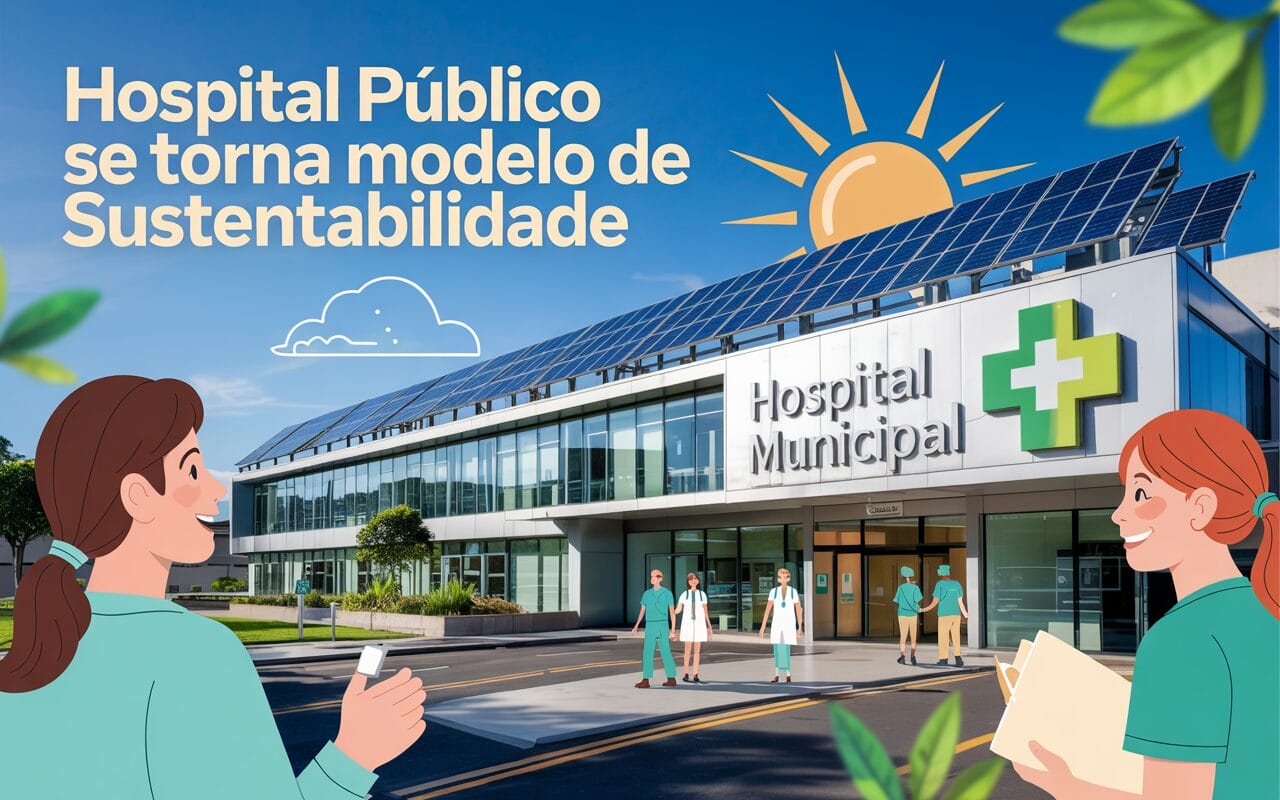
With 100% Renewable Energy, HMS Stands Out as a Sustainable Public Hospital, Reinforcing the Role of Municipal Health in Facing Climate Change and Promoting an Ecological and Efficient System.
The Municipal Hospital of Salvador (HMS) has become the first public hospital in the capital of Bahia to operate with 100% energy from renewable sources, establishing itself as a national reference in sustainability in public health management. The unit, which is maintained by the City Hall of Salvador and managed by the Santa Casa da Bahia, symbolizes a milestone in the energy transition within the hospital sector.
The initiative reinforces the municipal administration’s commitment to sustainable practices, promoting a model of hospital operation that combines efficiency, innovation, and environmental responsibility. The complete replacement of HMS’s energy matrix with clean sources strengthens Salvador’s role in facing climate change and in the development of low-carbon public policies.
Clean Energy and Environmental Management
A member of the Global Network of Healthy and Green Hospitals, the Municipal Hospital of Salvador adopts a series of practices aligned with environmental sustainability. In addition to the exclusive use of renewable energy, the unit develops actions such as:
-
Renewable energy advances over protected areas in Brazil, and a survey by the Energy Transition Observatory reveals silent impacts that challenge environmental conservation and pressure sensitive traditional territories.

-
Rio Grande do Sul accelerates energy transition: State invests in renewable technologies and consolidates decarbonization strategies and pathways to attract billions in new industrial investments.

-
With 160,000 m² of collectors, an area larger than 20 football fields, Silkeborg, in Denmark, hosts a solar thermal plant that heats 19,500 homes and could become the largest solar heating plant in the world.

-
A study reveals the expansion of renewable energy procurement in Brazil and shows how companies are taking advantage of opportunities to reduce expenses, ensure energy efficiency, and strengthen strategic environmental commitments.


- Efficient Water Management
- Healthy and Sustainable Food, recognized by the Green Kitchen seal, which certifies meals with a lower environmental impact
- Incorporation of Cleaner and Low-Carbon Operational Processes
The transition to a 100% renewable energy matrix is seen as a strategic advancement. “By being a reference as a public hospital fully powered by clean energy, HMS symbolizes this pioneering spirit and reinforces the institutional commitment to innovation and socio-environmental responsibility,” said Gustavo Mettig, the hospital’s general director.
Integrated Health and Sustainability
According to the municipal secretary of health, Rodrigo Alves, the model adopted by the hospital is a concrete example of how the health sector can actively contribute to global environmental challenges. “Public health needs to be part of the solution to the environmental challenges of our time. In Salvador, we have sought to do this with concrete actions. HMS is an example of how it is possible to combine quality care and environmental responsibility,” he declared.
The measure also represents an economic gain. By adopting clean energy and reducing electricity costs, the municipal administration can reallocate resources to other priority areas of public health, optimizing management.
Solar Energy in Other Units of the Network
The commitment to renewable sources is not limited to the Municipal Hospital. By 2025, seven Family Health Units (USFs) in the city will have solar power plants, implemented through a partnership with Neoenergia Coelba. The Municipal Health Department estimates that the plants will generate up to 80% savings on electricity consumption in the beneficiary units.
This model is being considered for gradual expansion to other units of the network, such as health posts, administrative centers, and urgent care units (UPAs), amplifying the positive effects of sustainability in municipal health.
Alignment with Global Commitments
The actions implemented in Salvador are in tune with international commitments to combat the climate crisis, such as the Paris Agreement and the Sustainable Development Goals (SDGs) of the United Nations.
By modernizing its hospital infrastructure based on renewable sources, the city not only contributes to the reduction of greenhouse gas emissions but also creates replicable models for other Brazilian capitals.
HMS is now a practical example of how the health sector can lead the transition to a low-carbon economy, without compromising the quality of care for the population. The city’s goal is to maintain the pace of investments in sustainability, strengthening the climate resilience of the public health system and promoting a model of responsible environmental governance.










Seja o primeiro a reagir!