





 Português
  Inglês
  Espanhol
  4 min de leitura
  0 comentários


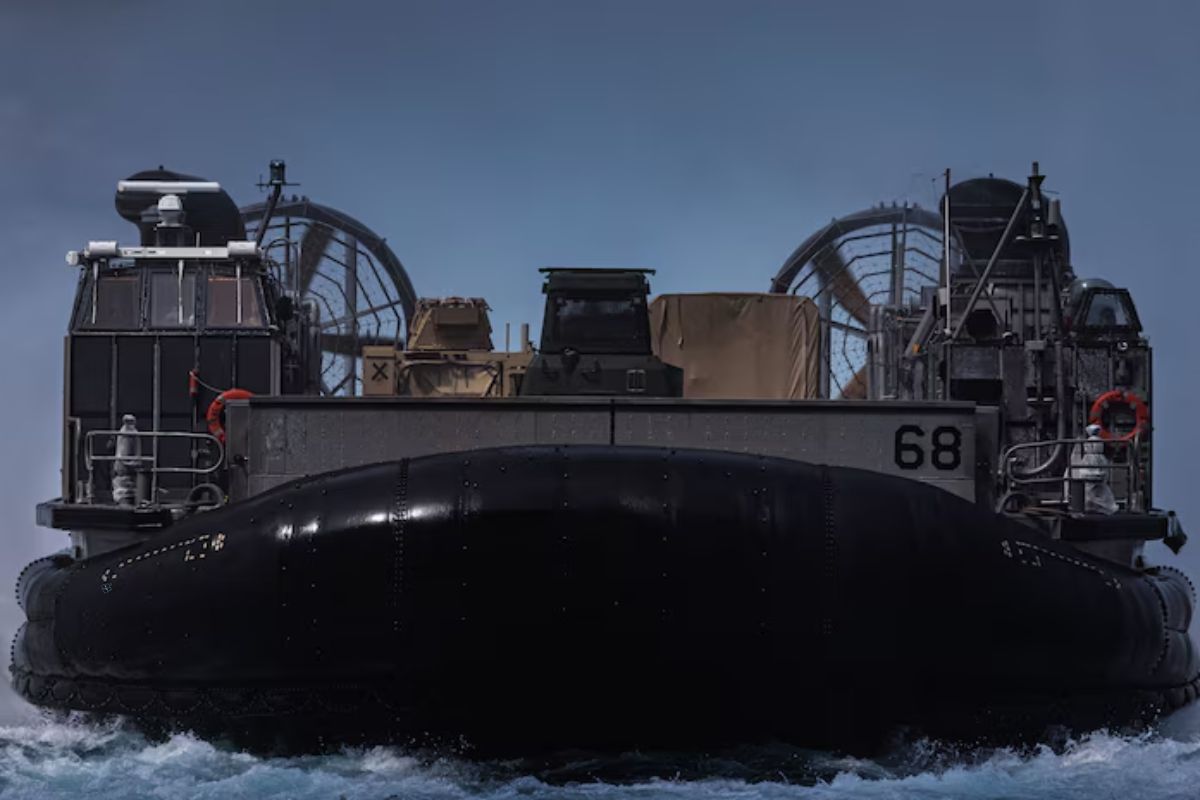
Amphibious Assault Craft Are Already Operating in the Caribbean Facing Venezuela and Expanding the Military Projection Capacity of the United States.
The U.S. LCAC Hovercrafts (Landing Craft Air Cushion) are at the center of an operation that reinforces American military presence in the Caribbean in 2025. According to the specialized channel Hoje no Mundo Militar, these vehicles can transport armored units, artillery, and even 3,300 Marines to shore in less than an hour, enhancing U.S. amphibious operational capability.
The deployment of a naval group, consisting of a Wasp-class amphibious assault ship and two San Antonio-class ships, was recorded in recent weeks off the coast of Venezuela.
Although the U.S. claims that the operation has an anti-narcotics character, experts point out that the firepower mobilized is sufficient for a large-scale invasion.
-
If the USA were to go to war with Brazil, Washington’s greatest fear would not be the attack itself, but facing a vast territory, prolonged resistance, and a costly, chaotic, and unpredictable occupation.

-
In 2013, Nicaragua sold the concession for a canal to rival Panama to a Chinese billionaire who lost 85% of his fortune, disappeared, and was declared bankrupt. Now the project resurfaces with a new route, a new Chinese partner, and a cost of $64.5 billion.

-
The USA announces a mysterious billion-dollar vault project to store critical minerals, but what intrigues experts is not just the plan itself, but why Latin America, including Brazil, has entered the center of this global dispute against China.

-
Trump Announces Bombing of U.S. Military Targets on Iranian Island Responsible for About 90% of Iran’s Oil Exports, Warns of Further Attacks if Navigation in Strategic Strait of Hormuz Is Threatened


What Are the U.S. LCAC Hovercrafts?
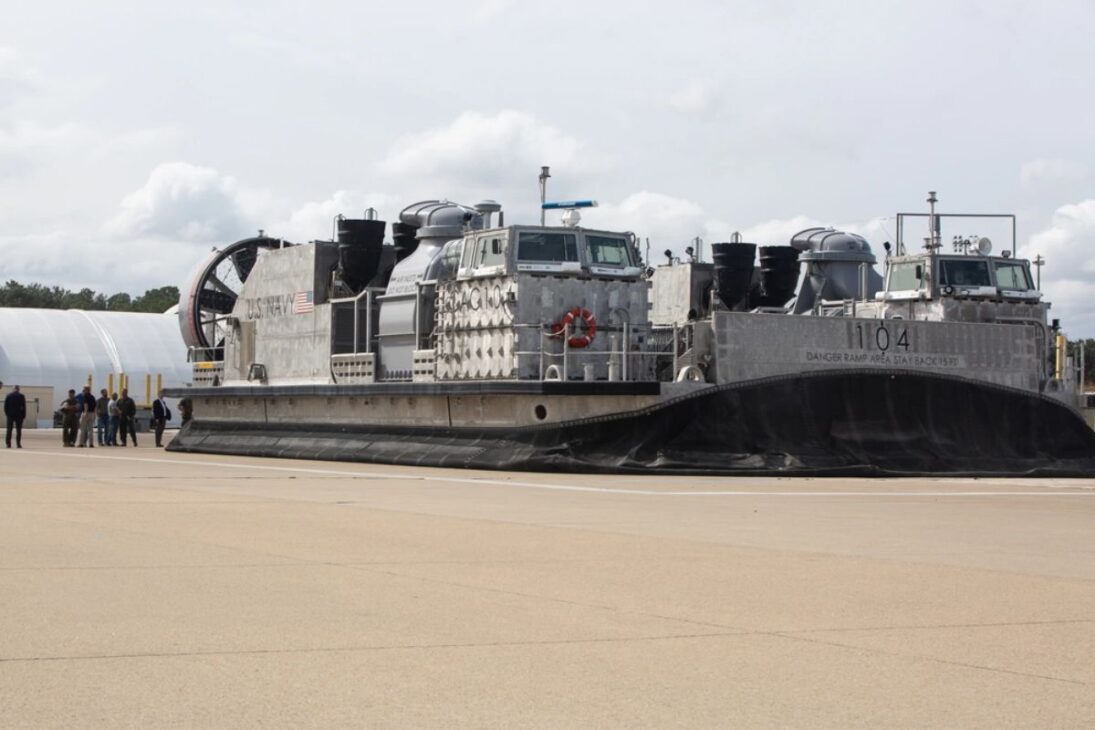
According to Hoje no Mundo Militar, the U.S. LCAC Hovercrafts were developed in the 1970s, following traumatic experiences in World War II and the Korean War when slow and vulnerable landings cost thousands of lives.
Unlike conventional vessels, LCACs use air cushions that allow them to traverse reefs, sea mines, and steep beaches.
This means that while traditional boats operate in only 15% of the world’s coastlines, LCACs can reach 70% of global coastlines, making amphibious operation planning much more flexible.
Mass production began in 1984, with 97 units built by 2001, each costing about US$ 40 million.
What Are the Technical Characteristics of the U.S. LCAC Hovercrafts?
The specifications are impressive. Each LCAC measures 27 meters in length and 14 meters in width, displaces up to 185 tons, and is powered by four Avco Lycoming TF40B gas engines, capable of reaching speeds over 74 km/h.
The operational range reaches 370 km at maximum speed but can exceed 500 km under economical conditions.
The payload is another differentiator: 68 tons, sufficient to transport an M1 Abrams tank, military trucks, artillery, or amphibious vehicles.
Additionally, they can carry up to 180 Marines in a single trip.
The cargo space is 168 m², with a 9-meter ramp that enables direct beach landings.
How Do LCACs Transform Amphibious Operations?
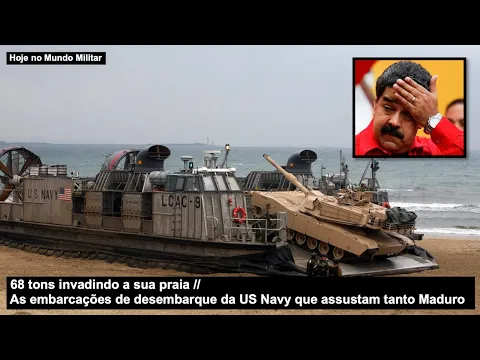

According to Hoje no Mundo Militar, LCACs have reduced landing times from hours to minutes.
A Wasp-class ship can accommodate up to three hovercrafts, while each San Antonio-class ship transports two.
Together, a group with these vessels can operate seven LCACs simultaneously, landing waves of up to 1,260 Marines per trip.
In less than an hour, the entire embarked force of 3,300 troops can be on shore, alongside armored units, M198 howitzers, support helicopters, and logistical vehicles. This represents a leap in reaction and intimidation capacity in crisis scenarios.
What Is the Current Context in the Caribbean?
The deployment of this fleet to the Caribbean in August 2025 is set against the backdrop of tensions between the U.S. and Nicolás Maduro’s Venezuela.
Officially, the mission is aimed at combating drug trafficking, but the presence of U.S. LCAC Hovercrafts and embarked F-35B fighters is seen as a demonstration of geopolitical strength.
For experts, the U.S. signals that it has enough means to execute a large-scale amphibious operation in the Americas.
The simple display of this power already fulfills part of the strategic objective: pressuring adversaries without firing a single shot.
Is It Worth Investing in Hovercrafts in 2025?
In the view of analysts, yes. Despite being expensive to operate and maintain, LCACs remain relevant.
They allow landings in previously inaccessible locations, project power quickly, and keep American amphibious doctrine up to date.
The modernization of the fleet, which began in the 2000s, has extended the lifespan of these vessels, which will still be essential until the arrival of the new generation of hovercrafts (SSC – Ship-to-Shore Connector).
Hoje no Mundo Militar highlights that in scenarios like the Caribbean and the Pacific, where geography imposes logistical challenges, hovercrafts become irreplaceable assets.
The U.S. LCAC Hovercrafts revolutionized the way military landings are conducted, offering unprecedented speed, flexibility, and range.
The presence of this fleet in the Caribbean in 2025 shows that the United States remains capable of projecting military power at any point in the Americas.
And what do you think, is the deployment of these hovercrafts just a demonstration of strength or a warning that the U.S. may intervene militarily in Venezuela? Leave your opinion in the comments — we want to hear from those closely following this scenario.









-

Uma pessoa reagiu a isso.