





 Portuguese
  English
  Spanish
  5 min of reading
  0 comments


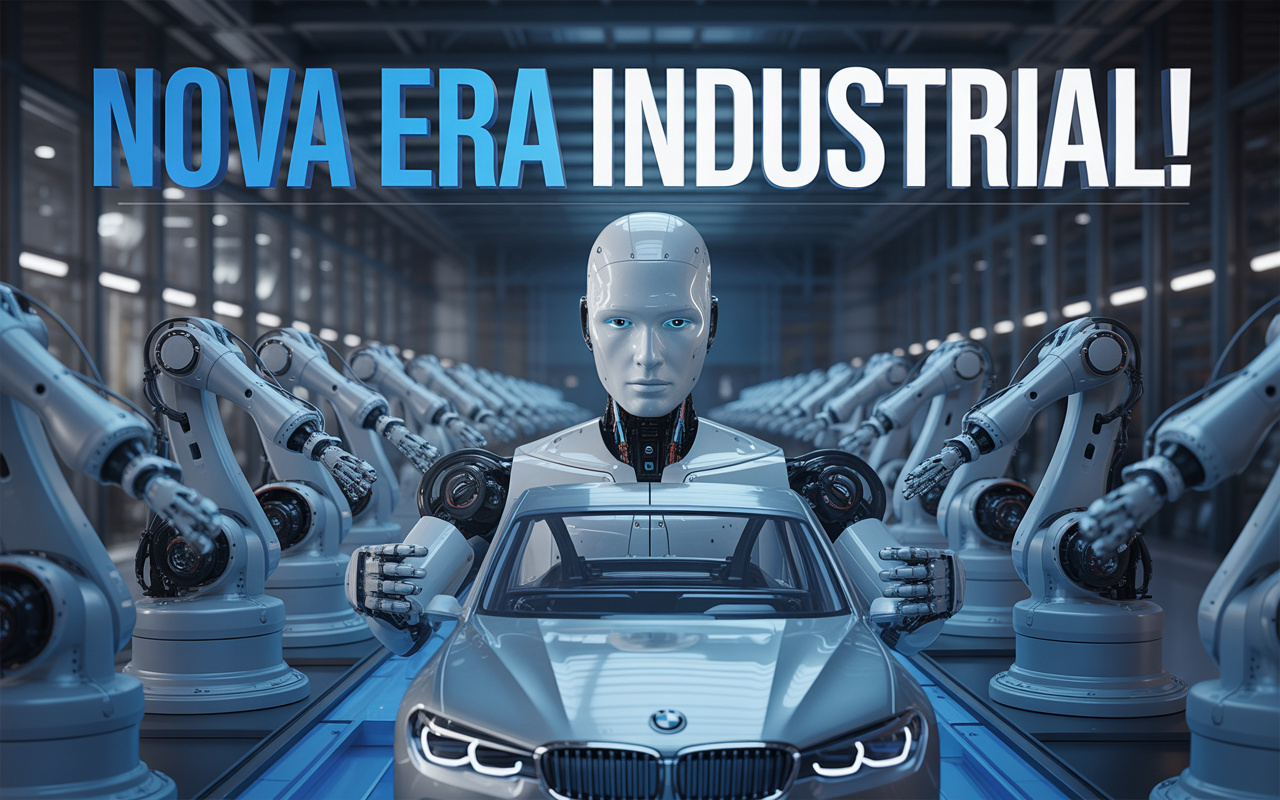
The Humanoid Robot Apollo From Figure AI Has Been Working for Five Months at BMW’s Factory in the USA, Performing Human Tasks in 10-Hour Shifts and Revolutionizing Industrial Automation.
For decades, imagining humanoid robots working alongside humans seemed like a science fiction dream. But that future has arrived and already has an address: the BMW manufacturing plant in Spartanburg, South Carolina (USA). Since the end of 2023, the German automaker has been testing the humanoid robot Apollo, created by the startup Figure AI, in its assembly line. The pilot project gained global attention after BMW’s official confirmation that the robot has been working up to 10 hours a day for five consecutive months, without significant operational failures.
The Apollo performs logistical and operational tasks previously carried out by human workers, doing so with precision, autonomy, and without breaks.
BMW and the Birth of a New Industrial Era
The Spartanburg factory is one of BMW’s largest units in the world, responsible for producing models such as the X5, X6, and X7. The site, which employs more than 11,000 people and produces about 1,500 vehicles per day, has become the ideal laboratory to test the integration between humans and intelligent robots.
-
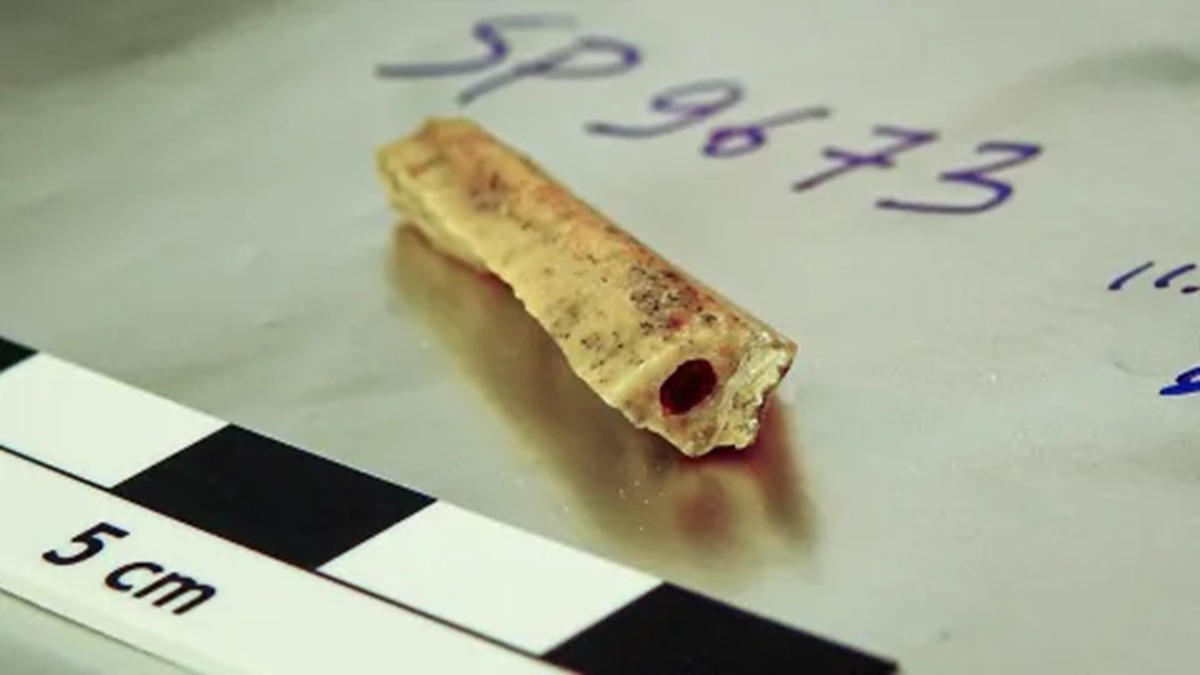
Researchers extracted DNA from a bone fragment of a Neanderthal found in the Denisova Cave in Russia.
-
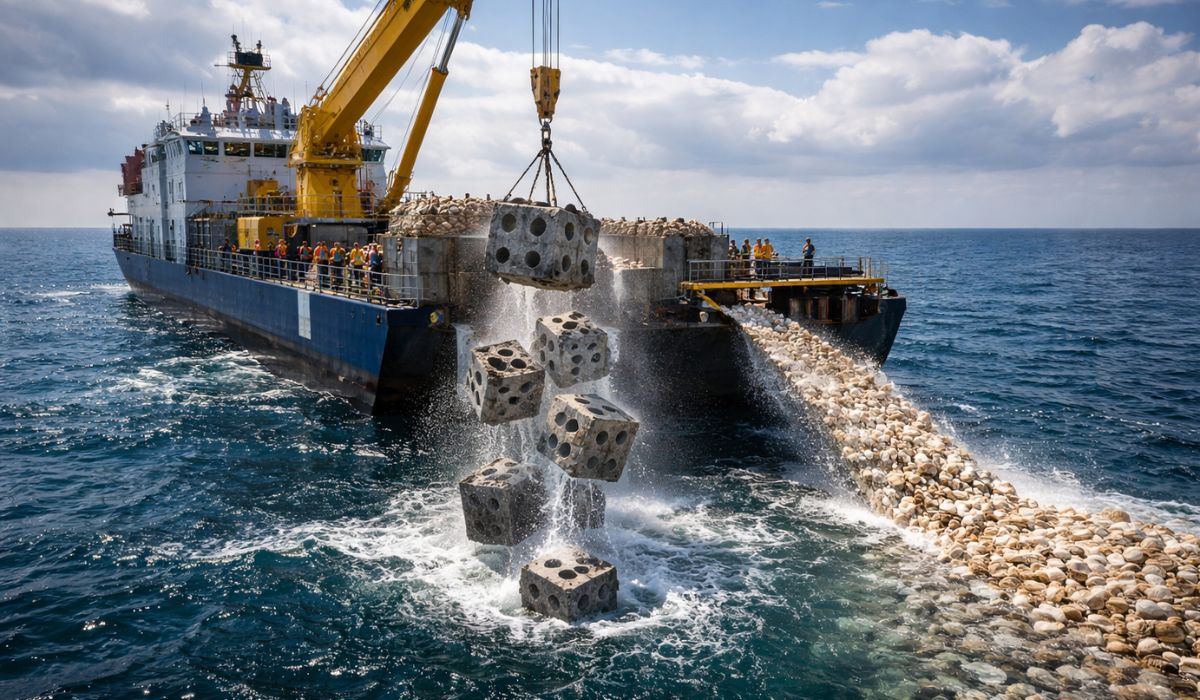
Navios dump 40 tons of shells and concrete blocks into the sea off the UK, reversing 200 years of destruction, bringing oyster reefs back, cleaning the water, and testing if the ocean floor can regenerate on a large scale.
-
Scientists released one-ton giant bison in the mountains of Romania, and the result surprised even zoologists: the vegetation in the region increased by 30%, and the soil began to capture ten times more carbon than before.

-
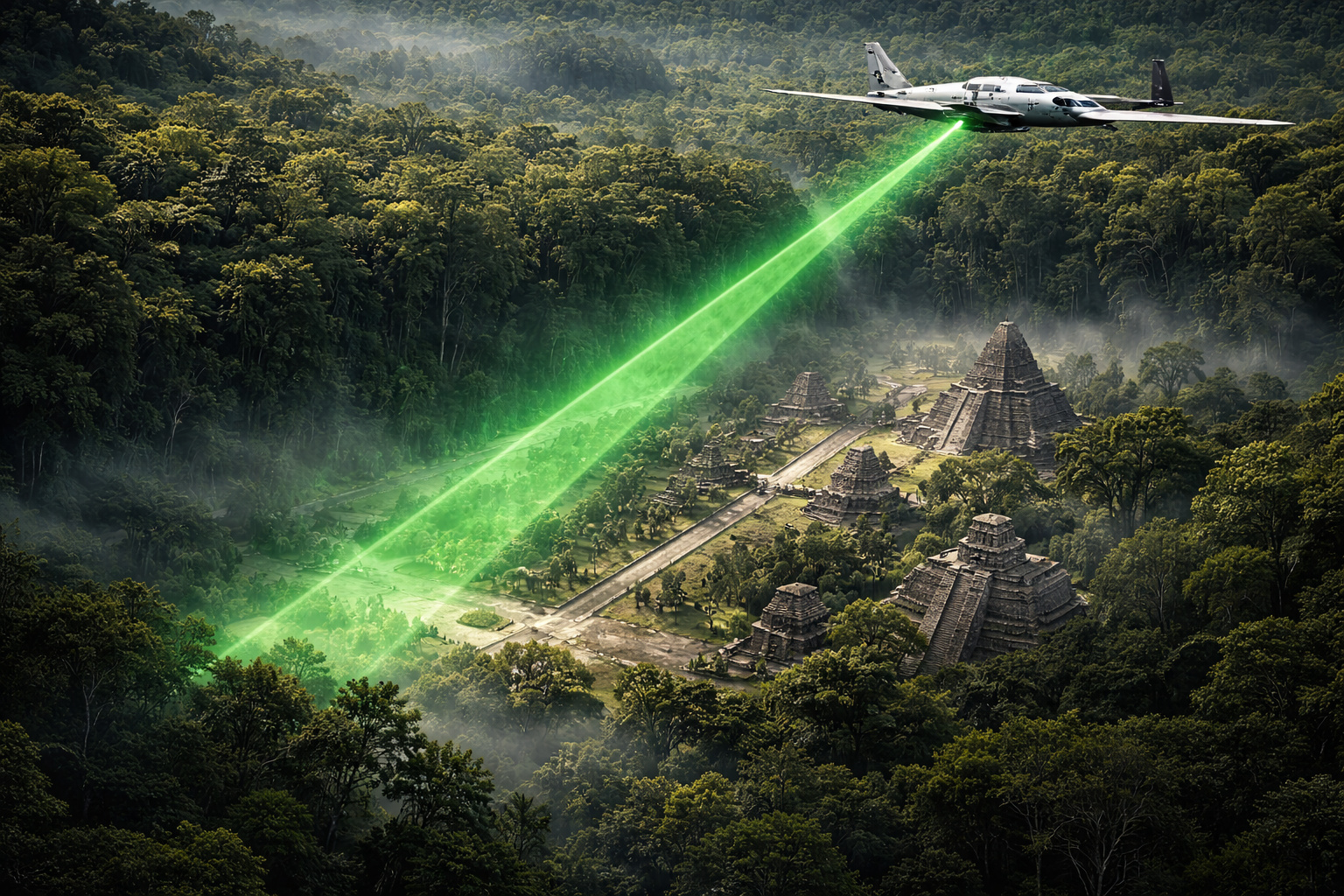
In 2016, a plane equipped with billions of laser pulses scanned 2,100 km² of jungle in Guatemala and revealed, beneath the tree canopies, a Maya megacity with 61,480 unknown structures, elevated roads spanning dozens of kilometers, industrial-scale irrigation systems, and a population of up to 15 million, three times more than any previous estimate.

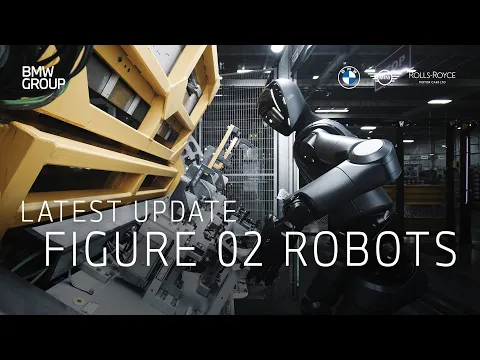

The Apollo, standing 1.75 meters tall and weighing 38 kilograms, was designed to move with fluidity and balance, capable of lifting loads, transporting parts, and operating basic tools.
Its structure combines aluminum alloys and lightweight polymers, while force sensors and 3D cameras allow it to detect and react to human movements around it, ensuring safety and efficiency in a dynamic environment.
“Apollo is the first truly functional humanoid robot within an automotive production line,” said Brett Adcock, founder of Figure AI, in an interview with CNBC.
Who Created Apollo: Figure AI’s Billion-Dollar Bet
Figure AI, based in California, was founded in 2022 with an ambitious goal: to create generalist humanoid robots capable of working like humans in any sector of the economy.
In less than two years, the company has raised over US$ 675 million in investments, with support from giants such as Microsoft, NVIDIA, OpenAI, and Bezos Expeditions (Jeff Bezos’s fund).
The Apollo is its first functional model equipped with generative artificial intelligence, compact electric motors, and high-precision LIDAR sensors. According to the company, the robot can learn new tasks by observing videos and human interactions, which sets it apart from conventional industrial systems.
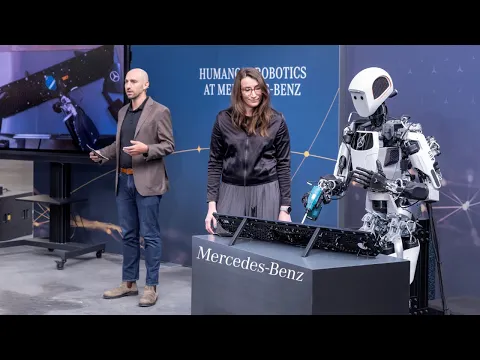
In practice, this means that instead of relying on fixed code, the Apollo learns like a human, absorbing movement patterns and operational logic.
Continuous Work and Human Adaptation
At the BMW factory, the robot works in shifts of up to 10 hours a day, assisting with the transportation of materials and assembly of lightweight components.
According to the report released by the company, the Apollo performs repetitive and physically demanding tasks, allowing human employees to focus on control and technical supervision activities.
The performance has caught the attention of BMW’s engineering team, which reported a 40% reduction in micro-stops in production and increased efficiency in logistics sectors.
Human operators underwent training to work alongside the robot, and the adaptation was described as “natural and cooperative.”
“Apollo does not replace people; it enhances the potential of the team,” declared Ilka Horstmeier, BMW’s global production director.
10 Hours of Work Per Day: Unprecedented Endurance and Autonomy
Unlike fixed industrial robots, the Apollo has rechargeable lithium-ion batteries and an energy self-management system. With a single charge, it can operate for over 10 continuous hours, performing hundreds of task cycles before entering automatic recharge mode.
BMW confirmed that the robot has undergone 1,500 hours of uninterrupted operation since the start of testing, without presenting critical failures.
The AI system constantly adjusts speed, gripping force, and movement route, optimizing each task based on collected data.
These metrics place Apollo among the most advanced robots in actual use in the automotive sector — even surpassing the endurance of models from Boston Dynamics and Tesla Robotics, which are still in laboratory phase.
The Impact on the Future of Work
The introduction of Apollo has sparked intense debates about the role of robots in the global economy.
For some experts, this represents an inevitable revolution that will reduce physical risks and increase productivity.
For others, the advancement signals deep changes in human employment, requiring retraining policies and adaptation of the workforce.
According to the World Economic Forum (2024), it is estimated that 85 million traditional jobs will be replaced by automation by 2030, but another 97 million new jobs are expected to arise in parallel, focused on supervision, programming, and maintenance of autonomous systems.
BMW claims that the project in Spartanburg does not foresee layoffs, but retraining employees for technical and digital monitoring activities.
The Expansion of the BMW-Figure AI Partnership
The success of the pilot led BMW and Figure AI to announce an expansion of the partnership to other factories, including units in Germany and Mexico, scheduled to receive new robots starting in 2025.
The startup, in turn, is already working on a second generation of Apollo, with a lighter design, improved joints, and expanded cognitive capabilities.
Figure AI’s stated goal is to deploy over 100,000 humanoid robots by 2030, operating not only in factories but also in hospitals, warehouses, and domestic environments.
The Fine Line Between Man and Machine
As Apollo quietly carries out its tasks among engineers and operators, the world watches the beginning of an unprecedented transformation.
What started as an isolated experiment is already considered a historical milestone in the automotive industry, a turning point between the mechanical automation of the 20th century and the adaptive robotic intelligence of the 21st century.
BMW summarizes this transition with a symbolic phrase in its official statement:
“It’s not about replacing people with machines, but about redefining what people can do when they no longer need to repeat the impossible.”
The Apollo is not just a robot; it is the symbol of the new industrial revolution. With 10 hours of daily work, five months of continuous operation, and unprecedented performance, it has transformed BMW’s factory into a laboratory of the future.







Seja o primeiro a reagir!