





 Portuguese
  English
  Spanish
  5 min of reading
  3 comments


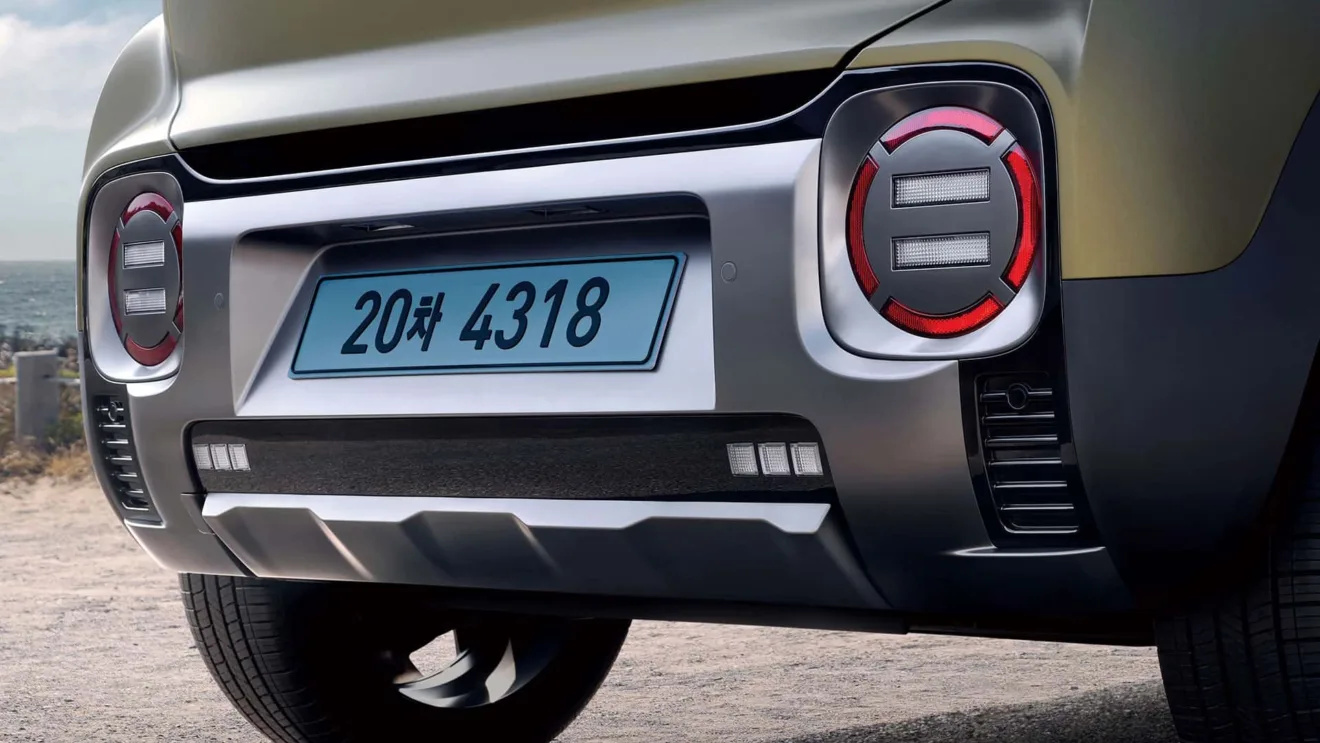


Meet the Hyundai Casper 2025, the South Korean compact SUV with a 1.0 turbo engine and modern design. Ideal as an urban car from Korea, it stands out for its low SUV price and technology that Brazil does not yet have.
The Hyundai Casper 2025, already available in South Korea, is a compact SUV designed for urban use, featuring modern design, embedded technology, and competitive pricing. With a 1.0 turbo engine, digital dashboard, and reduced dimensions, the model is noted for its practicality. The starting price is equivalent to R$ 45,000 in South Korea, making it extremely attractive for markets like Brazil, where an affordable and technological option is lacking in the mini-SUV segment.
What Is the Hyundai Casper?
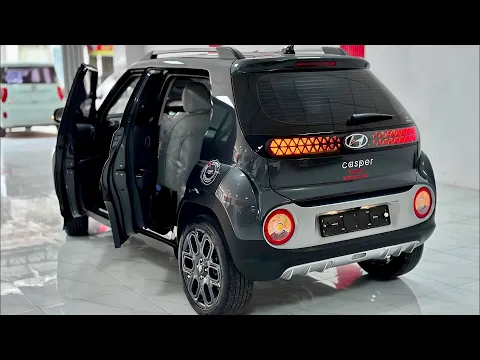

Launched originally in 2021, the Hyundai Casper is the smallest SUV from the South Korean brand, designed to cater to the “light car” segment in that country.
Developed for agile and stylish city driving, the Casper gained electric versions in 2024, including the “Electric Cross” model with an adventurous look.
-
Costing R$ 16,000, the new Yamaha features a 125 cc hybrid engine with electric assistance, delivers 8.3 hp, includes ABS, optimized fuel consumption, Y-Connect connectivity, 25 liters of storage space, and a surprising 4-year warranty in the urban segment.
-
OMODA & JAECOO grows in Europe in 2026 with an integrated strategy of sales, innovation, local production, and technological advancement in the United Kingdom, Italy, and Spain.

-
OMODA & JAECOO expands after-sales service in Brazil with competitive maintenance, a 7-year warranty, and high availability of parts for technological SUVs.
-
OMODA & JAECOO appoints Alessandra Souza as executive marketing director in Brazil and accelerates brand expansion with a focus on innovation, networking, and hybrid portfolio.


With three main versions (naturally aspirated, turbo, and electric), the car focuses on young, urban, and connected audiences who want an SUV-style vehicle but with the convenience of a hatchback.
Compact SUV Catches the Eye of the Brazilian Market
The Casper has attributes that align well with the demands of Brazilian consumers. Its compact size is ideal for heavy traffic and tight parking, common in large cities. The modern design, featuring large wheels, LED headlights, and a high roof, gives it the visual presence of an SUV despite its reduced dimensions.
- Robust and modern design
- Technological interior with a digital dashboard
- Crossover proposal with 1.0 turbo engine
- Excellent cost-benefit ratio with low SUV price
1.0 Turbo Engine and Urban Performance
The option with 1.0 turbo engine delivers 100 horsepower and 17 kgfm of torque, enough for smart performance in the city. The four-speed automatic transmission focuses on comfort and fuel economy. There is also a naturally aspirated option with 76 hp, aimed at low consumption.
This combination makes the Casper ideal for those seeking urban mobility with style and economy, without sacrificing some agility in daily traffic.
Digital Dashboard and Connectivity
Even in the most basic versions, the model features a fully digital 10.25-inch instrument panel and multimedia center with connectivity for Android Auto and Apple CarPlay. The internal layout is minimalist but functional, prioritizing ergonomics.
In the more complete versions, the ADAS (driving assistance) system is present, with autonomous braking alert, lane keeping assist, and adaptive cruise control.
Modern Design in a Compact SUV
The design of the Hyundai Casper is one of its main attractions. It mixes rounded elements with futuristic touches, combining robustness and friendliness. The LED taillights and headlights, the dark-finished front grille, and the roof rack give it a sophisticated look.
Despite its reduced size, it conveys the image of a robust and adventurous SUV. It is a bold proposal with its own identity that breaks away from the conventional.
Ideal Size for the Urban Car from Korea
Measuring 3.59 meters in length and with a wheelbase of 2.40 meters, the Casper is compact on the outside but surprisingly spacious on the inside. The higher suspension and good approach and departure angles allow it to handle potholes and ditches more easily than a traditional hatchback.

The trunk capacity is around 301 liters, similar to that of a Chevrolet Onix. The interior space is sufficient for four adults to travel comfortably on urban routes.
Technical Specifications of the Hyundai Casper 2025
| Characteristic | Details |
| Length | 3,595 mm |
| Width | 1,595 mm |
| Height | 1,575 mm |
| Wheelbase | 2,400 mm |
| Weight | Approximately 985 kg |
| Trunk | 301 liters |
| Engine | 1.0 aspirated (76 hp) / 1.0 turbo (100 hp) |
| Torque (1.0 turbo) | 17 kgfm |
| Transmission | 4-speed automatic (1.0 turbo) |
| Average consumption (estimated) | 11.9 km/l (urban) |
| Price in South Korea | Starting from 31,900,000 wons (~R$ 126,000) |
Comparison with the Brazilian Market
The national compact SUV market is dominated by models like Renault Kwid Outsider, Fiat Pulse, and Hyundai HB20X. All are larger and more expensive.
The Casper positions itself below them, offering a more accessible package, ideal for those looking for a second car, a city model, or entering the SUV universe.
It’s not just a matter of price, but of proposal: the Casper offers design, connectivity, and efficiency with dimensions optimized for urban use.
In South Korea, the model starts at 31.9 million wons, a price that directly converted represents about R$ 126,000. This level would make it competitive even with some entry-level hatchbacks, delivering the image and benefits of an SUV in an economical package. The low SUV price is a powerful differential in a market where values are constantly rising.
Available Versions and Future Expectations
- Combustion Version: is the simplest and most accessible, with naturally aspirated and turbo options.
- Electric Version (Inster): delivers 115 hp, 311 km of range, and fast charging.
- Electric Cross: adds adventurous style, with aesthetic details and larger wheels.
Hyundai is starting the commercialization of the electric model in Europe, which may pave the way for future expansion to Latin America. Producing it in regions like Mexico or Brazil could make its entry competitive.
Opportunity for the Brazilian Market
The Hyundai Casper represents a concept that is missing in Brazil: an urban car from Korea with an SUV look, equipped with current technology and a 1.0 turbo engine that balances performance and economy. Its low SUV price, combined with an efficient and modern set, positions it as an excellent option for urban consumers.
If Hyundai brings the model to the country, it will have a product with high sales potential among young people, first-time drivers, and families seeking practicality without sacrificing style. The Casper could indeed be the mini-SUV that is missing on Brazilian streets.








**** de doer
No Brasil se vier vai custar 100k
Carro **** da moléstia