





 English
  Francês
  Alemão
  Italiano
  Japonês
  Norueguês
  Portuguese
  Spanish
 5 min of reading
  0 comments



Ibama Authorizes Petrobras in the Amazon River Mouth, and Oil Exploration on the Equatorial Margin Reignites Debates on Economy and Sustainability.
On September 24, 2025, the Brazilian Institute of Environment and Renewable Natural Resources (Ibama) approved the final phase of the environmental licensing that authorizes Petrobras to begin oil exploration in the Amazon River Mouth region, located in the strategic Equatorial Margin.
The decision marks a milestone for the Brazilian energy sector and reignites debates over economic development and environmental preservation. The issuance of the environmental license is considered historic and could pave the way for operations in one of the most promising areas of the Brazilian coast.
Final Phase of Environmental Licensing Approved by Ibama
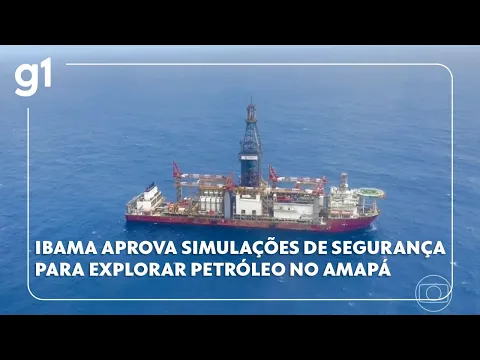
The last phase of the process was the Pre-Operational Assessment (POA). This is a technical simulation that tests Petrobras’s emergency plans and wildlife protection in case of accidents during deep-water drilling.
-
Brazilian giant expands borders in the Southeast: Petrobras confirms new oil discovery in ultra-deep waters in the pre-salt of the Campos Basin.

-
Alert in the global energy market: Severe tropical cyclone hits the coast and disrupts gas production at major plants in Australia, threatening global supply.

-
Petrobras finds high-quality oil in the pre-salt at 113 km from RJ and reignites expectations about strategic reserves in the Campos Basin.

-
Ocyan opens registrations for startups focused on innovation in the oil and gas sector and will select projects for Innovation Day with the support of Nexio.


The technical report from Ibama highlighted the robustness of the structure presented by the state-owned company, even in the face of logistical and environmental challenges. Despite internal disagreements, the leadership of the environmental agency accepted the technicians’ recommendation and approved the POA, requesting future adjustments to the Wildlife Protection Plan (PPAF).
“The Pre-Operational Assessment of Block FZA-M-59 is considered approved,” stated the official report from Ibama.
Amazon River Mouth: New Frontier of Oil Exploration
The Amazon River Mouth, located on the coast of Amapá, is part of the Equatorial Margin — a strip that extends from Rio Grande do Norte to Amapá. This region is considered the new frontier of oil exploration in Brazil.
Studies by the National Agency of Petroleum (ANP) indicate that the Equatorial Margin could contain up to 14 billion barrels of oil. The area has sedimentary characteristics favorable for hydrocarbon formation, which attracts the interest of major companies in the sector.
The Equatorial Margin is seen as a strategic opportunity to diversify national production and reduce dependence on mature fields, such as those in the Campos Basin.
Petrobras and the Logistical Challenges in the Equatorial Margin
With Ibama’s approval, Petrobras will soon receive authorization for drilling in Block FZA-M-59, located about 175 km from the coast of Amapá. The operation will take place offshore, using drillships and advanced technologies to minimize environmental impacts.
The state-owned company has already invested millions in environmental and logistical studies to enable the project. Among the main challenges are:
- The logistical complexity of the region, with limited access and poor infrastructure.
- The need for constant monitoring of marine wildlife, especially threatened species.
- The requirement for robust and effective emergency plans.
However, before this happens, Petrobras will have to revise and resubmit the Wildlife Protection Plan, as requested by Ibama, by a certain deadline.
Reactions to the Approval of the Environmental License by IBAMA
Ibama’s decision generated diverse reactions among environmentalists, local authorities, and representatives of the energy sector. Non-governmental organizations warn of the risks of irreversible impacts on sensitive ecosystems, such as coral reefs and mangroves in the Amazon region.
On the other hand, political leaders and representatives of the productive sector argue that the exploration of oil could bring economic development, job creation, and tax revenue for Northern states. Senate President Davi Alcolumbre celebrated the approval and highlighted Petrobras’s strategic role in the region.
Environmental Licensing: Stages and Requirements
The environmental licensing process for offshore drilling activities is rigorous and involves several stages:
- Environmental Impact Study (EIA) and Environmental Impact Report (RIMA).
- Public hearings with local communities.
- Preliminary License (LP), which assesses the project’s feasibility.
- Installation License (LI), which authorizes the installation of infrastructure.
- Pre-Operational Assessment (POA), which tests emergency plans.
- Operation License (LO), which allows the actual start of activities.
In the case of Petrobras, nearly all of these stages have been completed, notably the POA, which involved complex simulations and detailed technical analyses. Ibama requested that new simulations be conducted during the reservoir phase of the well, focusing on monitoring and rescuing wildlife. The approval of the POA represents the last step before drilling, consolidating the project’s advancement in the Equatorial Margin.
Economic Potential of Oil Exploration in the Amazon River Mouth
Petrobras’s entry into the Amazon River Mouth occurs at a time of global energy transition, with increasing demand for renewable sources and pressure for decarbonization. However, oil still accounts for about 30% of the world’s energy matrix, according to the International Energy Agency (IEA).
Brazil, as a relevant producer, seeks to balance its position between exploring new reserves and its commitment to climate goals. The Equatorial Margin could become a strategic asset for the country, expanding its export capacity and strengthening its presence in the international market.
Exploration in the Equatorial Margin could reposition Brazil as an energy protagonist in Latin America.
Environmental Impacts and Mitigation Measures
The proximity of the Amazon River Mouth to sensitive ecosystems requires heightened attention. Block FZA-M-59 is located more than 160 km offshore and over 500 km from the mouth of the Amazon River, in deep water. Nevertheless, experts warn of possible indirect impacts on coastal areas and marine biodiversity.
Ibama required Petrobras to incorporate continuous improvements in its emergency response plans, including the use of specialized vessels, satellite monitoring, and trained teams for wildlife rescue.
The state-owned company mobilized more than 400 professionals for the POA simulation. Environmental protection will be one of the pillars of the operation in the Amazon River Mouth, with strict monitoring and transparency requirements.

What’s at Stake for Brazil with IBAMA’s Approval?
The approval of the environmental license for Petrobras to explore oil in the Amazon River Mouth represents more than a technical advancement. It is a strategic decision that could redefine Brazil’s role in the global energy landscape.
The Equatorial Margin encompasses promising geological characteristics but also complex environmental and social challenges. The exploration of oil in this region demands responsibility, innovation, and constant dialogue with society.
Petrobras will have to demonstrate that it is possible to reconcile economic development with environmental preservation in one of the most sensitive areas of the Brazilian coast.








Seja o primeiro a reagir!