





 Portuguese
  English
  Spanish
  3 min of reading
  4 comments


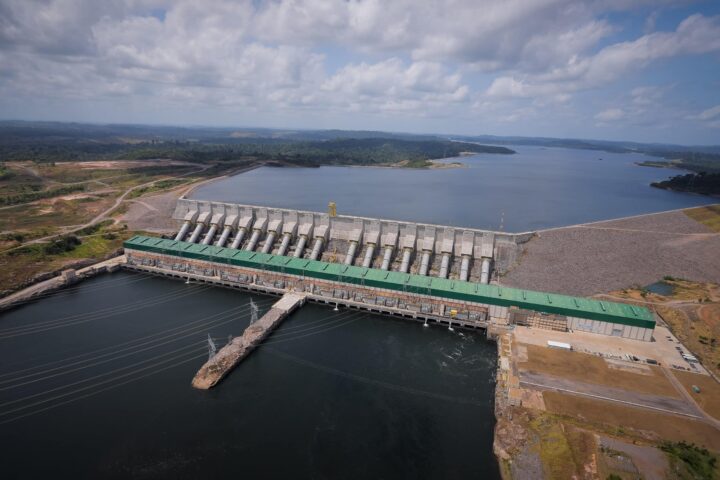


The Decision of Ibama to Reduce the Flow of the Belo Monte Hydropower Plant, Its Impacts on Electricity Generation, and the Expected Increase in the Electricity Bill for Consumers of up to R$2.4 Billion, According to Aneel.
The decision to reduce the flow of the Belo Monte Hydropower Plant may directly impact electricity generation in the country.
Therefore, with estimated additional costs of up to R$2.4 billion, consumers will feel this impact on their electricity bills.
Furthermore, the measure raises debates about sustainability, dependency on thermoelectrics, and energy security, making the situation even more complex.
-
Larger than entire cities in Brazil: BYD is building a 4.6 km² complex in Bahia with a capacity for 600,000 vehicles per year, but the discovery of 163 workers in conditions analogous to slavery has shaken the entire project.

-
With an investment of R$ 612 million, a capacity to process 1.2 million liters of milk per day, Piracanjuba inaugurates a mega cheese factory that increases national production, reduces dependence on imports, and repositions Brazil on the global dairy map.

-
Brazilian city gains industrial hub for 85 companies that is equivalent to 55 football fields.

-
Peugeot and Citroën factory in Argentina cuts production by half and opens a layoff program for more than 2,000 employees after Brazil drastically reduced purchases of Argentine vehicles.


Costs of Flow Reduction and Its Reflections on the Electricity Bill
Belo Monte: Flow Reduction May Increase Electricity Bill by R$2.4 Billion
The Brazilian Institute of Environment and Renewable Natural Resources (Ibama) has decided to reduce the flow of the Belo Monte Hydropower Plant.
This measure significantly impacts electricity in Brazil.
Additionally, the National Electric Energy Agency (Aneel) estimates that this decision could lead to a cost increase of between R$1.2 billion and R$2.4 billion for consumers.
Ibama’s Decision and Its Impact on Electricity Generation
Ibama determined the reduction of the flow of Belo Monte to preserve the environment, especially during the reproductive season, when fish reproduce.
This change limits the production of clean energy from the hydropower plant and, moreover, forces the activation of thermoelectrics, which have a much higher operational cost.
As a result, electric tariff prices may suffer significant adjustments, becoming a concerning factor for consumers.
How Does Aneel Evaluate the Situation?
For Aneel, communicating this decision to the power plant’s concessionaire may affect the predictability of the energy sector.
Thus, according to the general director of Aneel, Sandoval Feitosa, this measure directly impacts the cost of electricity in Brazil, harming consumers and compromising energy security.
Increase in the Electricity Bill and Consequences
The costs will be passed on to the electricity bill of Brazilians.
Therefore, the increase in tariffs is likely to be significant.
Moreover, the use of thermoelectrics in Brazil represents an expensive and less sustainable alternative, which raises an alert about the energy crisis in Brazil.
Consequently, this scenario demands a careful analysis and effective measures to avoid greater negative impacts.
What Is the Future of Sustainable Energy?
While environmental protection is essential, experts highlight that, in addition, it is necessary to balance the demands for clean energy with environmental preservation.
In this way, the Ministry of Mines and Energy, represented by Alexandre Silveira, reinforces that Belo Monte plays an essential role in national energy security.
However, it advocates for a detailed technical assessment to minimize economic impacts on consumers.
With the increased dependence on thermal sources, concerns about a potential blackout in Brazil in 2025 are rising.
Thus, the search for sustainable and efficient solutions will be fundamental to avoid new increases in the cost of electricity.
Furthermore, ensuring a reliable supply for the population becomes an absolute priority.








Interessante que sai um presidente entra outro com promessas só para ganhar votos, e, nada muda para o povo brasileiro. Lamentável.
NB: Saem “ricos”, altos salários vitalícios e nos pagamos a conta!
Vergonha…
Triste uma matéria dessas, com dados repetitivos e ao final não diz qual a justificativa do IBAMA para tal medida.
Se está sobrando energia eólica e solar, tanto que está sobrecarregando as redes de transmissão. Porque ligar as termoelétricas?