





 Portuguese
  English
  Spanish
  4 min of reading
  0 comments


With a Focus on Quantum Technology and Local Manufacturing, the Company Reinforces Its Commitment to Economic Development in the United States
IBM revealed that it will invest US$ 150 billion in the United States over the next five years, focusing on expanding its facilities for the production of quantum computers. This decision aligns with the initiative of the Trump administration, which seeks to encourage local manufacturing and strengthen American supply chains.
This announcement, made on Monday, 28, follows the investment commitments of other tech giants like Nvidia and Apple, which plan to spend around US$ 500 billion each in the U.S. over the next four years. The increase in investments by these companies is seen as a response to the import tariffs imposed by the government, which may negatively impact technology industry costs and operations.
The Importance of Quantum Computing
IBM’s investment in quantum computing reflects the growing importance of this technology in the global tech landscape.
-
Larger than entire cities in Brazil: BYD is building a 4.6 km² complex in Bahia with a capacity for 600,000 vehicles per year, but the discovery of 163 workers in conditions analogous to slavery has shaken the entire project.

-
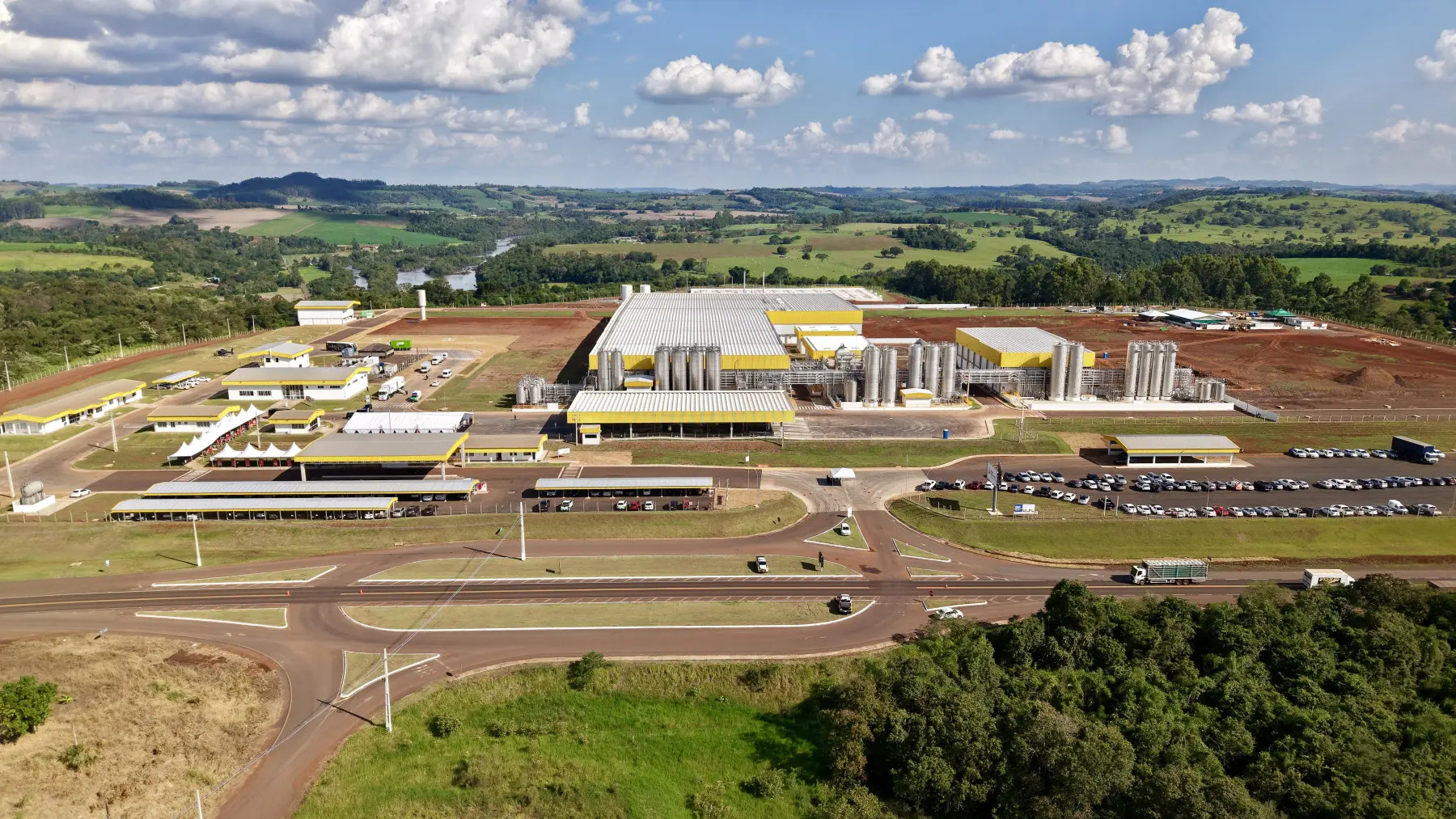
With an investment of R$ 612 million, a capacity to process 1.2 million liters of milk per day, Piracanjuba inaugurates a mega cheese factory that increases national production, reduces dependence on imports, and repositions Brazil on the global dairy map.
-
Brazilian city gains industrial hub for 85 companies that is equivalent to 55 football fields.

-
Peugeot and Citroën factory in Argentina cuts production by half and opens a layoff program for more than 2,000 employees after Brazil drastically reduced purchases of Argentine vehicles.


Quantum computers have the potential to perform complex calculations in seconds, something that would take years for traditional computers.
This capability can revolutionize sectors like pharmaceuticals, finance, logistics, and artificial intelligence, providing faster and more efficient solutions to complex problems.
More than US$ 30 billion of IBM’s total investment will be directed toward expanding the manufacturing of quantum computers and mainframes in the United States.
These systems are essential for handling large volumes of data and meeting critical application needs.
IBM already operates one of the largest quantum computing networks in the world, a technology that promises significantly higher performance than traditional computers.
Recent Advances and Competition in the Sector
Recently, IBM has made significant progress in quantum computing.
In 2021, the company announced the Eagle, a quantum processor with 127 qubits, marking an important milestone in quantum hardware development.
Additionally, IBM launched the IBM Quantum Experience platform, allowing researchers and developers to experiment with and develop quantum algorithms on its quantum computer network.
The recent wave of advances in quantum computing, including the launch of a new generation of chips by Google in December, has increased interest in the sector.
However, experts remain divided on how long it will take for this technology to find practical applications in the real world.
Google plans to launch commercial applications within five years, while Nvidia‘s CEO, Jensen Huang, forecasts a timeline of up to 20 years for the development of practical uses.
Reaction to the Government and Challenges Faced
DA Davidson analyst Gil Luria commented that while IBM continues to invest in quantum technology, the investment announcement might be interpreted as a strategy to please the Trump administration.
Large tech companies are using these promises as a way to protect themselves from potential trade conflicts.
Recently, IBM faced challenges, such as the suspension of 15 of its government contracts due to a cost-cutting initiative from the Trump administration.
This situation had a negative impact on its revenue forecasts for the second quarter, overshadowing the optimistic outlook the company had previously presented.
IBM’s Role in the Technological Development of the U.S.
IBM’s investment in the U.S. reflects a growing trend among tech companies to strengthen their local operations in response to a changing economic landscape.
The expectation is that with increased investment in quantum computing, the country can position itself as a leader in this emerging field, leveraging innovations to drive economic growth and global competitiveness.
In addition to its contributions to research and development in quantum technologies, IBM is also committed to investing in training and capacity-building programs for tech professionals.
The company has collaborated with educational institutions to offer courses and training programs in data science, artificial intelligence, and quantum computing, preparing the next generation of professionals to face future challenges.
Implications for the Future of Technology in the U.S.
As IBM and other tech companies expand their manufacturing and research capabilities in the United States, the country may be preparing for a new chapter in its technological innovation history.
This investment will not only strengthen IBM‘s market position but may also attract more companies to the tech sector, creating new job opportunities and economic growth.
Moreover, the focus on quantum computing and other emerging technologies could enhance the competitiveness of the U.S. in a global landscape, where countries like China and Germany are also investing heavily in research and development.
The ability of the U.S. to lead in this area will depend on its ability to innovate and adapt to new market demands.
Future Challenges and Opportunities
Despite the promises of investment, IBM and other tech companies will face significant challenges, such as increasing competition and the need to meet regulatory standards in the U.S.
Adapting to local preferences, including specific features for use across various industries, will be essential for IBM’s success in its new endeavor.
Additionally, research and development infrastructure in the U.S. needs continuous improvement to ensure that the country remains at the forefront of technological innovations.
Collaboration among the government, companies, and educational institutions will be crucial to create an ecosystem that fosters innovation and growth.
IBM’s investment is a clear signal that the company is committed to shaping the future of technology in the U.S., and its success could have significant repercussions throughout the industry.
By focusing on quantum computing and other innovations, IBM positions itself as a leader in a field that promises to transform how businesses and governments handle data and technological challenges in the years to come.
SOURCE: ISTOÉDINHEIRO









Seja o primeiro a reagir!