





 English
  Francês
  Alemão
  Italiano
  Japonês
  Norueguês
  Portuguese
  Spanish
  7 min of reading
  0 comments


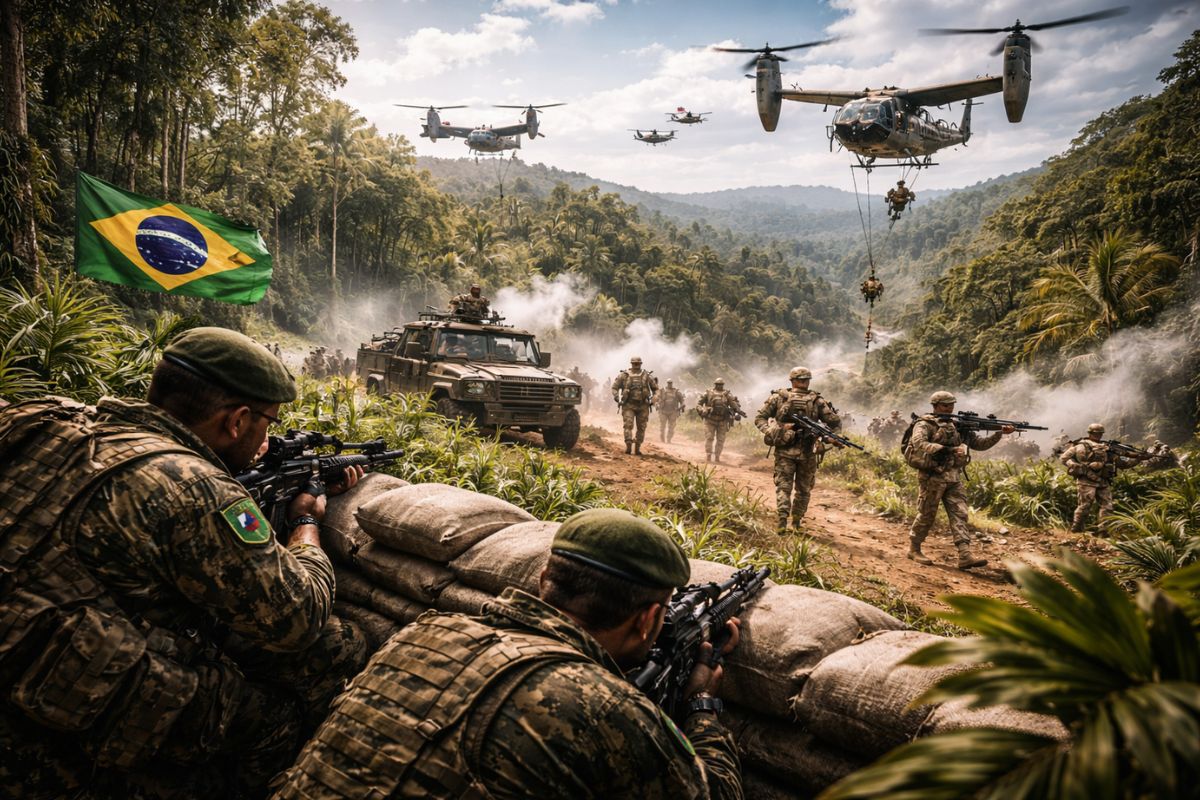
In an extreme and hypothetical war scenario, the biggest problem for the United States would not just be attacking Brazil, but sustaining a long, costly, and chaotic occupation in a continental territory, with forests, dense cities, a large population, and supply lines that are difficult to protect.
The war between the United States and Brazil may sound like a distant hypothesis, but the exercise exposes a central point: military superiority does not automatically resolve what comes after the first attack. On paper, Washington would have overwhelming air, naval, and budgetary advantages, but recent experience shows that winning the initial phase of a war is very different from controlling a large, populous, and geographically hostile country.
In the case of Brazil, the difficulty would cease to be merely military and would also become territorial, logistical, economic, and political. An open war could indeed produce rapid destruction of bases, radars, and ports, but turning that into stable occupation would be another story. It is precisely at this point that Brazil emerges as a much bigger problem than the raw numbers of power suggest.
The war would start with evident military imbalance
The starting point is clear. The United States appears as the world’s greatest military power, with over 1.3 million active soldiers, about 13,000 military aircraft, 11 nuclear aircraft carriers, and a defense budget far superior to Brazil’s.
-
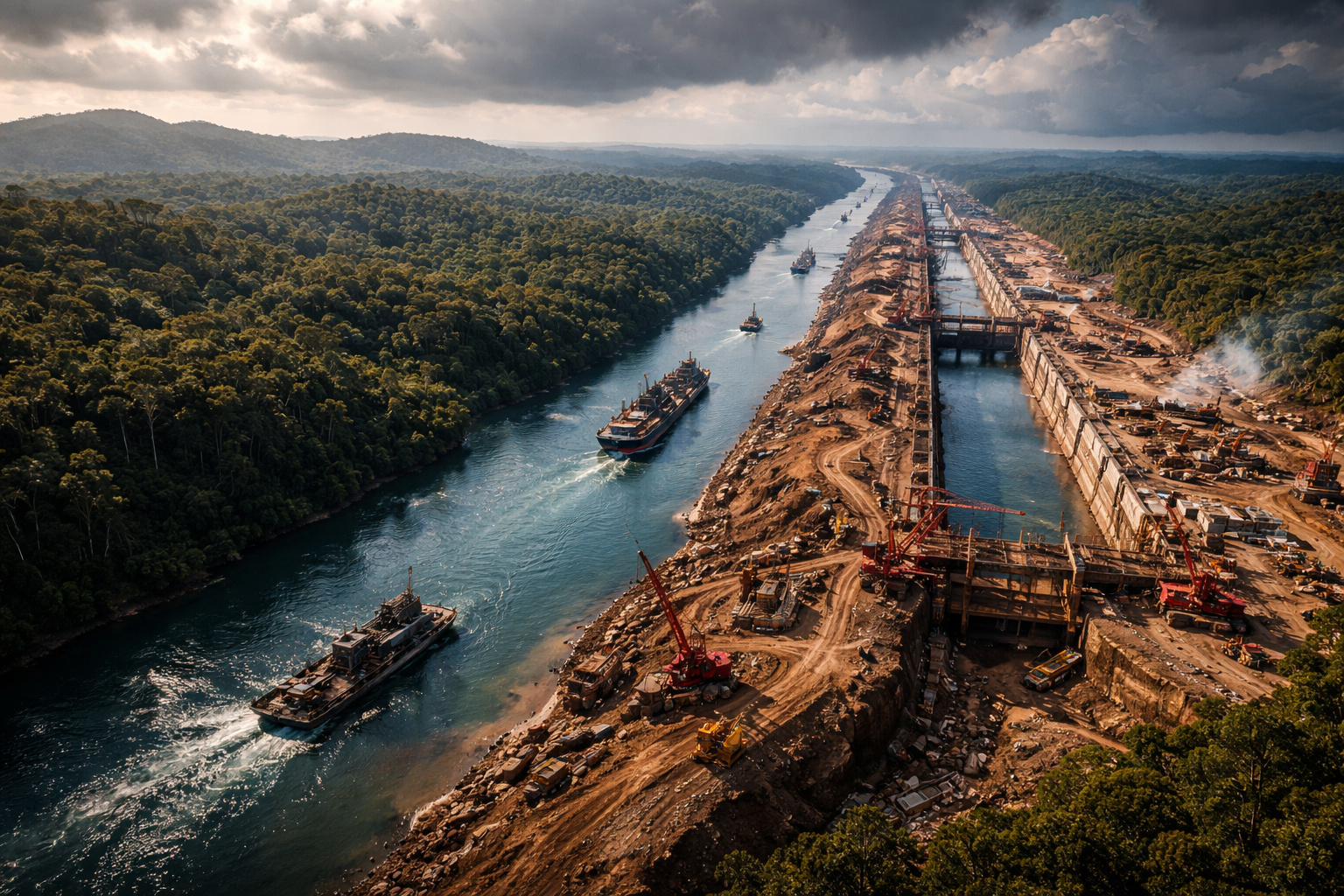
In 2013, Nicaragua sold the concession for a canal to rival Panama to a Chinese billionaire who lost 85% of his fortune, disappeared, and was declared bankrupt. Now the project resurfaces with a new route, a new Chinese partner, and a cost of $64.5 billion.
-
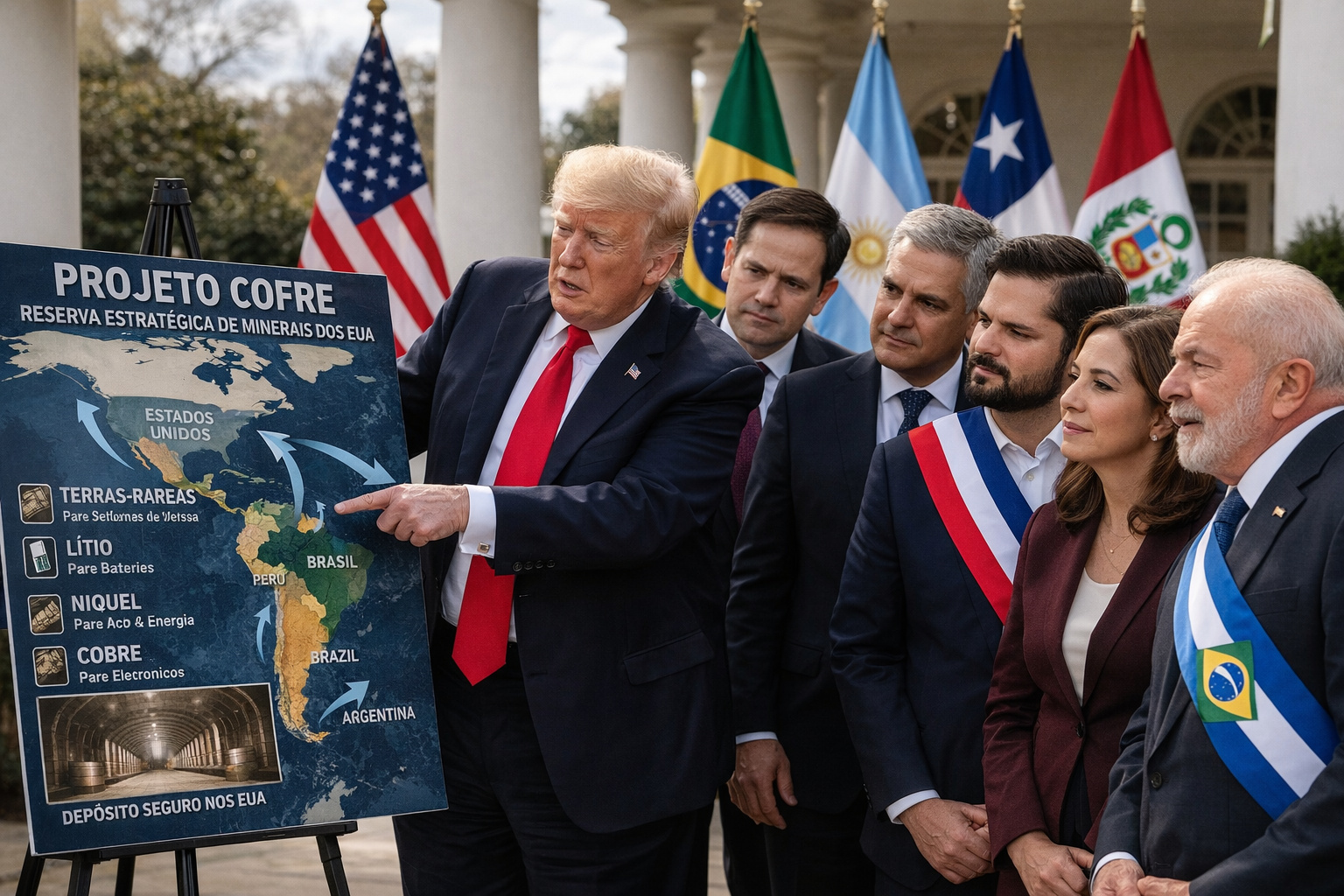
The USA announces a mysterious billion-dollar vault project to store critical minerals, but what intrigues experts is not just the plan itself, but why Latin America, including Brazil, has entered the center of this global dispute against China.
-
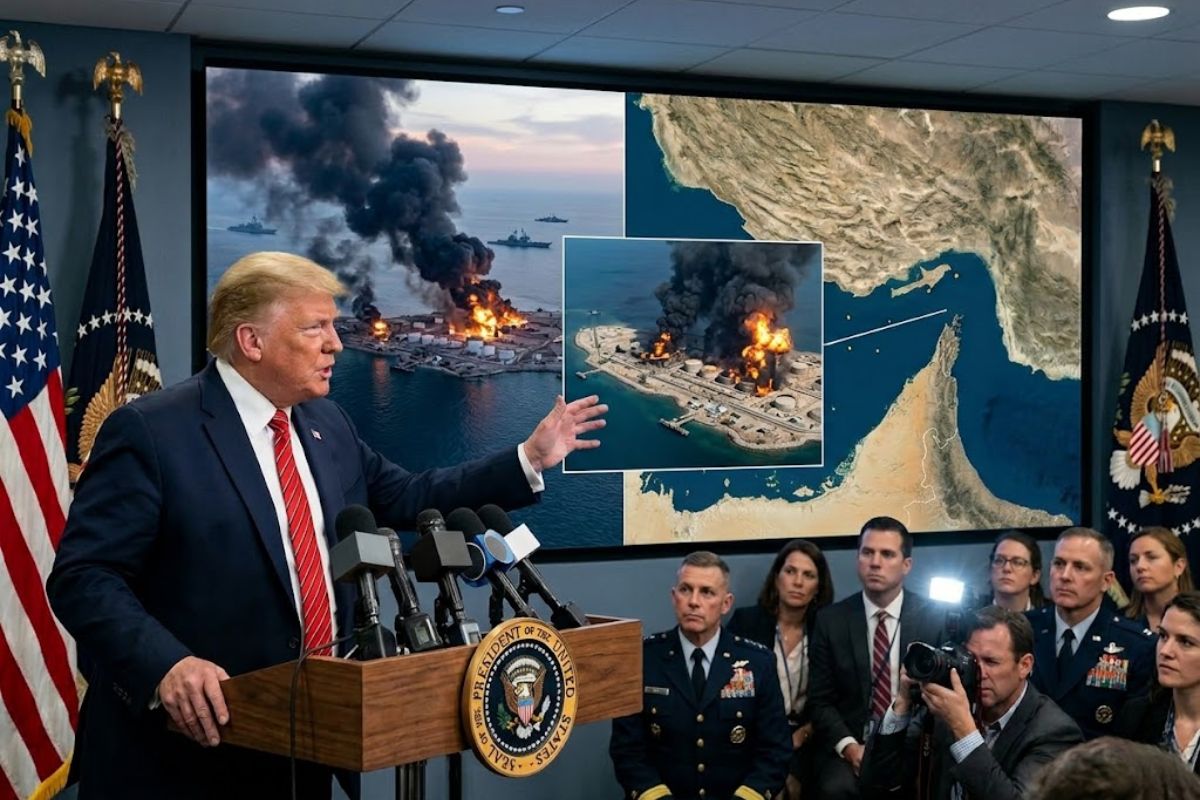
Trump Announces Bombing of U.S. Military Targets on Iranian Island Responsible for About 90% of Iran’s Oil Exports, Warns of Further Attacks if Navigation in Strategic Strait of Hormuz Is Threatened
-
At Less Than 40 Kilometers Wide, Strait of Hormuz Holds 20% of Global Oil and Becomes Epicenter of Global Crisis After Military Operation Against Iran Halts Oil Tankers and Triggers Energy Price Surge

Brazil, on the other hand, has a much smaller force, with over 376,000 active military personnel, more than 1.3 million reservists, nearly 500 aircraft, and a much-reduced budget.
This contrast indicates that, in a conventional war, the initial phase would largely favor Washington. Air bases, communication structures, radars, ports, and defense systems would be natural targets.
American air superiority would be a decisive factor at the beginning of the conflict, especially in bombing operations and neutralizing strategic infrastructure.
The territory would turn the war into another problem
The initial advantage, however, is hindered by the size of the country. Brazil has about 8.5 million square kilometers, a vast coastline, over 15,000 kilometers of land border, and a variety of environments that would complicate any organized advance.
The Amazon, cerrado, Pantanal, mountains, caatinga, and large metropolises would create very different obstacles, all requiring specific solutions.
This is where the war stops being just a matter of weapons and becomes a matter of space. Brazil appears as a country too large to be neutralized solely from the air and too complex to be controlled by conventional lines of occupation.
The very comparison with conflicts like Vietnam, Iraq, and Afghanistan helps reinforce this point, as the biggest problem almost always arises after the initial tactical victory.
Brazilian geography would weigh more than many weapons
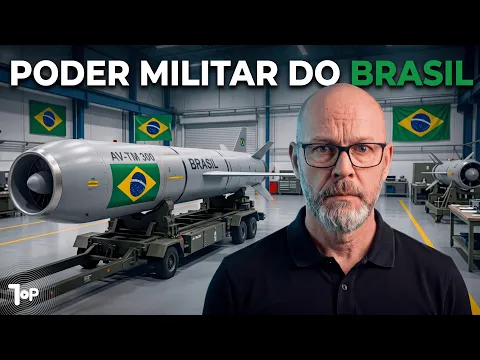

One of the strongest points of this hypothesis is the idea that Brazilian geography would function almost like a weapon. The Amazon appears as an environment of limited visibility, unpredictable rivers, extreme heat, high humidity, and difficulty in monitoring under the dense canopy. In this scenario, drones, cameras, satellites, and advanced equipment would lose some efficiency.
Additionally, the Brazilian Army maintains a recognized jungle training structure and has brigades focused on different environments, such as jungle, Pantanal, caatinga, and mountains.
In a prolonged war, knowing the terrain would weigh as much as having sophisticated equipment. And this type of local advantage is precisely what turns invasions into occupations that are much more costly and slower than planned.
The war in Brazil would require extremely risky landings and advances
An American operation, if attempted, would depend on a complex sequence: initial air destruction, amphibious landing, land advance, and subsequent occupation.
The problem is that each of these stages opens new vulnerabilities. The Brazilian coastline is extensive, the choice of entry point would be delicate, and troop transport ships would be vulnerable during long crossings.
Then would come the advance on land. In a war of this type, roads, bridges, fuel, ammunition, and food become as valuable as fighters and missiles.
The further the troops advanced, the more fragile their supply lines would become. In a continental country, with uneven infrastructure and large distances between strategic centers, logistics would cease to be support and become the center of the problem.
Prolonged resistance would be the biggest nightmare of an occupation
Another decisive factor would be the size of the population. Brazil has over 213 million inhabitants, and the presence of a foreign force tends historically to reduce internal divisions and increase resistance.
The potential weight of large urban centers, the complexity of controlling dense cities, and the possibility of distributed resistance in different regions would further increase the cost of occupation.
This is the part where war stops being a plan and becomes a permanent drain. An occupation would have to deal simultaneously with giant metropolises, dense peripheries, forested areas, traditional communities, long distances, and fragmented state presence.
In other words, there would not be a single front. There would be several, changing shape according to the environment and local reaction.
The cost of war would turn victory into a defeat
Even with a conventional victory, the costs would hardly balance out. As a reference, conflicts like Iraq and Afghanistan consumed enormous sums over the years.
In a much larger and more populous country like Brazil, any attempt at occupation would generate even heavier costs, in addition to human losses that would be politically difficult to sustain.
This point helps explain why Washington’s biggest fear in this hypothetical scenario would not be exactly the phase of the attack. It would be the day after.
It would be the need to maintain troops, protect routes, secure cities, contain resistance, finance continuous military presence, and still absorb the diplomatic and economic impact of a war with the potential to shake global food, energy, and trade chains.
Brazil is of interest for resources, territory, and international weight
Brazil would not be relevant only for its size. The country draws attention due to pre-salt oil, freshwater, biodiversity, strategic minerals, agribusiness, and the so-called Blue Amazon.
This combination enhances the geopolitical value of the territory and helps explain why crises involving Brazil would never be merely regional.
In a war, the problem would not be restricted to the military field. There would be effects on exports, international food prices, supply chains, and the interests of other major trading partners.
This would make any operation in Brazil more diplomatically sensitive and much harder to isolate from the rest of the international system.
The most likely pressure would not be military, but economic
Perhaps the most important conclusion is precisely this: the United States would not need to invade Brazil to pressure it.
The most plausible form of confrontation would be an invisible war, based on sanctions, tariffs, financial isolation, and diplomatic pressures. Instead of tanks and landings, this type of war uses currency, trade, the banking system, and international alliances as instruments of coercion.
This makes sense within the reasoning presented. If conventional war would have enormous costs and unpredictable occupation, economic pressure appears as a more plausible and less risky tool.
It does not produce the same visual effect as a bombing, but it can cause deep, prolonged, and difficult-to-neutralize damage.
The biggest obstacle would not be invading, but sustaining what would come next
In the end, the hardest answer is also the simplest. In theory, the United States could win an initial conventional war against Brazil. But invading does not mean controlling.
And controlling a continental, populous, diverse, and strategically valuable country would require a level of permanence, cost, coordination, and political tolerance that would likely make the operation unsustainable.
Geography complicates, the population resists, and the cost makes it unfeasible. It is this combination that transforms Brazil, in this extreme scenario, into a much bigger problem for any occupying power than the numbers of military power alone suggest.
War could even start with a clear advantage on one side, but the outcome would depend precisely on what recent history shows to be most difficult to dominate: territory, time, and resistance.
What this hypothesis truly reveals
More than imagining an invasion, the hypothesis serves to show something else. The defense of a country in the 21st century does not depend solely on weapons.
It also depends on the economy, infrastructure, trade partners, technological autonomy, and the capacity to withstand pressures that do not always come in the form of open conflict. This may be the great lesson behind the entire discussion about war and sovereignty.
In your opinion, the biggest risk for Brazil in a war scenario would indeed be a military invasion or prolonged economic and diplomatic pressure?








Seja o primeiro a reagir!