





 Portuguese
  English
  Spanish
  5 min of reading
  0 comments


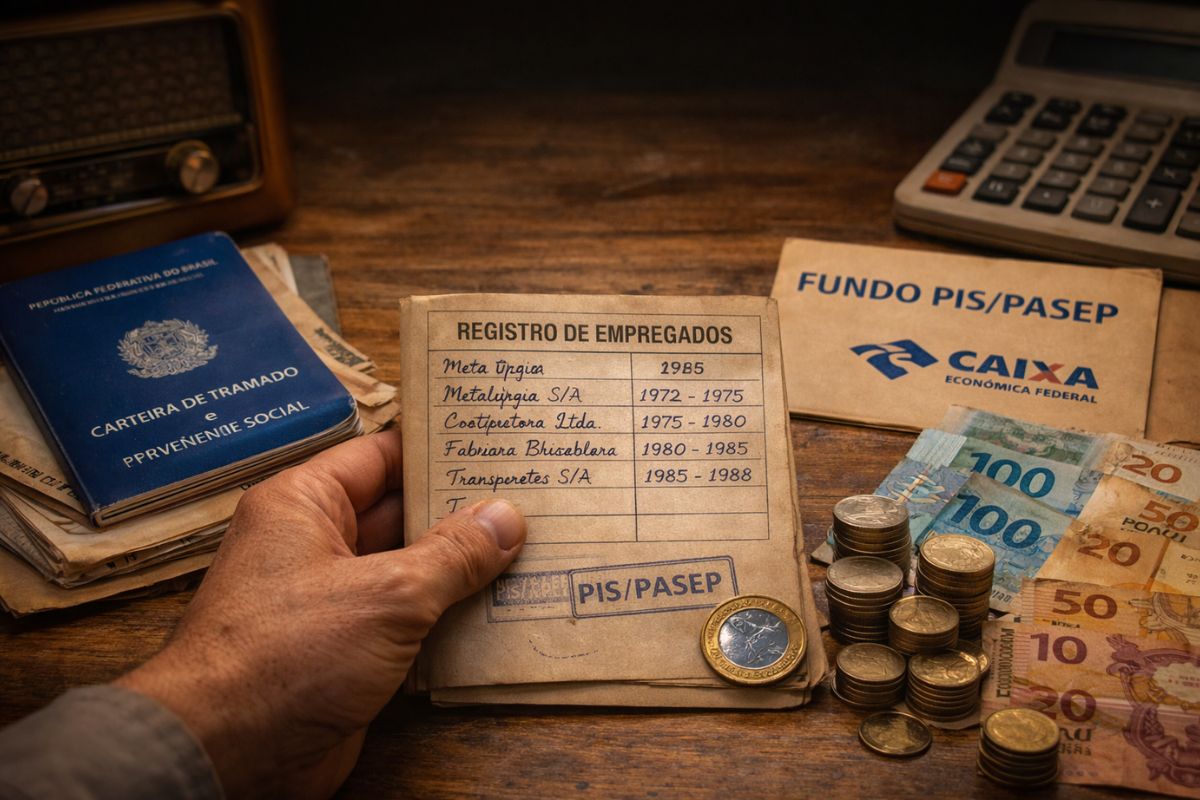
Workers who had a signed work card between 1971 and 1988 may have forgotten money in the PIS/Pasep with free consultation on the Repis Cidadão website, but the deadline to withdraw goes until 2028 before the National Treasury absorbs the values
If you worked with a signed work card between 1971 and 1988, it is worth spending a few minutes on a consultation that may reveal forgotten money in your name. The old PIS/Pasep fund accumulated amounts over nearly two decades for private sector workers and public servants, and many people never withdrew it. The average available balance is around R$ 2,800 per person, according to the federal government, but the amount varies according to the length of employment and the salary at the time.
According to G1, the consultation is free, simple, and can be done online in just a few minutes. A new group of beneficiaries will be able to withdraw starting this Wednesday (25), with initial payments for those who made the request by February 28. Those who do not request reimbursement by September 2028 will lose the right to withdraw: the funds will be incorporated into the National Treasury. For those who had a signed work card during that period, the clock is ticking.
What is the old PIS/Pasep fund and why is there forgotten money
The Social Integration Program (PIS) was created in 1970 to form an individual savings account for workers with signed work cards in the private sector. Soon after, the Program for the Formation of Public Servant Heritage (Pasep) was launched with the same logic for civil and military public servants.
-
50 viaducts, 4 tunnels, 28 bridges, and 40 kilometers of bike paths: BR-262 in Espírito Santo will receive 8.6 billion reais for the largest engineering project in the state’s history, inspired by the Immigrant Highway in São Paulo.

-
Brazil produces too much clean energy and doesn’t know what to do with it: over 20% of solar and wind capacity was wasted in 2025 while investors flee and 509 renewable generation projects were abandoned in the last year.

-
Piauí will produce a new fuel that replaces diesel without needing to change anything in the truck’s engine and reduces pollutant gas emissions by half: truck drivers from all over the Northeast are already celebrating the news that will arrive later this decade.

-
A new Brazilian shopping center worth R$ 400 million will be built in an area equivalent to more than 4 football fields, featuring 90 stores, 5 cinemas, a supermarket, a college, and parking for 1,700 cars, potentially generating 3,000 jobs.

In 1975, the resources from both programs were merged into the PIS/Pasep Fund, which operated until 1988, when it was replaced by the current salary bonus.
The problem is that not everyone withdrew what they were entitled to. In 2020, the quotas of the fund that had not been withdrawn were transferred to the FGTS, and three years later, to a single account of the National Treasury.
Since then, those who worked with a signed work card or were public servants during that period can request reimbursement of the amounts. But many workers do not even know they have money sitting idle, simply because they were never notified or because they lost their connection to the system.
How to check if you have a balance in the PIS/Pasep
The most direct way to find out if there are forgotten amounts is to access the Repis Cidadão website, recently launched by the Ministry of Finance.
The step-by-step is simple: enter the site, log in with your silver or gold gov.br account, provide your NIS (Social Identification Number), and click search. If there is a balance in your name, the site itself will guide you on the next steps to withdraw.
The NIS can be found on your work card, on the FGTS statement, on the Meu INSS website, or in the CadÚnico.
If you prefer, you can also check through the FGTS app. The consultation is free and has no cost, which is worth emphasizing because scammers often use the PIS/Pasep theme to charge undue fees. If someone asks for money to “release” the balance, it is a scam.
How to request reimbursement for forgotten money
After confirming that you have a balance, the worker who had a signed work card between 1971 and 1988 can request reimbursement in two ways: in person at a Caixa Econômica Federal agency or through the FGTS app.
In the app, just log in, access the “more” option, then “PIS/Pasep reimbursement” and follow the instructions to attach the required documents.
If the request is made by the beneficiary themselves, they just need to have an official identity document on hand. For heirs, in the event of the holder’s death, it is necessary to present a PIS/Pasep certificate issued by Social Security with the list of dependents, or a declaration of dependents from the paying agency, or even a court authorization.
The Repis Cidadão website also provides specific guidelines for heirs who need to withdraw amounts from deceased relatives.
When does the money from the PIS/Pasep go into the account
After the request, Caixa analyzes the application and sends the information to the Ministry of Finance. The payment is made directly into the interested party’s bank account at Caixa or through a digital social savings account.
Those who requested by February 28 will start receiving from this Wednesday (25). Those who request by Monday (31) will receive on April 27. There are other payment dates throughout the year, following a calendar defined by the government.
The important thing is not to leave it for later. Those who had a signed work card during that period and are entitled to the PIS/Pasep balance need to make the request before September 2028.
After this deadline, the money will definitely go to the National Treasury, and the worker will lose access to the amounts. There is no second chance after the deadline.
Why so many people have not yet withdrawn the PIS/Pasep
The explanation is a combination of misinformation and bureaucracy. Many workers who had a signed work card between 1971 and 1988 do not even know that the fund existed or that they have available amounts. Others knew but found the process complicated and kept postponing it.
With the creation of Repis Cidadão, the government simplified the consultation and withdrawal request, but the uptake is still far from reaching all beneficiaries.
The average balance of R$ 2,800 may seem small to some, but for millions of retired or elderly workers, it represents a significant amount. It is money that already belongs to the worker and is sitting idle waiting to be claimed. The consultation takes minutes, costs nothing, and can result in a deposit in the account in just a few weeks.
If you worked with a signed work card between 1971 and 1988, the consultation for PIS/Pasep is quick, free, and may reveal money that you didn’t even know existed. The deadline to withdraw goes until September 2028. After that, the National Treasury absorbs the amounts, and the worker loses the right. A few minutes of consultation could be worth R$ 2,800.
Have you checked if you have a balance in the PIS/Pasep? Do you know someone who worked during this period and may have forgotten money? Share in the comments and let those who may be missing this opportunity know.










Seja o primeiro a reagir!