





 English
  Francês
  Alemão
  Italiano
  Japonês
  Norueguês
  Portuguese
  Spanish
  5 min of reading
  25 comments


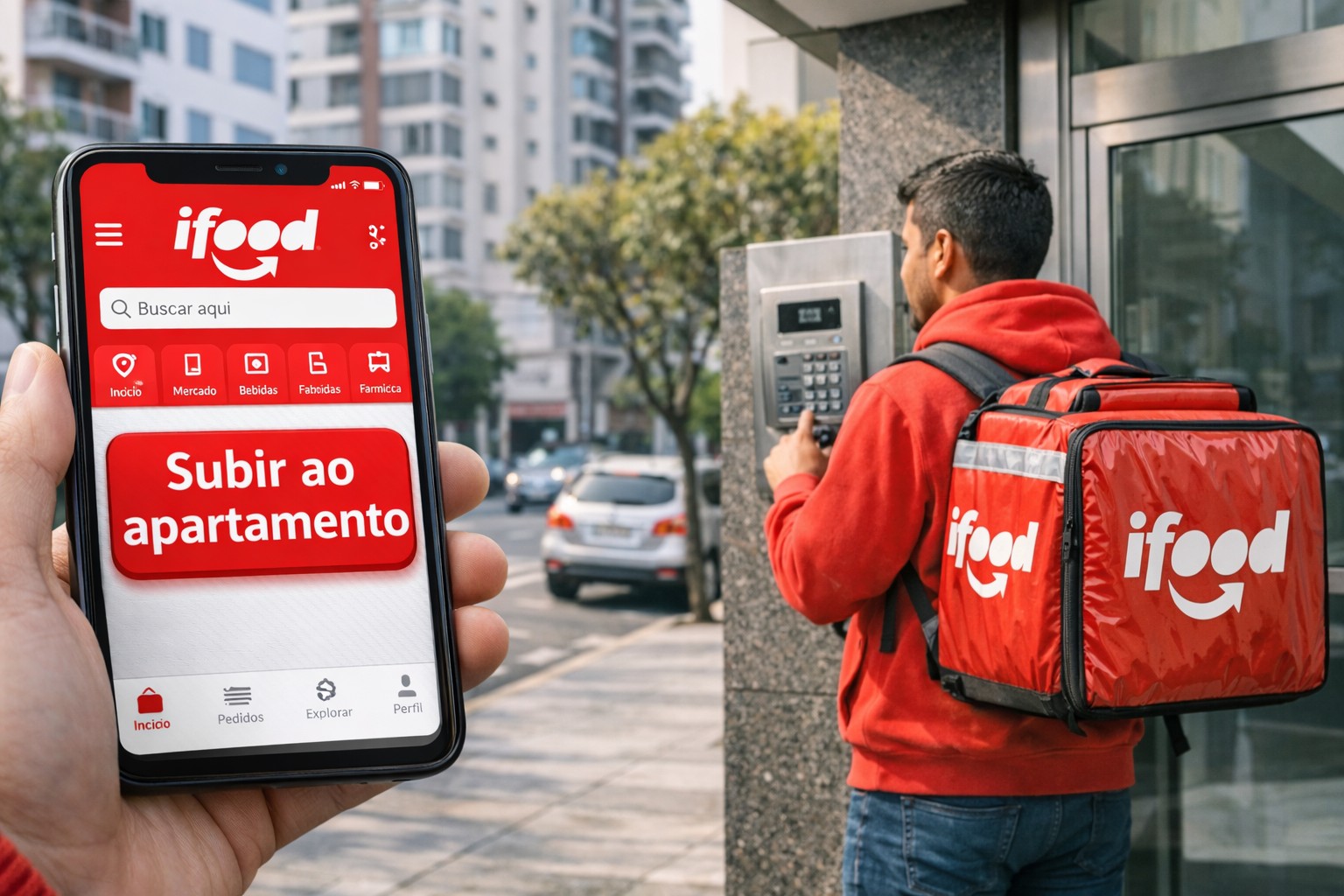


What Changes For Delivery Drivers, For The Delivery Fee, And For Delivery With The Absence Of An Official Option To Go Up To The Apartment On Ifood
The Ifood, the Delivery Drivers, the delivery fee, and delivery are part of the daily routine for millions of Brazilians. Therefore, any adjustment to this system generates significant national debate. Thus, the discussion arose about creating a paid button for the Delivery Driver to go up to the customer’s apartment. The proposal seems simple and fair to many users.
The topic involves safety, logistics, costs, and legal impacts. Therefore, the analysis needs to be careful, as each decision directly affects the operation of delivery.
The Ifood has also launched campaigns asking customers to pick up their orders at the front desk. One example is the #BoraDescer campaign, detailed here: #BoraDescer Campaign.
-
Expansion of Federal Institutes: 38 new campuses and R$ 200 million for public education; see the cities included.

-
Lula’s government changes rule in important benefit and thousands of Brazilians will no longer receive it; see what has changed.

-
New Gripen fighter makes Argentines surrender to Brazil, and the heavy reaction exposes envy, frustration, and shock at Brazil’s technological leap.

-
This discovered deposit near the Andes could change the future of Argentina, attract billions, and even shake up the global metals market.


Thus, the big question remains. After all, why has Ifood still not created this button for “Go Up To The Apartment,” even with so many reports of conflict involving Delivery Drivers? One of these practical examples can be seen in the video below:
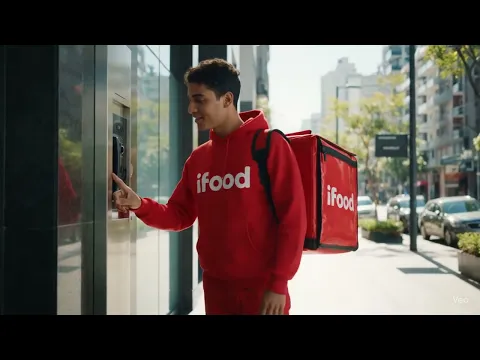

The Controversy Of Delivery Drivers Going Up To Apartments: Safety, Time, And Different Expectations
The delivery market has grown significantly in Brazil in recent years. With this advance, Ifood has established itself as the leading platform in the sector.
This growth has also brought new conflicts between customers and Delivery Drivers, especially within residential condominiums. Many consumers expect the delivery directly at the apartment door.
Many buildings have strict rules regarding the access of delivery drivers. Thus, the Delivery Driver needs to wait for authorization and registration to complete the delivery, which consumes valuable time.
Crowded elevators and long hallways further increase the internal travel time. Even so, the delivery fee often remains the same.
There is also the issue of safety. The delivery person moves alone in internal areas and may face unexpected situations, ranging from accidents to conflicts with residents.
As a result, many Delivery Drivers prefer to deliver only at the front desk. Some customers interpret this practice as a refusal of service, which fuels the daily controversy.
Thus, the creation of a paid button on Ifood seems, for some, like a balanced solution. Practical analysis shows that the issue is more complex than it appears.
Market Numbers Show The Weight Of Ifood In The Brazilian Delivery Scene
Ifood dominates the delivery market in Brazil. The platform connects millions of customers and many registered Delivery Drivers across all regions of the country.
The volume of orders is significant. In some months, Ifood has recorded over 180 million orders, demonstrating the scale of the operation.
Research also indicates a share of over 90% in the Brazilian delivery sector. Thus, any change affects the entire market.
The economic impact is strong. Studies estimate transactions above R$ 140 billion when considering the entire chain related to the delivery fee.
The company still maintains high levels of investment, including technology and support programs for Delivery Drivers, which sustain daily delivery.

The “Go Up To The Apartment” Button On Ifood Would Increase The Delivery Fee — But Also Increase The Platform’s Responsibility
From a legal standpoint, the situation requires caution. Currently, Ifood recommends delivery at the front desk. Thus, the limit of responsibility is clearer.
If the button is created, the platform may assume new risks. The formalization of entry into internal areas opens up the possibility for more complex legal questioning.
The labor debate may also grow. The more control over the steps of service, the greater the discussion about the level of subordination of the Delivery Drivers.
Another decisive point involves time. In some buildings, going up takes just a few minutes. In other locations, this process can easily exceed twenty minutes.
When that happens, delivery loses efficiency. The number of deliveries per day decreases, even with a possible additional fee in the delivery fee.
The Direct Impact On The Income Of Delivery Drivers And The Dynamics Of Delivery
For Delivery Drivers, the button could create an extra source of income. The delivery fee would include an additional amount for internal displacement within buildings.
This additional income needs to be compared to the lost time. If the number of deliveries drops significantly, total earnings could even decrease in some cases.
There is also the risk of normalization. An optional service may become a permanent expectation from customers over time.
The inequality among consumers may increase. Those with higher incomes can more easily pay the extra fee, while others are limited.
Thus, any decision needs to balance remuneration, safety, and efficiency. The work of Delivery Drivers demands respect and proper planning within delivery.
The implementation of the button would also require changes in contracts, systems, insurances, and internal policies. Therefore, the topic is deep and structural.
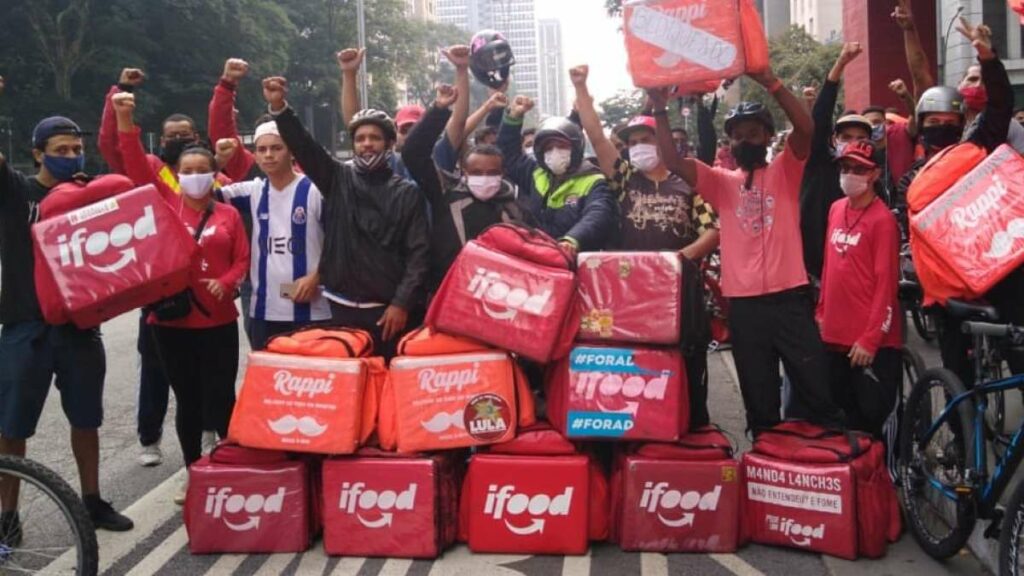
The Importance Of Tips On Ifood To Support Delivery Drivers In Delivery
Besides the delivery fee, Ifood already offers the option of tips in the app. This feature is simple and directly benefits Delivery Drivers.
The tip serves as recognition for the delivery person’s effort. Thus, it helps in composing the monthly income without altering the entire operation of delivery.
Many professionals report that the tip encourages even more attentive service. Thus, it can even increase the chances of the delivery person going up to the apartment.
The tip does not create an obligation. Nevertheless, it improves the relationship between the customer and the professional, with respect and empathy on both sides.
Whenever possible, it’s worth leaving a tip on Ifood. This small gesture makes a big difference for the Delivery Drivers who keep delivery running daily.

Why The Controversy Continues — And Why The Button Still Doesn’t Exist On Ifood
In summary, the “Go Up To The Apartment” button on Ifood would bring benefits and also significant risks. The decision needs to consider all sides of delivery.
On one hand, the income of Delivery Drivers could increase. Clarity about the delivery fee would also reduce conflicts between customers and delivery drivers.
On the other hand, legal and operational risks increase. Logistic efficiency may decline, which raises costs and pressures across the entire chain.
Thus, Ifood maintains the current guidance. The front desk remains the main delivery point, with lower risk and greater standardization.
Even so, the debate remains active. Delivery continues to grow in Brazil, and new solutions may emerge in the near future.
Until then, a simple practice is worthwhile. Whenever possible, customers should go down to the front desk and, when they can, leave a tip on Ifood. This support helps the Delivery Drivers and strengthens a more humane and fair delivery.








Melhoraria se houvesse um pagamento adicional do cliente bem como do restaurante pela demora em descer do apto bem como em preparar o pedido…tipo depois de dois minutos na chegada para coleta ou entrega ambos teriam que pagar um real por minuto adicional
O cliente tem que pagar uma taxa para os entregadores. Tipo criar uma taxa subir. Supomos que ganhar R$ 5.00 , a mais…
Imagina se não tiver elevador. Imagina o risco para ambos , no quesito segurança. Imagina o tempo para cada edifício que o entregador tenha que subir., sem contar a condicao física de cada um.