





 Portuguese
  English
  Spanish
  5 min of reading
  2 comments


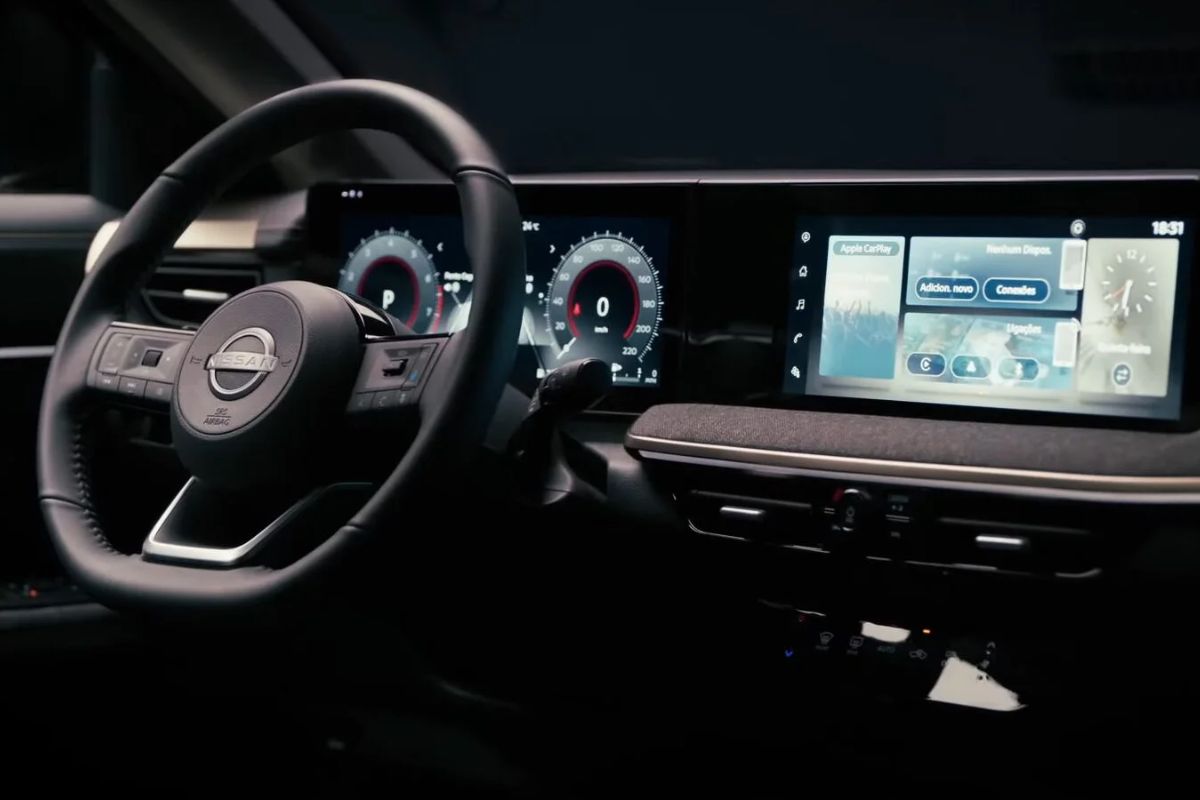


As The New Argentine Nissan Kicks Arrives On December 13, 2025, With Three Versions Above 200 Thousand Reais, The Nippo-Brazilian SUV Loses Power With 120 Hp Gasoline And Exposes The Price Hike In The Compact Segment In Argentina And Brazil, Driven By Technology
The debate surrounding the new Nissan Kicks gained momentum on December 13, 2025, when the new generation, launched in Brazil in July of this year, began to be sold in Argentina, imported from Brazilian production lines and positioned from the start among the most expensive compact SUVs in the neighboring market.
In practice, this move exposes a sensitive combination for consumers: the new Argentine Nissan Kicks comfortably exceeds the 200 thousand reais mark, retains a 1.0 turbo three-cylinder gasoline engine limited to 120 hp and 20.4 kgfm, and is still more expensive than the top-of-the-line version currently offered in Brazil, feeding the perception of loss of power in real life in the face of price hikes.
Argentine Versions Of The New Nissan Kicks Are All More Expensive Than The Brazilian Top Model

Launched in July in the Brazilian market, the new Nissan Kicks landed in Argentina with three well-defined versions: Sense, Advance, and Exclusive.
-
For R$ 32,000, a brand new Hyundai car is a rival to the Kwid with a 1.2 engine producing 82 hp, 6 airbags as standard, multimedia with wireless Android Auto, up to 391 liters in the trunk, and a refreshed look for 2026 in India.
-
He bought a new car in 1983, locked it in the barn in 1988, and no one opened the door for 38 years until the family discovered what was stored inside and realized it looked like something out of a movie.
-
A 250cc motorcycle that can reach 560 km with a 14-liter tank, features disc brakes on both wheels and is among the most well-known in Brazil.
-
Man finds over 200 rare cars abandoned on a lot and tries to do the impossible in 8 hours with a surprise at the end.


In all cases, the pricing positioning exceeds the level of the Platinum version sold in Brazil, currently advertised at R$ 199,990.
In Argentina, the entry-level Sense configuration starts at 52,990,000 pesos, about R$ 201,362, already above the Brazilian ceiling.
Even at the base, the new Argentine Nissan Kicks breaks the symbolic barrier of 200 thousand reais, transforming a compact SUV into an access product that is increasingly restricted.
The mid-range Advance version raises the bar to 57,990,000 pesos, approximately R$ 220,362, narrowing the distance between a compact SUV and products from higher segments even further.
At the top of the range, the new Nissan Kicks Exclusive is priced at 9,990,000 pesos, which the text converts to around R$ 227,962, consolidating the model as one of the most expensive compact cars among imports in the region.
In practice, all versions of the new Nissan Kicks in Argentina cost more than the Kicks Platinum sold in Brazil, although they share the engine, platform, and much of the equipment list, which reinforces the notion that the price differential is much more related to the macroeconomic and tax context in Argentina than to additional relevant content for the end user.
1.0 Turbo Gasoline Engine Limits The Power Of The New Nissan Kicks
Despite the updated look and global proposal, the new Nissan Kicks in Argentina retains the same mechanical base already known in Brazil: a 1.0 three-cylinder engine, with direct injection, turbocharger, and dual-clutch automated transmission.
The central difference lies in the fuel.
While the project was conceived to operate in different markets, in Argentina the new Nissan Kicks operates exclusively on gasoline, without a flex option.
This results in a technical sheet that registers a power of 120 hp and torque of 20.4 kgfm, correct figures for a 1.0 turbo, but which support the perception that the SUV “loses power in real life” when faced with a final price exceeding 200 thousand reais.
In a scenario where the consumer associates a high ticket with more robust performance, a 1.0 turbo compact SUV with 120 hp for over R$ 220 thousand tends to be seen as modest in strength, even though it offers good delivery in urban settings and adequate capacity for highway driving.
In practice, Argentina receives the same mechanical set, but with a valuation heavily pressured by the exchange rate and local taxes.
Standard Equipment: What Each Version Of The New Nissan Kicks Delivers
At the base, the new Nissan Kicks Sense tries to justify the price level with a relatively complete package for the segment.
The version comes standard with 17-inch alloy wheels, LED headlights and taillights, electric mirrors in shiny black, digital air conditioning, and a 7-inch digital dashboard.
The Nissan Connect multimedia center uses a 12.3-inch screen, with wireless Android Auto and Apple CarPlay, in addition to USB-C ports.
In terms of safety, the new Nissan Kicks Sense offers adaptive cruise control with Stop and Go function, autonomous braking with pedestrian detection, lane-keeping assistant, rearview camera, rear sensors, tire pressure monitoring, traction and stability control, ISOFIX anchors, and six airbags.
In the Advance configuration, the new Nissan Kicks adds convenience items that bring the SUV closer to a more premium level: wireless cell phone charger, trunk depth leveler, remote engine start system, and synthetic leather-wrapped steering wheel.
The idea is to provide an intermediate step between daily family use and a comfort package typical of top versions.
The Exclusive version, the top model in Argentina for the new Nissan Kicks, reinforces the focus on embedded technology and finish.
The model now includes panoramic sunroof, 19-inch alloy wheels, rain sensor, twilight sensor, electric folding external mirrors, electrochromatic interior mirror, ambient lighting, a 12.3-inch digital dashboard, and synthetic leather seats.
In terms of content, the SUV approaches the proposition of a sophisticated compact, but without significant changes in the mechanical part.
What The New Argentine Nissan Kicks Signals For The Region
The arrival of the new Nissan Kicks in Argentina, imported from Brazil, in December 2025, consolidates two simultaneous trends: increasingly expensive compact SUVs in the region and a technical standardization strategy that maintains the same 1.0 turbo engine with 120 hp as the base of the family, regardless of prices comfortably exceeding 200 thousand reais.
At the same time, the choice for a single mechanical set and an advanced electronic package, with traction control, driving modes, and a wide range of driving assistants, reinforces the notion that automakers like Nissan are willing to sell more technology and digital content in exchange for smaller, yet more efficient engines.
The question that remains for the consumer is whether this balance makes sense: does a compact SUV with a 1.0 turbo engine, even modern, justify the price of a vehicle in a higher category when imported to markets like Argentina, especially when the top version comfortably exceeds the price of the most expensive configuration of the model in Brazil.
Would you pay over 200 thousand reais for a 1.0 turbo SUV like the new Argentine Nissan Kicks, or would you wait for alternatives with more power in the same price range?










Esse novo Kicks é maravilhoso!!! Nissan é muita qualidade!!!
Não pago R$ 100 k em carro com motor 1.0 de 3 cilindros, muito menos R$ 200 k num que tem, além de tudo, câmbio automatizado…. Sai fora.