





 Português
  Inglês
  Espanhol
  4 min de leitura
  0 comentários


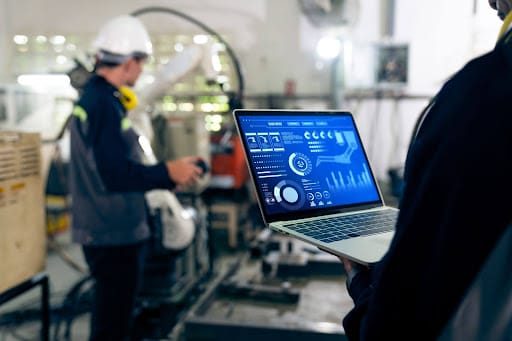
The federal government announced in January of this year a new industrial policy plan to boost the Brazilian industry until 2033. Named Nova Indústria Brasil (NIB), the instrument foresees R$ 300 billion to be invested in various areas related to digitalization, modernization, ecological transition, and increasing the autonomy of the Brazilian industrial park.
To achieve this, the program uses traditional public policy mechanisms, such as increased federal investments, low-interest loans, and subsidies. Special funds and tax incentives are also utilized to stimulate sectors of the economy, such as health, agribusiness, information technology, urban infrastructure, defense, and bioeconomy.
The initiative was developed by the Ministry of Development, Industry, Commerce, and Services (MDIC). For this purpose, a partnership was established with the National Industrial Development Council (CNDI), comprising 20 ministries, 21 sectoral entities, 16 civil society organizations, and the National Bank for Economic and Social Development (BNDES).
-
A bright yellow mushroom imported from Asia escaped from a cultivation farm in the United States in 2010 and is now aggressively spreading across 25 states, destroying entire communities of native fungi in American forests.

-
Buried under China, a colossal machine weighing 20,000 tons began operating as the largest neutrino detector on the planet and, in just 59 days, surpassed results that science took half a century to achieve.

-
Iran enters the center of a climate alert after the war emitted 5.6 million tons of CO2 in two weeks, surpassing the annual pollution of entire countries.

-
Lunar exploration may change after a Chinese probe finds a “cavity” of radiation that reduces the impact on astronauts by up to 20% at certain times on the Moon.


According to information released by BNDES and MDIC, the main part of the R$ 300 billion will come from financing by the Bank, the Financing Agency for Studies and Projects (Finep), and the Brazilian Agency for Industrial Research and Innovation (Embrapii). It is expected that the resources related to innovation and digitalization will be corrected by the reference rate (TR), which is lower than the long-term rate (TLP).
Challenges and Solutions for the Digital Transformation of Industries
The digital transformation of the Brazilian industry is one of the pillars of the new government plan. According to the data released alongside the plan, only 23.5% of the sector is currently digitized. Promoting digital transformation is therefore one of the goals of 90% of Brazilian industries, along with tripling the participation of national production in new technology segments.
In a statement, the Presidency of the Republic recognized some challenges for the NIB to be implemented. The dissemination of the use of national digital platforms in economic sectors, training and education in information and communication technology and semiconductors in higher education, and reducing dependence on imported solutions are some of them.
In this context, the implementation of systems such as MRP for Companies – manufacturing resource planning – should be even more frequent. This mechanism tends to be more used due to the growing need to manage inventory, optimize processes, and forecast demand.
Moreover, in a scenario of industrial transformation, tools such as ERP for Small Industries should also have a greater role in strengthening management and competitiveness in the segments. This is because the resource provides process automation, data integration, and improvements in operational efficiency.
It Is Essential to Revitalize the Sector to Improve Productivity and Competitiveness
In an interview with Revista Indústria Brasileira, the professor from the University of São Paulo (USP) and former president of the Financing Agency for Studies and Projects (Finep) from 2011 to 2015, Glauco Arbix, pointed out the importance of an industrial policy to raise the standard of productivity and competitiveness in the sector. This set of rules, proposals, instruments, and objectives seeks to elevate the level of the industry.
In Brazil, Arbix considers it necessary to have a policy that, in addition to recovering the industry, creates instruments to renew it based on different foundations and objectives than those integrated into past industrial policies. In light of the new technological cycle, the expert states the need to incorporate new methodologies, technologies, and qualify the workforce, so that the national industry can move forward and operate at the same level as the most advanced in the world.
He assesses that the productivity and competitiveness of the Brazilian industry are still low. As a result, the sector faces difficulties in competing in the international market and in producing more sophisticated goods, increasingly demanded by markets and consumers.
Opportunities for the Economic Growth of Industry 4.0
According to the study “Monitor of Industry 4.0,” by International Market Analysis Research and Consulting (Imarc), the Brazilian market for Industry 4.0 reached US$ 1.77 billion in 2022, with a compound annual growth rate of 18.8% from 2017 to 2022. Projections indicate that the amount may reach US$ 5.62 billion in 2028, with a compound annual growth rate of 21% between 2023 and 2028.
The data were analyzed by the National Industry Observatory of the National Confederation of Industry (CNI). Reaching this milestone represents an opportunity for the industrial sector to recover a more significant share of Brazil’s Gross Domestic Product (GDP) and reposition the Brazilian productive sector on a global scale.
The study shows that Europe accounts for 34.1% of the global industrial market, followed by the United States and Canada. Latin America, on the other hand, represents 7.2%.
In this context, the repositioning is deemed necessary, as the industry is considered the sector that most promotes economic development due to innovation and technological advancement. Imarc’s estimate is that the global Industry 4.0 will grow by about 145% by 2028.
The term Industry 4.0 refers to the Fourth Industrial Revolution and encompasses digital technologies aimed at optimizing relationships with customers and suppliers and the production itself. In this context, production can become more efficient, intelligent, economical, and free of failures due to automation, digital systems, and greater interconnection between machines.







Seja o primeiro a reagir!