





 Portuguese
  English
  Spanish
  6 min of reading
  0 comments


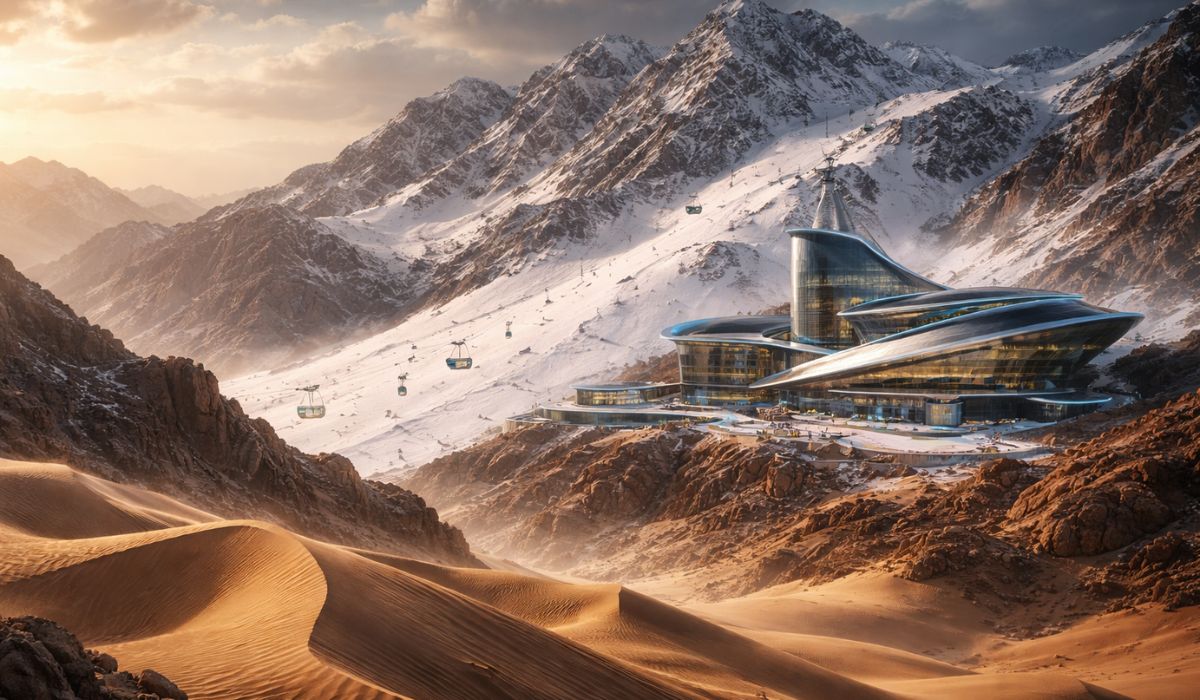
Saudi venture combines winter tourism, megaprojects, and technology in a mountainous area of the northwest of the country, while changes in schedule, sports plan, and execution keep Trojena under international attention.
The proposal to create a winter experience in a mountainous area of northwest Saudi Arabia has placed Trojena, one of the projects of the megacity NEOM, at the center of the debate on tourism, engineering, and environmental impact.
Announced in March 2022, the project was presented as a mountain destination with lower temperatures than those recorded in other parts of the country, infrastructure for winter sports, and operation throughout the year.
Since its launch, the initiative has been followed not only for its unusual nature of forecasting snow-related activities in Saudi territory but also due to changes in schedule, scope review, and alterations in the sports calendar that had reinforced the international projection of the venture.
-
Without a button, sensor, or any electronic system, Harvard scientists create a solar device that autonomously decides whether to generate energy or heat and can transform energy use in homes and buildings.

-
Theories about UFOs have resurfaced strongly after an aerospace scientist and a general connected to the Roswell case mysteriously disappeared in the United States within a few months, and even the FBI was called in to investigate.

-
Neither in the refrigerator nor in the fruit bowl: this is the correct way to store lemons.

-
It has only 11 thousand residents: Brazilian Tuscany impresses everyone with mountains of 1,900 meters and wide views of valleys.
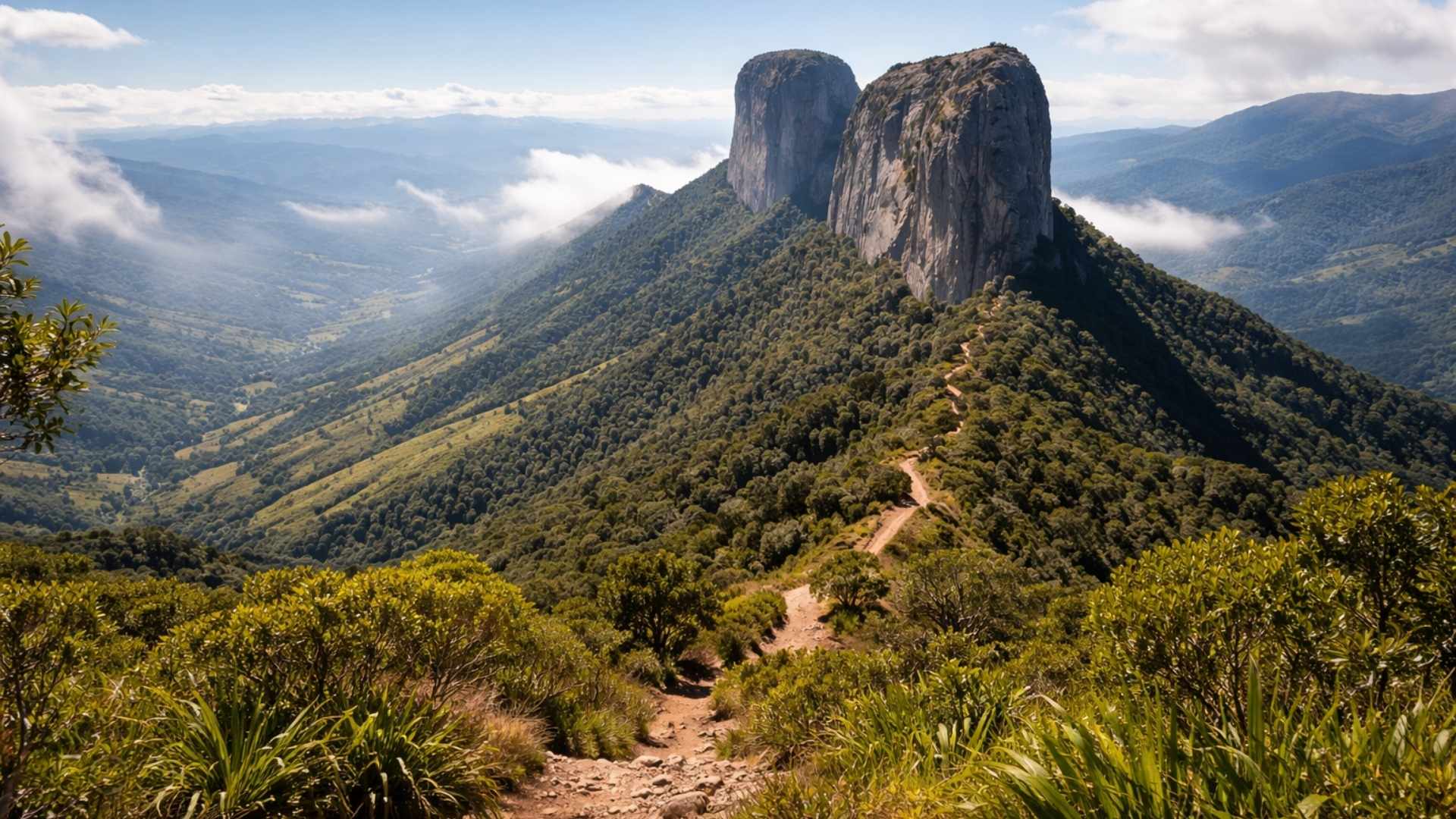

Inserted in Saudi Arabia’s economic diversification strategy, Trojena was launched as part of Vision 2030, a program with which the kingdom seeks to reduce its dependence on oil and increase revenues in areas such as tourism, entertainment, and sports.
In NEOM’s institutional material, the proposal appears as a luxury destination in a mountainous range that reaches 2,600 meters in altitude, with a climate described as milder throughout the year and temperatures below zero in winter.
The company also claims that the site will have the first outdoor skiing experience in the Gulf region.
Although this is the official presentation of the project, the practical execution of the proposal depends on factors such as infrastructure, supply, and the capacity for large-scale operation in an area with a predominantly arid climate.
What is Trojena within the Saudi plan
More than the image of a ski resort in the desert, Trojena was designed as a broader tourist complex, with hotels, residences, leisure areas, adventure sports, and infrastructure aimed at high-end visitors.
The venture was announced by Crown Prince Mohammed bin Salman on March 3, 2022, when the Saudi government presented the project as a new mountain tourism hub within NEOM.

In this context, the project began to fulfill two central functions within the Saudi strategy.
The first is economic, integrating the attempt to increase the weight of tourism in the national economy.
The second is institutional, reinforcing the narrative of transforming the country into a center of technology, major works, and international events.
This second axis gained strength in 2022 when Trojena was chosen to host the 2029 Asian Winter Games.
However, that forecast did not hold.
In January 2026, the Olympic Council of Asia and the Saudi Olympic and Paralympic Committee announced the postponement of that edition to a yet-to-be-determined date.
Shortly after, in February 2026, Almaty, Kazakhstan, signed the contract to officially host the 2029 Asian Winter Games.
As a result, one of the most cited elements in Trojena’s international presentation became invalid.
The project remains linked to Saudi Arabia’s economic repositioning effort but can no longer be treated, in an updated manner, as a confirmed host of the continental winter event.
How the project tries to make snow viable in an arid region
The proposal relies less on the image of a flat desert and extreme temperatures and more on the specific characteristics of the chosen terrain.
Trojena is located in a high area of the Tabuk region, where NEOM claims there is significantly cooler weather than in neighboring areas and the possibility of negative temperatures in winter.
According to the company, these natural conditions would open up space for winter activities and the operation of external facilities related to skiing.
Still, the structure planned for the venture depends on technological support and large-scale works.
Reports from international media and public documents about the project point to the use of cooling systems, snow production, and water infrastructure, including plans related to an artificial lake and supply works.
For this reason, the feasibility of the venture has also been analyzed from the perspective of resource consumption and the maintenance of operation over time.
Altitude, in this scenario, is presented as a factor that reduces some of the climatic limitations.
Still, it does not eliminate the need for artificial solutions to sustain a winter experience in a country with an arid climate.
In practice, the proposal combines terrain, heavy engineering, and billion-dollar financing.


NEOM construction has begun to coexist with delays and scope revision
In the early years, Trojena was treated as one of the priority fronts of NEOM.
In November 2024, Reuters reported that, in light of rising costs of the megaproject, one of the preserved priorities was precisely the completion of Trojena, then still linked to the plan to host the Asian Winter Games.
More recently, however, international coverage has begun to register signs of financial pressure, execution difficulties, and reevaluation of deadlines.
In March 2026, a report published by The Wall Street Journal reported that Saudi Arabia had canceled important contracts related to Trojena, in a move that would affect significant parts of the project.
According to the publication, the interruptions affected fronts associated with water infrastructure and supplies considered central to the complex.
Although NEOM continues to present Trojena as a strategic destination in its institutional channels, recent reports have begun to highlight the difference between the initial schedule and the actual stage of implementation.
This mismatch helps explain why the project continues to attract attention outside of Saudi Arabia.
In addition to the unusual nature of the proposal, the venture has begun to be observed as a test of the country’s ability to bring large-scale works announced in recent years to fruition.
Water, energy, and environmental impact at the center of the discussion
The main criticisms of the project focus on the use of water and energy in a region where these resources require intensive planning.
The construction of structures for snow, cooling, hospitality, and large-scale leisure increases pressure on supply systems and energy consumption, especially in a venture that relies on artificial solutions to maintain part of the proposed experience.
Recent reports on Trojena also mention logistical obstacles related to water supply and the infrastructure necessary to support the complex.
According to experts consulted by international outlets, this type of project requires not only high initial investment but also a continuous operation with high technical and environmental costs.
On the official side, NEOM maintains that the project will be guided by sustainability principles and that the Trojena region has favorable natural characteristics, such as high altitude and lower temperatures than those recorded in neighboring areas.

This position, however, does not end the debate.
For experts who monitor megaprojects in arid regions, the discussion involves both the construction phase and the capacity to keep the venture operational without excessively stressing already limited natural resources.
At this point, Trojena has begun to concentrate broader discussions on luxury tourism, intensive use of technology, and the environmental limits of large territorial interventions.
At the same time, the project remains one of the most visible initiatives in the Saudi strategy to transform high-impact ventures into instruments of economic repositioning and international projection.
What is still under analysis is whether the execution will be able to keep pace with the announced scale since the launch, especially in light of recent revisions of deadlines, costs, and structure.





Seja o primeiro a reagir!