





 Portuguese
  English
  Spanish
  4 min of reading
  0 comments


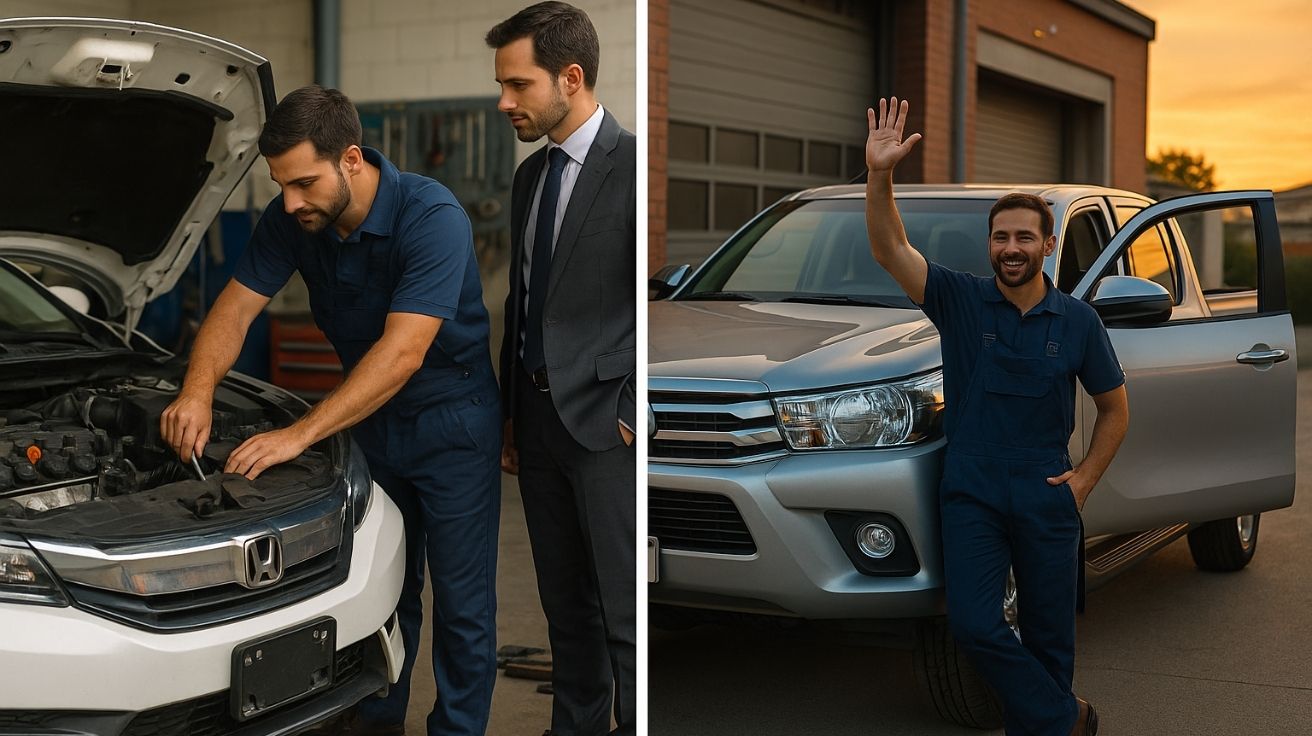
The Mechanic Profession Remains Active in All Scenarios, with High Demand Even in Developed Countries Like Switzerland, Where Qualified Professionals Are Lacking and Salaries Exceed CHF 30,000 per Month


Even in the face of economic crises, wars, or technological advances, the automotive mechanic profession remains one of the most indispensable in the world. In developed countries like Switzerland, the shortage of qualified professionals has led to the opening of hundreds of positions, with salaries exceeding CHF 5,000 monthly. In Brazil and several other nations, this trade continues to be a solid and permanent income opportunity.
Essentially, the mechanic is responsible for keeping vehicles running. Their functions range from preventive and corrective maintenance to detailed diagnostics of complex systems. This work ensures not only the mobility of people but also the functioning of essential sectors such as transportation, health, public safety, and logistics.
The nature of this profession, based on the continuous need for repairs, adjustments, and replacements, makes it resilient and enduring. As long as there are cars on the streets, there will be demand for professionals who know how to care for them. Even with the transition to electric cars and emerging technologies, mechanics continue to be key players in the automotive ecosystem.
-
Brazilian city gains industrial hub for 85 companies that is equivalent to 55 football fields.

-
Peugeot and Citroën factory in Argentina cuts production by half and opens a layoff program for more than 2,000 employees after Brazil drastically reduced purchases of Argentine vehicles.

-
A Brazilian city gains a factory worth R$ 300 million with the capacity to process 200 thousand tons of wheat per year, a mill of 660 tons/day, silos for 42 thousand tons, and an industrial area of 276 thousand m².

-
Havan will leave the shopping mall in Blumenau to inaugurate something that the chain has never done before: a megastore in half-timbered style in the Historic Center of the city, which is expected to be completed in May and change the landscape of local retail.


What Does an Automotive Mechanic Do and Why Is Their Work Essential
The automotive mechanic directly engages in vehicle maintenance, disassembling, replacing, adjusting, and repairing mechanical and electrical components. They work with brakes, suspension, transmission, steering, ignition, cooling systems, among others. For this, they use specific tools, measuring instruments, and diagnostic techniques.
Besides the technical aspects, this professional must have attention to detail, agility, logical reasoning, and a willingness to constantly update their skills, especially with the advancement of technology embedded in vehicles. Their role can take place in independent workshops, dealerships, automotive centers, transportation companies, and even military fleets.
The market also demands knowledge in electronic fuel injection systems, sensors, electronic modules, which further enhances the value of those who invest in continuous training. Thus, technical courses, specializations, and hands-on experience are important differentiators for professional growth in this segment.
Global Profession: Shortage of Mechanics in Switzerland and Above-Average Salaries
The current scenario is not limited to Brazil. According to information from the site Jobs Around the World, Switzerland is facing a significant shortage of automotive mechanics, opening hundreds of positions for foreigners. The European country offers average salaries exceeding CHF 5,000 (over R$ 30,000 monthly), along with benefits such as health insurance, retirement plans, and productivity bonuses.
To work in Switzerland, it is necessary to have technical training in the field, proven experience, and proficiency in one of the local languages, German, French, or Italian, depending on the region. The demand is constant, especially in cities like Zurich, Geneva, and Valais, where salaries can exceed CHF 68,000 per year.
Swiss companies value punctuality, precision, and technical training, and mechanics have access to ongoing training and cutting-edge technology in the workshops. For Brazilians with experience and preparation, this can be an excellent gateway to the European market and a real opportunity for professional advancement.
Innovations That Modernized the Profession in Brazil
In Brazil, the reality of auto repair shops has also changed. The introduction of management software, digital scheduling for clients, CRM for customer loyalty, and automated financial control systems has transformed the routine in workshops. These technologies allow for greater organization, fewer errors, and better customer service.
Today, modern workshops utilize OBDII readers, laser alignment systems, and even 3D printers to produce parts on demand. All of this contributes to faster diagnostics, more precise services, and a stronger reputation in the market.
Those who combine good technique with modern and efficient service stand out more easily. This shows that, even though it is a traditional profession, the automotive mechanic is far from outdated; on the contrary, it is becoming increasingly technological and valued.
How to Prepare for This Stable and Growing Career
To enter the field, it is ideal to seek technical training in automotive mechanics through recognized vocational courses. Having a solid foundation facilitates entry into the market and opens doors for specializations in areas such as embedded electronics, hybrid and electric vehicles.
Practical experience is fundamental. Therefore, internships and experiences in workshops contribute to the development of skills and the creation of a trustworthy portfolio. Over time, it is possible to grow in the career, open one’s own workshop, or even seek international opportunities, like those mentioned in Switzerland.
Foreign language proficiency is an important differentiator for those dreaming of working abroad. Mastering German, French, or English can be decisive when applying for a position outside Brazil. For those looking to operate locally, the focus should be on customer service, financial management, and digital marketing, in addition to technical excellence.









Seja o primeiro a reagir!