





 Português
  Inglês
  Espanhol
  3 min de leitura
  0 comentários


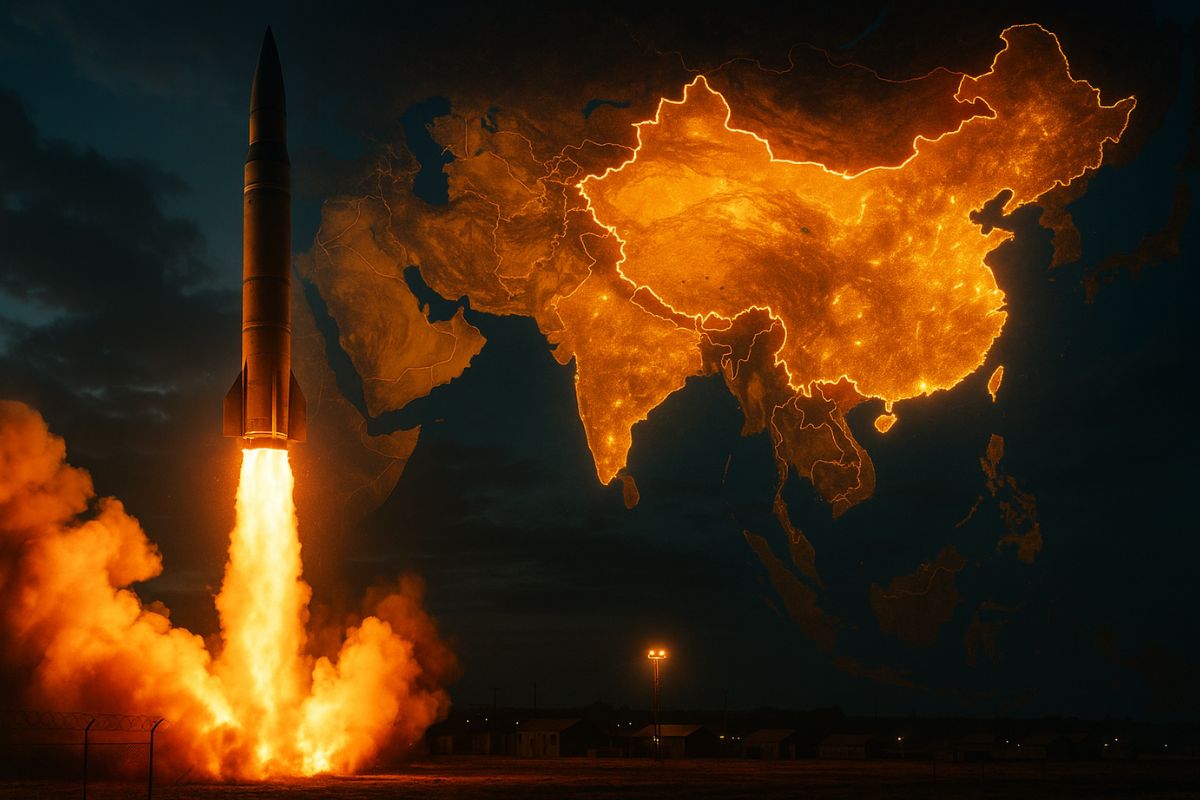
India Tests Missile Capable of Hitting China Anywhere on Its Territory. Agni-5, Long-Range Ballistic Missile, Raises Tension Between the Two Major Powers in Asia Amid Geopolitical Disputes.
The India Tests Missile Capable of Hitting China highlights the escalating arms race in Asia. The equipment, named Agni-5, can carry nuclear warheads and reach any point in Chinese territory, according to official information released by the Indian government on Wednesday.
The launch took place in the state of Odisha, in the eastern part of the country, and, according to authorities, the test “validated all technical and operational parameters.” The announcement comes in a delicate context, marked by previous clashes at the border and disputes for influence in South Asia.
What Is the Agni-5 Missile
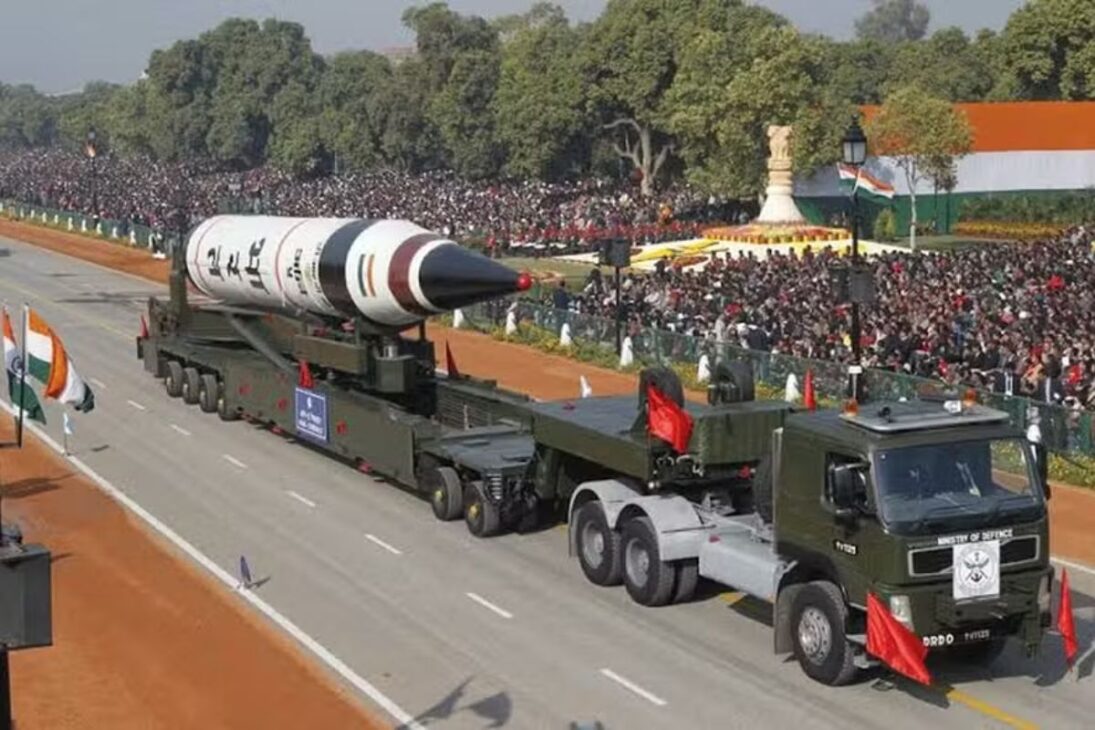
The Agni-5 is an intermediate-range ballistic missile capable of traveling over 5,000 kilometers. Developed by the Defense Research and Development Organization (DRDO), it can carry nuclear warheads, becoming a central piece in India’s military strategy.
-
Found in one of the most radioactive places on Earth, this Chernobyl fungus may be doing something with radiation that no one has been able to explain to this day.

-
A bright yellow mushroom imported from Asia escaped from a cultivation farm in the United States in 2010 and is now aggressively spreading across 25 states, destroying entire communities of native fungi in American forests.

-
Buried under China, a colossal machine weighing 20,000 tons began operating as the largest neutrino detector on the planet and, in just 59 days, surpassed results that science took half a century to achieve.

-
Iran enters the center of a climate alert after the war emitted 5.6 million tons of CO2 in two weeks, surpassing the annual pollution of entire countries.


Unlike previous versions of the Agni series, the new model was designed to enhance India’s deterrent power against strategic rivals such as China and Pakistan. The system uses solid fuel, allowing for greater mobility and speed in launches, as well as reducing maintenance costs.
Why the Test Concerns China
According to the British newspaper The Guardian, the firing occurs at a time of unstable relations between India and China. In 2020, violent clashes at the Himalayan border left casualties on both sides, further deteriorating bilateral relations.
With a range that fully covers Chinese territory, the missile sends a clear political message. Analysts interpret the test as a way to reaffirm Indian autonomy in defense matters and to pressure Beijing in regional disputes.
Regional Impact and Relation with Pakistan
In addition to its rivalry with China, India maintains historical tensions with Pakistan, which is also a nuclear power. In May of this year, militants killed 26 people in Kashmir administered by New Delhi, an incident that nearly brought the two countries to the brink of war.
The Agni-5, therefore, is not limited to balancing forces with Beijing but also reinforces India’s position against Islamabad. The presence of three countries armed with nuclear weapons in the same geographic axis increases the risk of military escalation.
External Pressures: United States and Russian Oil
As it expands its military capacity, India faces diplomatic pressures from Washington. The American government demands that New Delhi reduce its import of Russian oil, vital for the Indian economy amid the war in Ukraine.
The U.S. has threatened to double import tariffs on Indian oil from 25% to 50% if the country does not diversify its suppliers. This scenario puts New Delhi at a crossroads between preserving its energy sovereignty and maintaining alignment with the Quad alliance, which includes the United States, Japan, and Australia.
Next Diplomatic Steps
Despite the show of military strength, India and China seek some level of rapprochement. Prime Minister Narendra Modi recently met with Xi Jinping at a summit in Russia and is expected to visit Beijing for the Shanghai Cooperation Organization meeting later this month.
This parallel diplomacy shows how New Delhi tries to balance military deterrence with political dialogue, in a risk containment strategy.
The Agni-5 missile test marks a new chapter in the power struggle between India and China, reinforcing the arms race and pressuring the Asian geopolitical balance. The message is clear: India wants to position itself as a central player in regional security, even in the face of multiple tensions.
And you, do you think the new missile strengthens India’s security or increases the risk of instability in Asia? Share your opinion in the comments – we want to hear from those closely following this scenario.







Seja o primeiro a reagir!