





 Portuguese
  English
  Spanish
  5 min of reading


The Natural Gas Industry Is Important For A Sustainable And Innovative Future In Brazil. Find Out In This Report Featuring Experts.
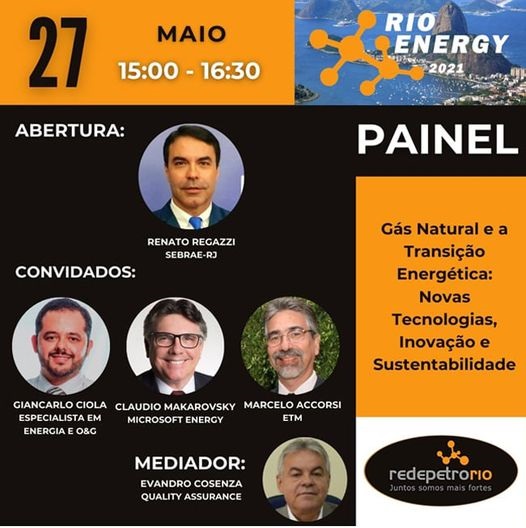
The natural gas industry was at the center of the debate on the second day of Rio Energy 2021, organized by Rede Petro Rio. Present at the virtual meeting on Thursday (27) were the president of the institution, Carlos Cavalcanti, and speakers Giancarlo Ciola, energy and O&C specialist; Cláudio Makarovsky from Microsoft Energy; and Marcelo Accorsi from ETM. Also read about the panel from May 26 here.
The mediator of the meeting titled “Natural Gas and the Energy Transition: New Technologies, Innovation, and Sustainability” was Evandro Consenza from Quality Assurance.
Natural gas is a fundamental raw material in the petrochemical industry, capable of replacing fuel oil, diesel, and both mineral and biomass coals, as well as uranium in thermoelectric plants. It is one of the bets for reducing pollutants worldwide, but it still requires significant investments.
-
Brazilian giant expands borders in the Southeast: Petrobras confirms new oil discovery in ultra-deep waters in the pre-salt of the Campos Basin.

-
Alert in the global energy market: Severe tropical cyclone hits the coast and disrupts gas production at major plants in Australia, threatening global supply.

-
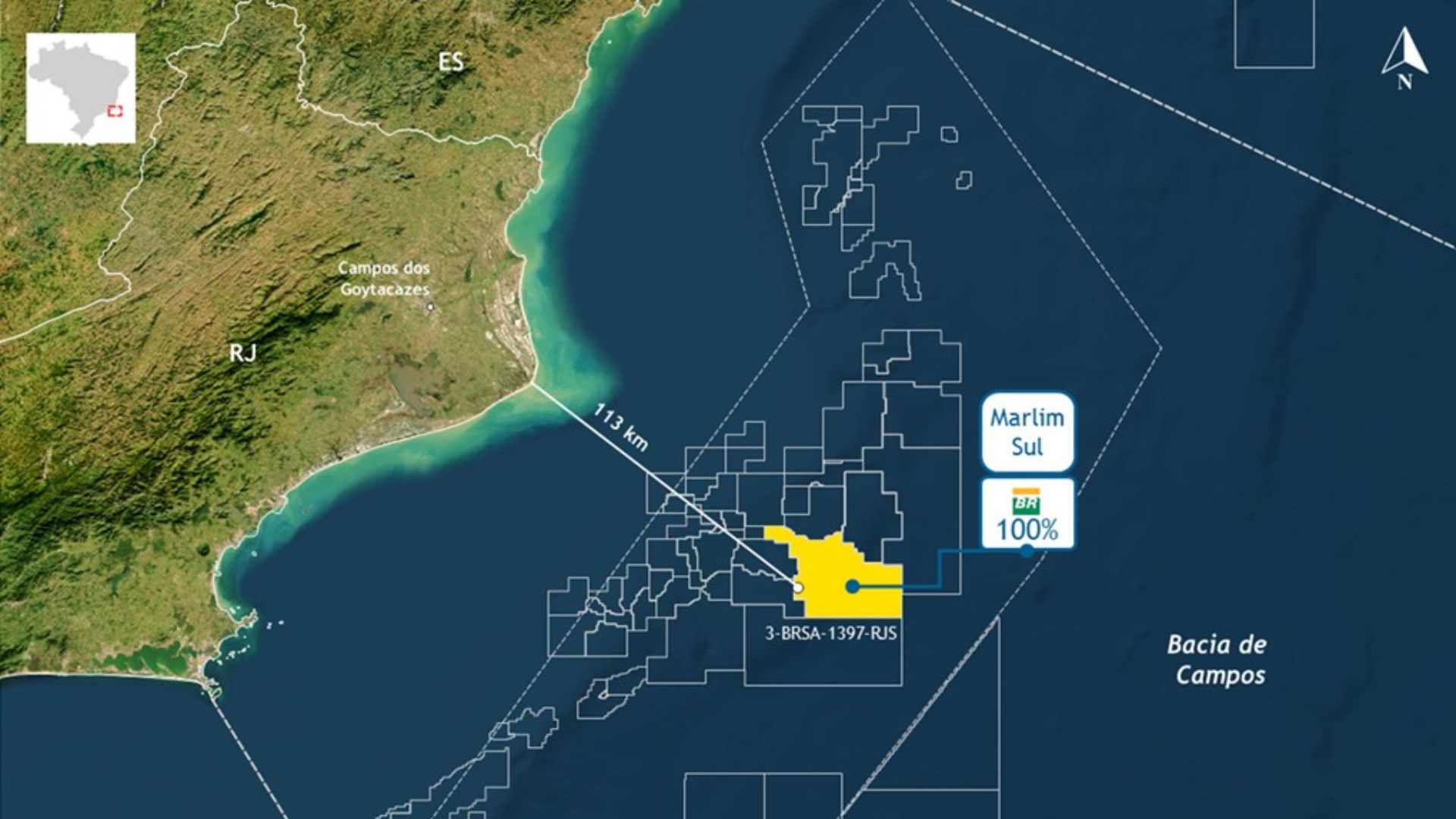
Petrobras finds high-quality oil in the pre-salt at 113 km from RJ and reignites expectations about strategic reserves in the Campos Basin.

-
Ocyan opens registrations for startups focused on innovation in the oil and gas sector and will select projects for Innovation Day with the support of Nexio.

To contribute to the regulatory framework of the gas industry, the Law No. 14,134 of 2021, known as the New Gas Law, was recently enacted. The drafting of the text involved industry stakeholders, experts, civil society, among other segments that are part of Brazil’s promising natural gas sector.
The New Gas Law was mentioned in the speeches of experts during Rio Energy. See below.
Does The New Gas Law Expand The Low-Carbon Economy In The Sector?
“It is a very strong signal of the paths we will take to seek greater competitiveness in the gas market and stimulate increased use of the hydrocarbon across the industry, not only as fuel but also as raw material, to reduce costs and improve usage. Stimulating integration from the viewpoint of electricity generation. Among fossil fuels, gas is the greenest. We are heading in the right direction.”
Giancarlo Ciola.
However, Marcelo Accorsi made a counterpoint. He highlighted that at no point does the New Gas Law directly address the reduction of greenhouse gases in the text.
“The Law was made with the objective of liberalizing the market, increasing competition, and lowering gas prices. There is a lot of technology we can leverage in the transition using gas. It will generate reduction in greenhouse gases due to the substitution of fuels, but considering a longer horizon, which is 2050, where there are 120 countries in the world promising zero emissions by then, gas will also need to be decarbonized.”
Marcelo Accorsi
In Brazil, 83% of the electricity matrix and 45% of the energy matrix is renewable. However, the country still faces a social challenge to overcome: 14 million people still cook with firewood or coal, and at least two million still have no access to any electricity.
“If we, with the New Law, reduce the gas price from 9.70 rials (industrial use) to 4.00 dollars, by the year 2050 we will have 25 gigawatts of new generation being created.”
Cláudio Makarovsky
Also Read:
The Gas Market In Brazil Has A Positive Outlook, Experts Assess At Rio Energy
What Are The New Technologies For The Conscious Use Of Gas?
Services and products for appropriate consumption, data development, and gas distribution are factors intertwined with a promising future for the natural gas industry and environmental sustainability.
With key figures in the subject together in the same debate at Rio Energy 2021, the discussion about new technologies for gas usage was inevitable.
Energy and O&C specialist Giancarlo Ciola highlighted the world of thermoelectric power.
“Today we have highly efficient turbines when we talk about energy generation, especially in combined cycle, with the integration of steam turbines along with natural gas. There is a lot of mature motorization using natural gas, following the Brazilian spirit of flex engines (diesel and natural gas).
Giancarlo Ciola
Petrobras is conducting a pilot study using a supercritical CO2 turbine. The equipment is one-tenth the size of a common steam turbine.
“There is new technology emerging and ‘it’s already around the corner.’”
Cláudio Makarovsky
This technology, however, according to experts, will continue to emit some percentage of CO2. For Marcelo Accorsi, the ideal scenario is for turbines to burn hydrogen directly or to be mixed with gas.
“By mixing hydrogen with gas, we decrease the carbon percentage in the mixture or can burn hydrogen directly. Mixing is easier because today’s technology can already be used in a turbine with few adaptations.”
Marcelo Accorsi
The Direct And Indirect Natural Gas Industry Needs To Invest To Adapt To The Future
The entire supply chain of natural gas must develop to adapt to new service and industry models, keeping pace with technological and sustainable advances.
Carbon capture, utilization, and storage is one of the factors to be considered. But all of this requires investment.
“There is only one way, in my opinion, for everyone to adapt to the low-carbon era: hit the wallet.”
Cláudio Makarovsky
For Marcelo Accorsi, “adaptation” is not the correct term to define the situation. A true “revolution” is necessary, in the words of the ETM representative, based on financial investments.
Numbers Of The Revolution Of Natural Gas In Brazil
- R$ 60 billion should be invested in the natural gas industry per year, according to the National Confederation of Industries
- 4.3 million jobs in the coming years
- 2,000 kilometers of new pipelines for flow and transportation (R$ 20 billion in investments)
- 2 million additional royalties for municipalities, states, and the Union
The Challenges The Country Needs To Face To Leverage Gas In The Energy Matrix
Political responsibility, the internalization of consumption, and domestic production means were the issues raised by experts for Rio de Janeiro and Brazil to leverage gas in the matrix.
“This gas should not limit or constrain oil production; we must find a way to separate CO2, develop the infrastructure to bring in gas, and not forget that we need to develop demand.”
Giancarlo Ciola
For Cláudio Makarovsky, federal-level regulation is important.
“We must have sensitivity so that the rules cease to be government rules and become state rules.”
Cláudio Makarovsky
Marcelo Accorsi is also an advocate for harmonizing gas industry regulations and highlights the qualification of the workforce.
“We must think about the qualification of people. Engineers, technicians, specialists… we need to build a strong scheme to provide a strong workforce for the significant demand that is coming.”
Marcelo Accorsi
You can check out the full debate below. Rio Energy 2021 will return with its agenda on June 1 with virtual negotiations starting at 3 PM. The event will run until June 2.










Seja o primeiro a reagir!