





 Portuguese
  English
  Spanish
  3 min of reading
  0 comments



New Hybrid Solar Cell Promises Efficiency and Sustainability with Integrated Storage for Nighttime Consumption
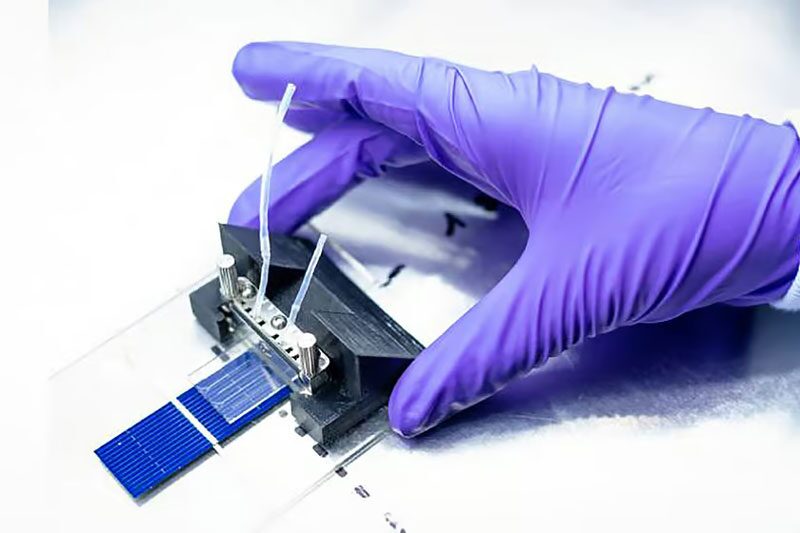
A group of European scientists has revealed a significant step forward in solar technology: a hybrid solar cell with embedded photochemical battery, capable of storing energy during the day and providing it at night. This promising development not only improves the efficiency of solar energy storage, but also presents a sustainable solution, using widely available materials, without resorting to rare and expensive metals. This innovation was led by researchers from the Chalmers University of Technology in Sweden and the Polytechnic University of Catalonia in Barcelona, Spain, according to the site Avalanche News.
Sustainable and Efficient Technology
The new device has a overall efficiency of 14.9%, which is considered modest compared to some of the best solar cells on the market. However, the technology has significant development potential and already provides environmental benefits by eliminating the need for rare metals, common in conventional solar systems.
Two critical problems have been solved with this innovation. The first was reducing the overheating of silicon solar cells, as high temperatures can decrease efficiency by up to 25%. The second was finding a way to store energy without using rare chemical elements, a challenge to make the technology accessible and scalable.
-
Renewable energy advances over protected areas in Brazil, and a survey by the Energy Transition Observatory reveals silent impacts that challenge environmental conservation and pressure sensitive traditional territories.

-
Rio Grande do Sul accelerates energy transition: State invests in renewable technologies and consolidates decarbonization strategies and pathways to attract billions in new industrial investments.

-
With 160,000 m² of collectors, an area larger than 20 football fields, Silkeborg, in Denmark, hosts a solar thermal plant that heats 19,500 homes and could become the largest solar heating plant in the world.

-
A study reveals the expansion of renewable energy procurement in Brazil and shows how companies are taking advantage of opportunities to reduce expenses, ensure energy efficiency, and strengthen strategic environmental commitments.


How the Hybrid Solar Cell Works
The basic principle of the system involves a conventional silicon photocell, which serves as the base of the solar cell. However, the difference lies in a transparent element positioned over this cell, responsible for the microcirculation of a special liquid. This liquid has the ability to alter its molecular structure when exposed to ultraviolet and visible light, allowing it to function as an energy storage medium.
This innovative system has been named molecular solar thermal storage device (MOST) by the scientists. Solar energy is stored in changes in the molecular bonds of the liquid. To release the energy, the system restores the molecular bonds to their original form. According to the researchers, the liquid can be reused up to 1000 times, which is equivalent to approximately three months of continuous operation.
Benefits of Cooling and Increased Efficiency
In addition to storing energy, the liquid also plays an important role in the cooling of the silicon photocell. In direct heating conditions of up to 39°C, the liquid managed to reduce the cell temperature by 8°C, resulting in an increase of 0.2% in efficiency, raising it to 12.6%. This small increase contributes to the overall efficiency of the hybrid system, which reached 14.9%.
Although this efficiency is still below the commercial standards of large solar systems, scientists believe that there is room for improvements in each of the components, which could elevate performance to commercially viable levels in the future. This means that the device may offer advantages in efficiency, durability, and lower costs over time.








Seja o primeiro a reagir!