





 Português
  Inglês
  Espanhol
 3 min de leitura


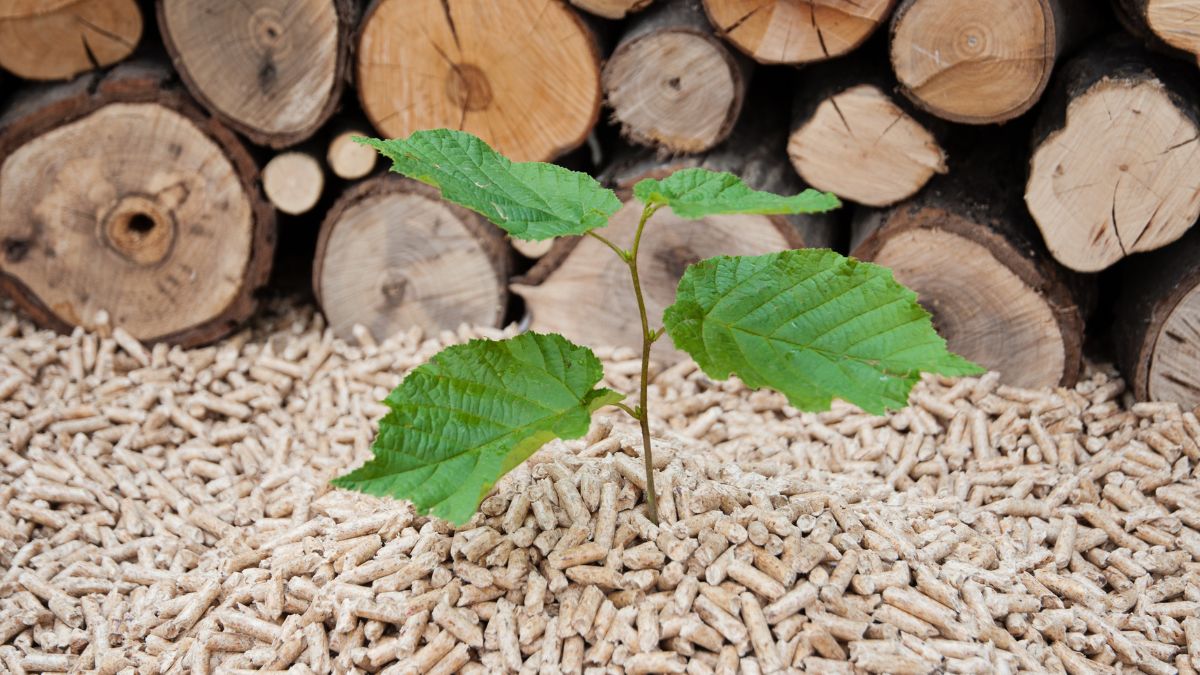
Production Is Being Carried Out in Partnership with the Federal University of Juiz de Fora
There is a global race for new, more sustainable and durable products for the industry and construction. One of the products that has gained attention in this regard is biomass. Now, the National Institute of Metrology, Quality and Technology (INMETRO) has invested in a new project to produce a graphene nanomaterial from wood biomass.
The new production is linked to a partnership between the agency and the Federal University of Juiz de Fora (UFJF). The project is titled “Use of Renewable Sources for the Production of Graphene Oxide and Its Application in Polymeric Nanocomposites.” This partnership will enable the production of graphene oxide without the use of toxic and aggressive solvents, making use of biomass from wood and paper. Learn more about this innovation in today’s article.
Learn What Graphene Oxide Is and Understand Its Main Applications with the Video Below


Finep Will Invest R$1.9 Million in Research on Graphene from Biomass, Promising Very Interesting Results for Society
The president of INMETRO stated that this bioproduct is of significant interest to society, as it could be applied in a range of materials and equipment, in addition to constructions. It is such a relevant project that Finep (Financier of Studies and Projects) allocated a total of R$1.9 million for investment in the research.
-
A bright yellow mushroom imported from Asia escaped from a cultivation farm in the United States in 2010 and is now aggressively spreading across 25 states, destroying entire communities of native fungi in American forests.

-
Buried under China, a colossal machine weighing 20,000 tons began operating as the largest neutrino detector on the planet and, in just 59 days, surpassed results that science took half a century to achieve.

-
Iran enters the center of a climate alert after the war emitted 5.6 million tons of CO2 in two weeks, surpassing the annual pollution of entire countries.

-
Lunar exploration may change after a Chinese probe finds a “cavity” of radiation that reduces the impact on astronauts by up to 20% at certain times on the Moon.

Thus, INMETRO will be responsible for the characterization and application of graphene in polymeric composites used in manufacturing equipment. UFJF, in turn, will contribute to the research through physicochemical studies of the materials resulting from the process.
According to the researchers, this new graphene nanomaterial will bring promising results for society. After all, it promises to compose more durable materials without using fossil fuels, being more sustainable.
However, according to the project coordinator from UFJF, Benjamin Fragneaud, the project will allow the generated product to have high competitiveness in the market, due to the similar quality of materials that are already being sold today. In other words, the benefits are numerous.
The Applications of Sustainable Graphene Are Many and Involve the Creation of More Durable Materials for Industry and Construction
The production of biographene is very interesting for the national scenario, considering the large amount of by-products that can be reused to produce it. After all, within this project, the proposal is to use lignin, a compound found in paper and residual wood, for the production of the nanomaterial.
“There is always a barrier between scientific development and the industrial application of materials. This involves large-scale production and long-term quality control. This project aims to overcome this barrier.”
Indhira Oliveira Maciel, researcher and member of the study (2022)
Furthermore, the production of this sustainable material will bring new stimulus to national companies that produce materials for industry and construction. This is because environmental responsibility in companies is increasingly demanded by consumers.
This partnership between INMETRO and UFJF is very important because it combines distinct knowledge from researchers for a cause. The project coordinator explains that graphene has multiple applications.
“Here at the University, this nanomaterial is used in electronic devices and gas sensors. However, its general-level applications have a much broader reach; it can be used in basically any product with a plastic coating, for example. The problem is that, on an industrial scale, the production of graphene oxide is extremely ‘dirty,’ using aggressive acids. So, why not consolidate a green alternative?”
Benjamin Fragneaud, project coordinator at UFJF (2022)
The project is also highly recognized because it adopts the Sustainable Development Goals (SDGs) established by the United Nations (UN). That is, it is being developed focused on innovation in the industry and responsible production consumption.





Seja o primeiro a reagir!