





 English
  Francês
  Alemão
  Italiano
  Japonês
  Norueguês
  Portuguese
  Spanish
  5 min of reading
  0 comments


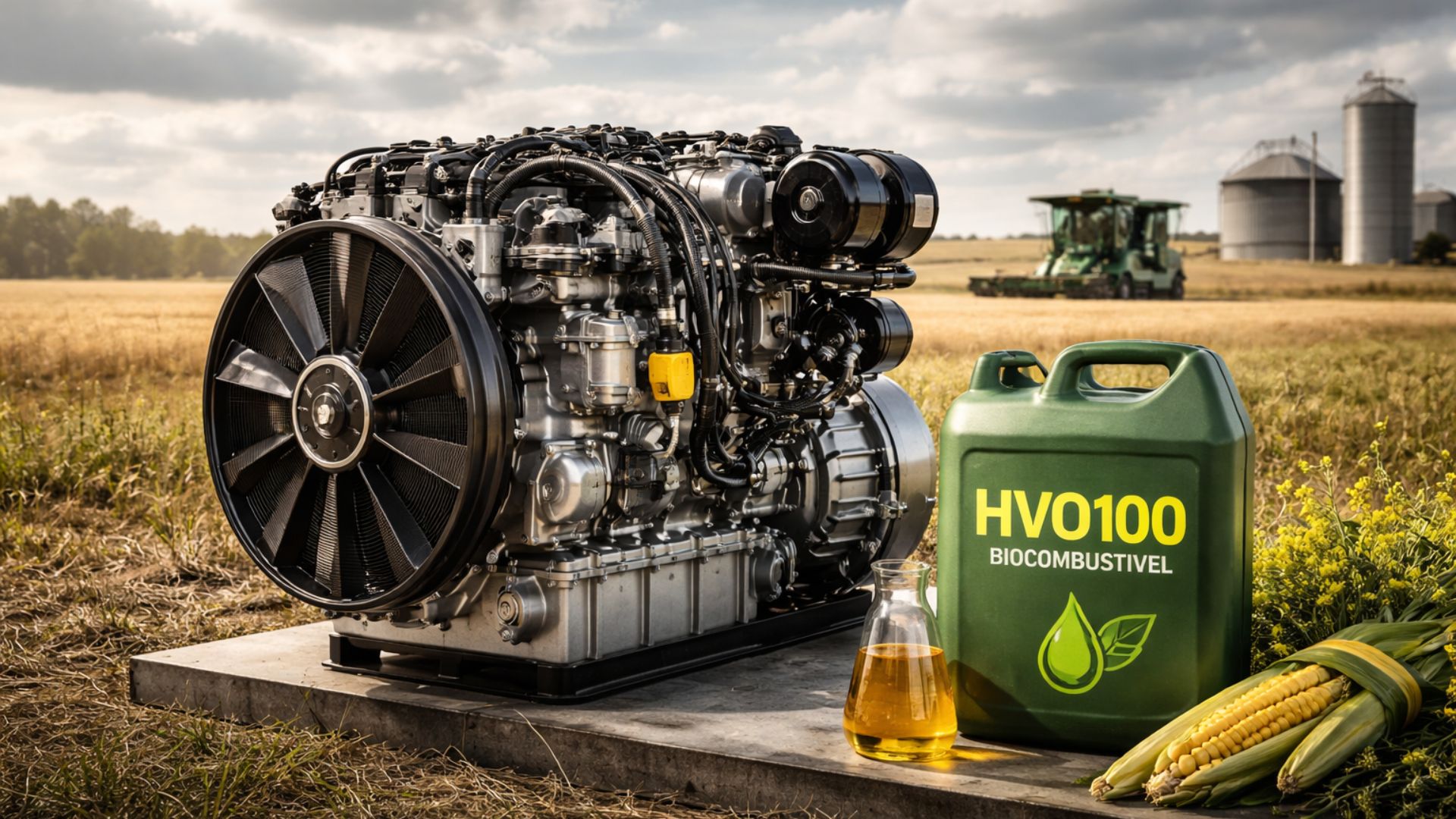
Discover how the use of biofuel engines in agriculture reduces diesel consumption, improves machine efficiency, and decreases dependence on oil, driving more sustainable production.
The advancement of the biofuel engine represents a strategic shift in the agriculture sector, especially in light of challenges related to the intensive use of diesel and the growing dependence on oil. According to information from the website Cana Oeste, the introduction of engines compatible with renewable fuels, such as HVO100, is already beginning to transform the way agricultural machines operate in Brazil.
Without requiring major structural adaptations, this technology emerges as a practical alternative for producers seeking efficiency and sustainability. The global energy transition scenario also pressures the sector to adopt cleaner solutions, and the Brazilian countryside stands out for its adaptability.
In this context, the use of the biofuel engine is not just a trend, but a direct response to demands for emission reductions and greater energy autonomy. The gradual replacement of traditional diesel helps reduce dependence on oil, bringing economic and environmental benefits.
-
Brazil accelerates decarbonization in the South: International forum in Foz do Iguaçu gathers leaders to discuss the advancement of biomethane in the energy matrix and the potential of “caipira pre-salt.”

-
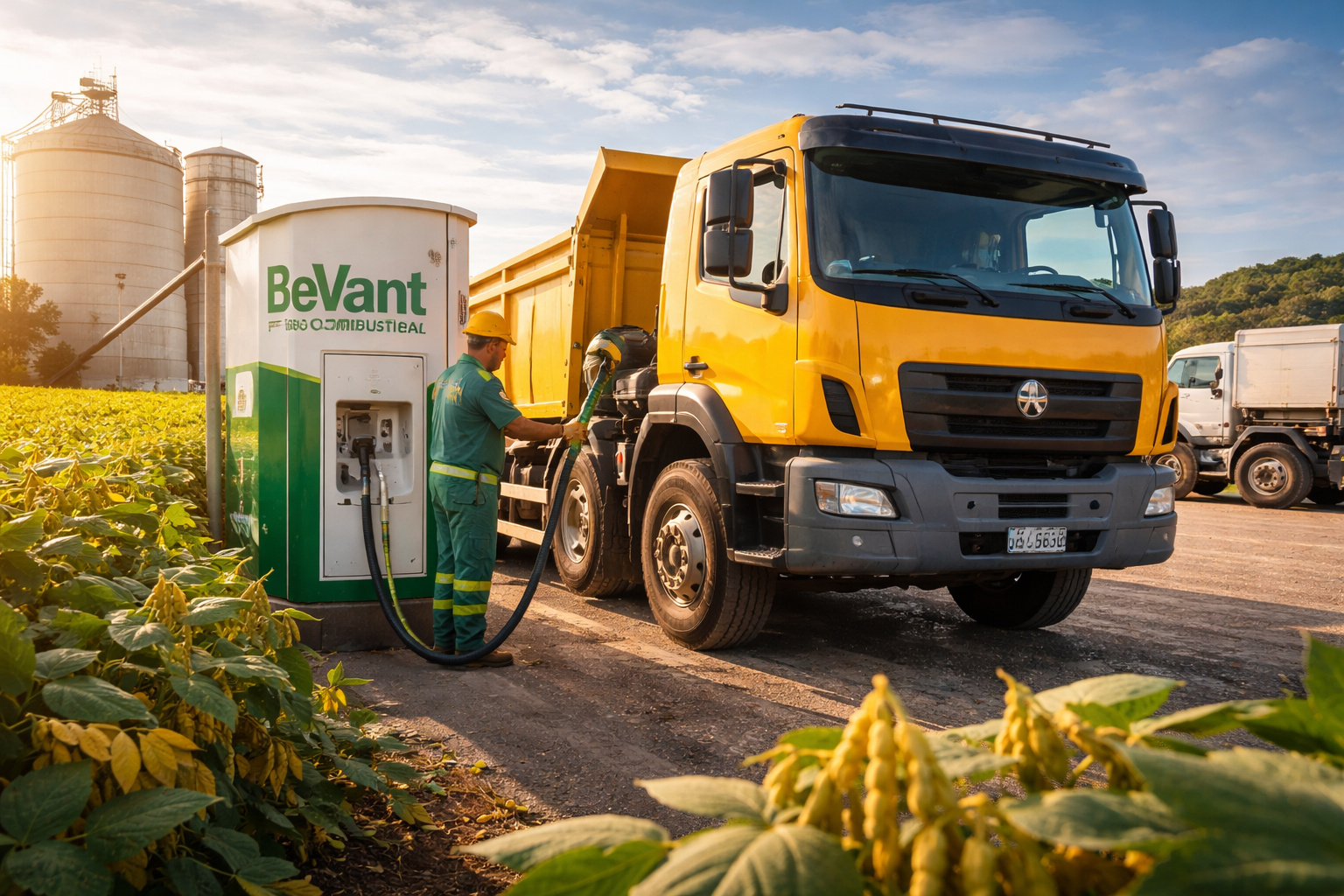
As diesel prices soar due to conflicts in the Middle East, a Brazilian city decides to test a little-known biofuel that promises to completely replace fossil fuel without adaptation and could change the future of energy in the country.
-
Used Cooking Oil Transforms Into Kerosene: How 1 Million Tons of Used Fat Are at the Center of an Aviation Fuel Market That Could Attract Over $1 Trillion in Investments, Already Fuels Planes with Up to 80% Lower Emissions, and Triggered a Global Competition for This Waste

-
Middle East War Drives Up Methanol Prices and Threatens Global Biodiesel Production, Triggering Warning for Biofuels Industry and Agricultural Market


How the biofuel engine operates with HVO100 in the field
The biofuel engine is designed to run on renewable fuels without compromising machine performance. In the agriculture sector, this feature is crucial, as productivity directly depends on operational efficiency.
HVO100, known as green diesel, is produced from vegetable oils and animal fats. Its manufacturing process results in a fuel with properties similar to diesel, allowing its use in modern engines without the need for significant modifications.
This compatibility facilitates the adoption of the technology and accelerates the energy transition in the field. At the same time, it reduces dependence on oil, as the fuel can be produced from renewable sources.
Another important point is the reliability of the system. The engines are designed to maintain stability, power, and durability, ensuring that the agriculture sector continues to operate at high performance even with the replacement of diesel.
Less diesel and more efficiency in modern agriculture
The reduction of diesel usage is one of the main objectives of energy modernization in the agriculture sector. Agricultural machines operate for long periods and under demanding conditions, making fuel consumption a critical factor.
With the use of the biofuel engine, it is possible to maintain the same operational efficiency, but with a lower environmental impact. This represents an important competitive advantage, especially in markets that value sustainable practices.
Moreover, the lower dependence on oil reduces the sector’s vulnerability to price fluctuations and international crises. This stability is essential for long-term planning in the agriculture sector.
The replacement of diesel with renewable alternatives also helps improve the sector’s image, reinforcing its commitment to sustainability and technological innovation.
Cutting-edge technology elevates performance and reduces operational costs
The new models of biofuel engines bring significant advances in performance and efficiency. One example is the AGCO Power CORE 80 engine, which equips modern tractors and is already approved to operate with HVO100 in Brazil.
According to the manufacturer, this engine offers 15% more torque and 12% more power compared to the previous model, and has 25% fewer components. This structural reduction helps decrease vibrations and maintenance costs.
Another highlight is the presence of an engine brake, a feature that aids in fuel economy and improves operational control. These advances show that the use of biofuels does not compromise performance, even in intensive applications in the agriculture sector.
Thus, the biofuel engine establishes itself as an efficient solution to replace diesel, maintaining productivity and reducing dependence on oil.


Positive environmental impacts with the replacement of diesel
The adoption of the biofuel engine brings significant environmental benefits for the agriculture sector. The use of HVO100 can significantly reduce greenhouse gas emissions compared to conventional diesel.
According to information from the manufacturer, this reduction can reach up to 90%, depending on the production and usage conditions of the fuel. This data reinforces the potential of biofuels in mitigating climate change. In addition to carbon emissions, there is also a reduction in local pollutants, which improves air quality in rural areas. This contributes to a healthier and more sustainable working environment.
The lower dependence on oil also has an indirect environmental impact by decreasing the exploration of fossil resources. Thus, the biofuel engine positions itself as an alternative aligned with global demands for sustainability.

Reduction of dependence on oil and economic gains in agriculture
The reduction of dependence on oil is one of the main benefits of using the biofuel engine in the agriculture sector. The diesel market is highly influenced by external factors, such as international conflicts and currency fluctuations.
By adopting renewable fuels, rural producers gain greater predictability of operational costs and reduce financial risks. This is especially important in a sector that operates with sensitive margins and high exposure to external variables.
Furthermore, the production of biofuels can stimulate local economies, generating jobs and strengthening regional production chains. This dynamic contributes to the sustainable development of the agriculture sector.
Another relevant point is the possibility of integration with other agricultural activities, such as the cultivation of raw materials for biofuels, expanding income sources and reducing dependence on diesel.

Structural challenges and expansion of the biofuel engine in the field
Despite the advances, the expansion of the biofuel engine in the agriculture sector still faces significant challenges. The availability of fuels like HVO100 on a large scale is one of the main obstacles.
The distribution infrastructure also needs to evolve to meet the growing demand. Currently, diesel still dominates the market, making the transition difficult in some regions.
Moreover, public policies and incentives are crucial to accelerate the adoption of the technology. Investments in research and development are also necessary to enhance efficiency and reduce operational costs.
Even so, the growth potential is significant. With its strong agricultural base, Brazil is well-positioned to lead the expansion of the biofuel engine, gradually reducing dependence on oil.
A new energy horizon for Brazilian agriculture
The advancement of the biofuel engine marks an important transformation in the agriculture sector. The possibility of replacing diesel without major adaptations makes this technology accessible and efficient for producers of different profiles.
With gains in performance, emission reductions, and lower dependence on oil, the sector is moving towards a more sustainable and resilient model. This change not only meets environmental demands but also strengthens Brazil’s competitiveness in the global market.
As technology evolves and the supply of biofuels increases, the trend is that the use of the biofuel engine will become increasingly common. The future of agriculture inevitably involves cleaner, more efficient, and strategic energy solutions.









Seja o primeiro a reagir!