





 Português
  Inglês
  Espanhol
  5 min de leitura
  0 comentários


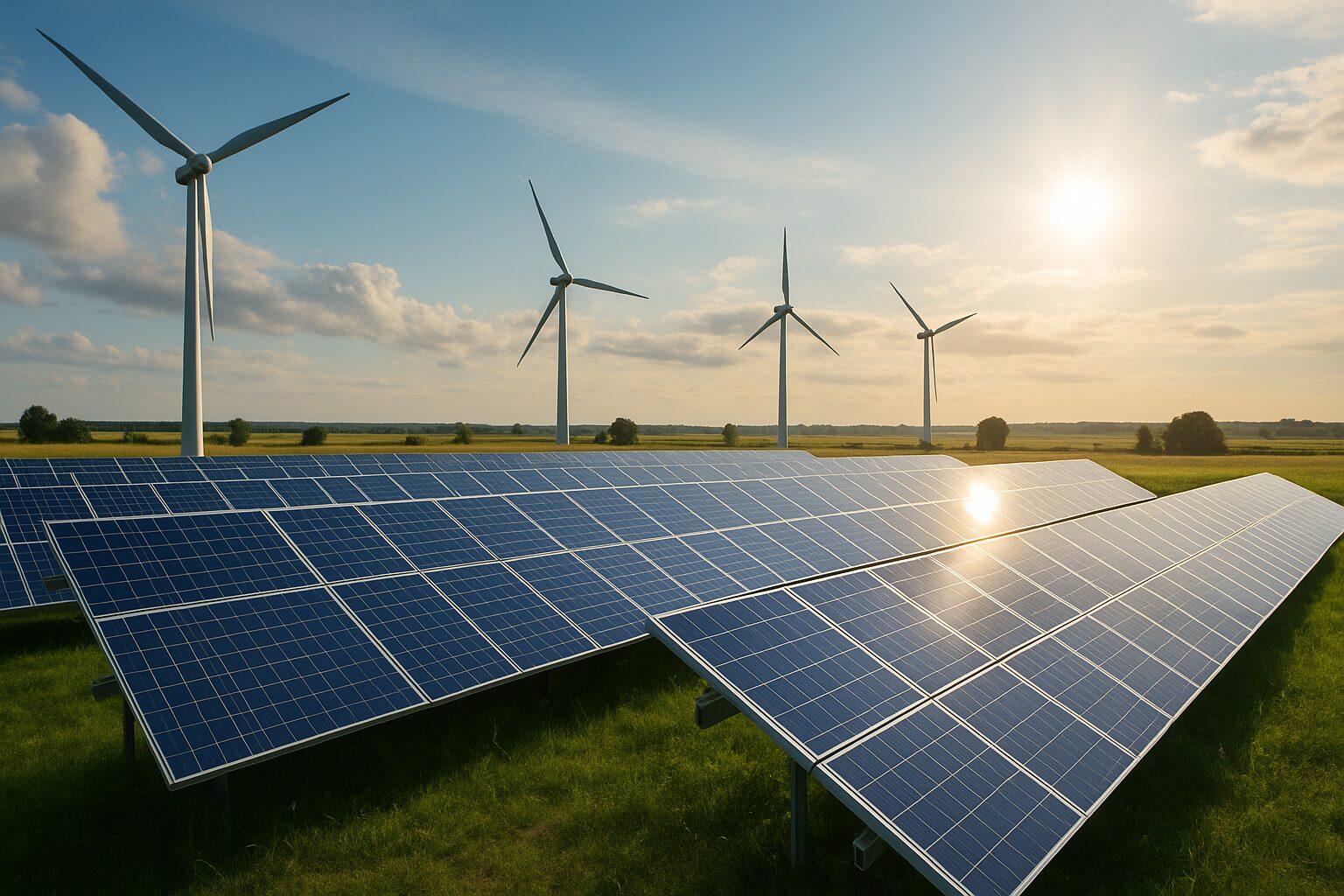
Discover How Renewable Energy Innovation Is Transforming the Future with Clean Technologies, Sustainable Solutions, and New Opportunities for a More Efficient and Conscious World.
Renewable energy innovation is undoubtedly one of the most urgent and transformative themes today.
In a scenario of intense climate change and environmental degradation, thinking about sustainable ways to produce energy has become essential to ensure a balanced future.
For centuries, humanity has relied on burning biomass, coal, and more recently, oil and natural gas.
-
Renewable energy advances over protected areas in Brazil, and a survey by the Energy Transition Observatory reveals silent impacts that challenge environmental conservation and pressure sensitive traditional territories.

-
Rio Grande do Sul accelerates energy transition: State invests in renewable technologies and consolidates decarbonization strategies and pathways to attract billions in new industrial investments.

-
With 160,000 m² of collectors, an area larger than 20 football fields, Silkeborg, in Denmark, hosts a solar thermal plant that heats 19,500 homes and could become the largest solar heating plant in the world.

-
A study reveals the expansion of renewable energy procurement in Brazil and shows how companies are taking advantage of opportunities to reduce expenses, ensure energy efficiency, and strengthen strategic environmental commitments.


In the 19th century, the Industrial Revolution intensified this model, expanding the use of fossil fuels to power factories, locomotives, and entire cities.
However, throughout the 20th century, the side effects began to become evident.
In 1973, the first major oil crisis, caused by the Organization of the Petroleum Exporting Countries (OPEC) embargo, exposed the global vulnerability of relying heavily on finite resources. This historical episode drove countries to seek alternative energy sources.
According to the Intergovernmental Panel on Climate Change (IPCC), published in 2023, limiting global warming to 1.5°C requires drastic cuts in carbon emissions by mid-century.
This scenario further accelerated investments in clean technologies such as solar, wind, biomass, and other renewable sources.
The Beginning of the Energy Transition in Brazil and Worldwide
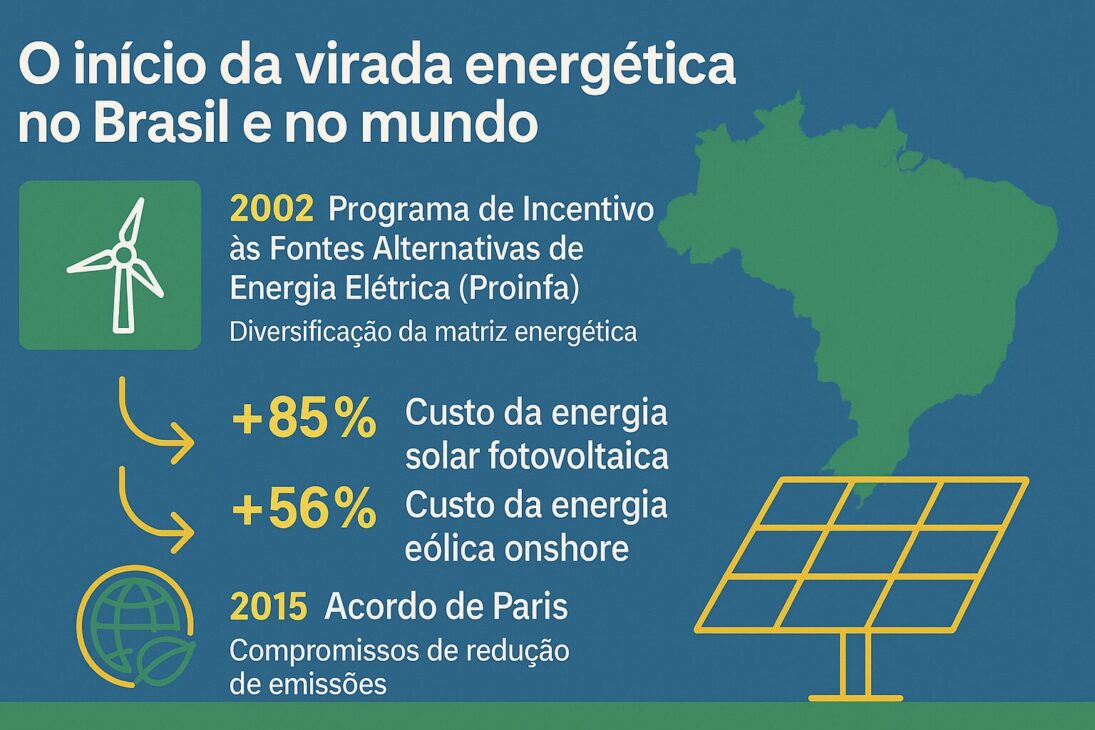
Brazil began to awaken to renewable sources from the 1990s, but it was in the 2000s that investments intensified.
In 2002, the federal government created the Incentive Program for Alternative Sources of Electric Energy (Proinfa) to diversify the national energy matrix.
According to data from the National Electric Energy Agency (ANEEL), the program contributed to the inclusion of wind, biomass, and small hydroelectric plants in the Brazilian electrical system.
Worldwide, according to the International Renewable Energy Agency (IRENA), between 2010 and 2020, the cost of photovoltaic solar energy fell by about 85%, while onshore wind energy decreased by 56%.
This made these technologies accessible and competitive compared to conventional sources, marking a historic transition.
Additionally, starting in 2015, with the Paris Agreement—signed by 196 countries—the international community made firm commitments to reduce emissions.
According to the official United Nations website, the treaty came into force in November 2016 and boosted public policies and investments in green innovation in various countries.
The Power of Technological Innovation in Clean Sources
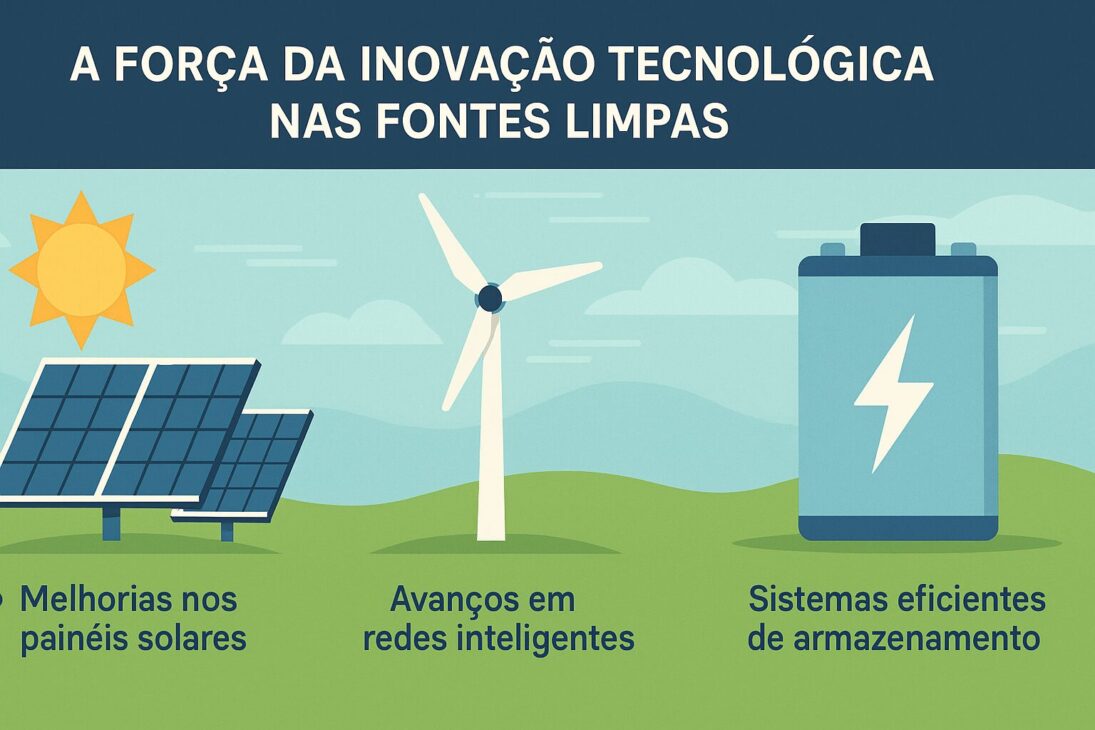
The innovation of renewable energy encompasses improvements in solar panels to the creation of smart grids and efficient storage systems.
According to the 2022 report from BloombergNEF, the decrease in the production cost of lithium-ion batteries allowed for large-scale storage of solar and wind energy, solving the intermittency problem.
In Brazil, the growth of solar energy has been exponential.
According to the Brazilian Photovoltaic Solar Energy Association (ABSOLAR), by the end of 2023, the country surpassed 37 GW of installed solar capacity, totaling distributed and centralized generation.
This number corresponds to over 16% of the national electric matrix, reflecting technological advancement and growing public interest.
Wind energy has also gained prominence.
According to the National Electric System Operator (ONS), in 2023, Brazil had about 25 GW of installed wind power, which corresponds to over 12% of national production.
The state of Rio Grande do Norte leads with the highest number of operational wind farms.
Smart grids, in turn, have begun to integrate the concept of sustainable cities.
According to data from the Energy and Environment Institute (IEMA), smart grids allow for real-time monitoring of energy consumption and production, promoting efficiency and reducing waste.
Education and Research: The Pillars of Energy Transition
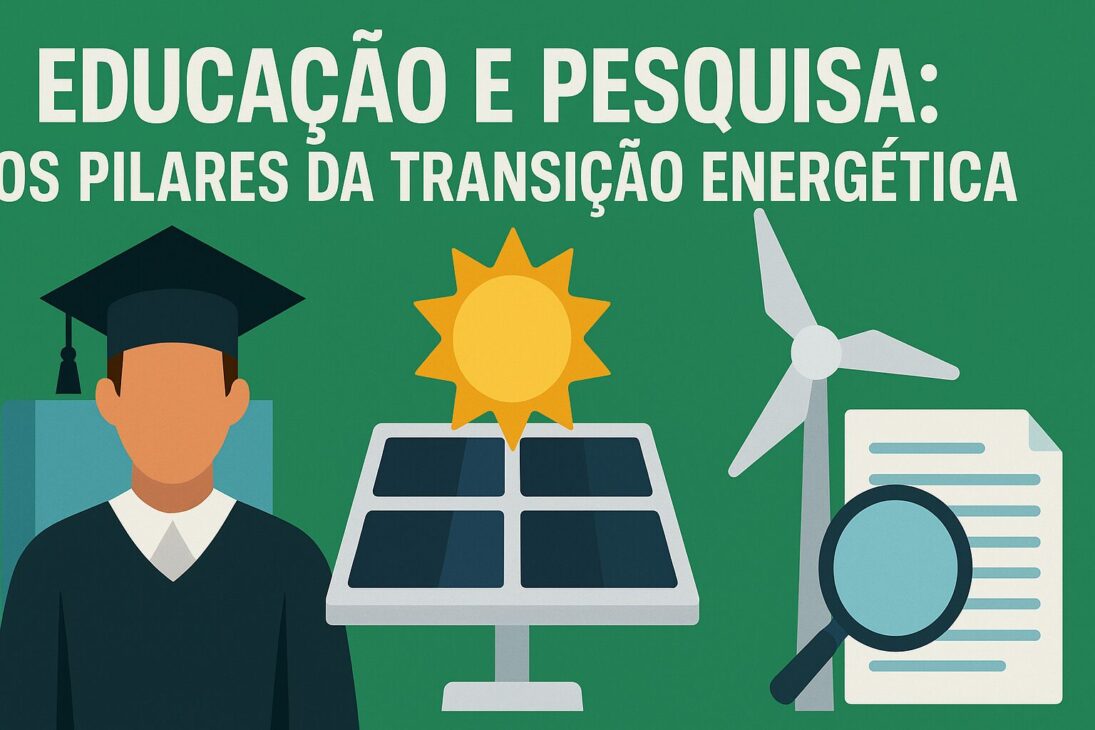
The advancement of innovation also directly depends on the training of professionals and support for research.
According to the National Council for Scientific and Technological Development (CNPq), between 2010 and 2023:
There was a growth of more than 60% in academic projects related to renewable energies, with highlights in areas such as nanotechnology, electrical engineering, and sustainability.
Moreover, institutions such as the Federal Institute of Santa Catarina (IFSC) and SENAI have begun to offer technical and qualification courses focused on solar, wind, and energy efficiency.
This training helps prepare the new generation of professionals to work in a dynamic and highly innovative market.
According to data from IRENA, the renewable energy sector generated over 13 million jobs globally by 2022.
Brazil alone accounts for over 1.3 million of these positions, according to estimates from ABSOLAR.
Social, Environmental, and Economic Impact of Green Innovation
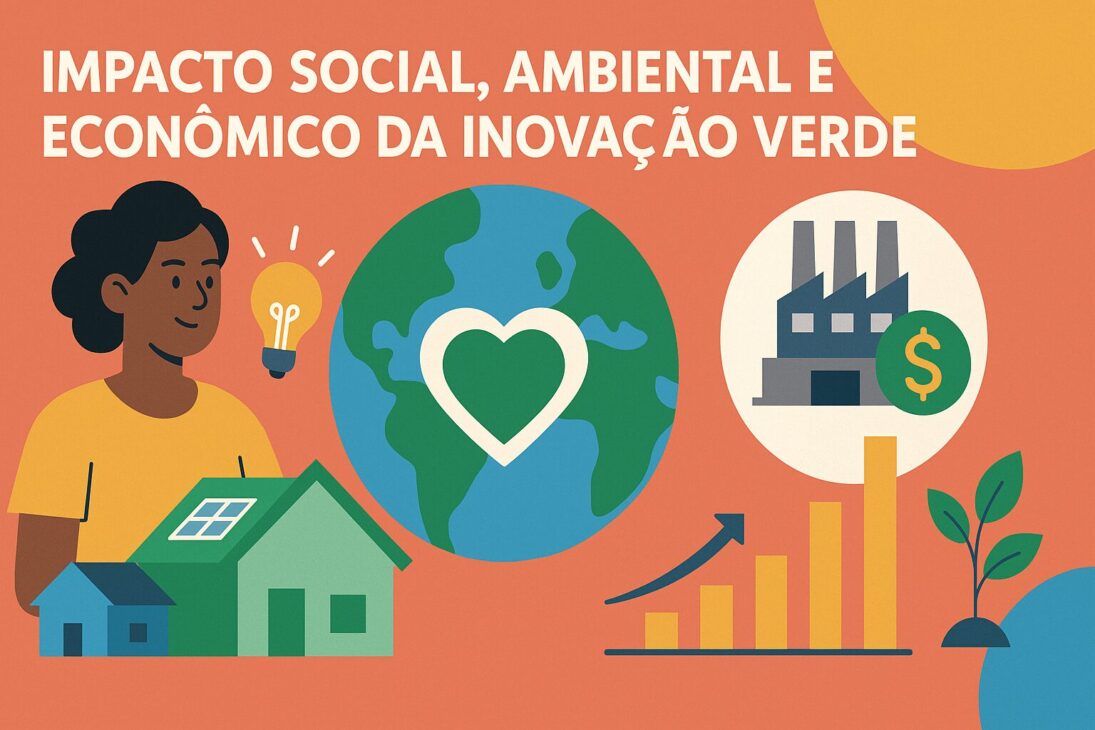
The renewable energy innovation is directly linked to promoting environmental justice and reducing inequalities.
According to the 2023 report from the United Nations Industrial Development Organization (UNIDO):
Communities with access to clean energy show significant improvements in education, health, and economic development.
In Brazil, companies and startups have been developing creative and accessible solutions.
Projects like those from Litro de Luz Brasil, for example, use PET bottles with solar panels to illuminate areas of communities without access to electricity.
This combination of simple technology with social impact demonstrates how innovation can transform lives.
Additionally, initiatives such as the Legal Framework for Distributed Generation, enacted in 2022 (Law No. 14.300/22), brought legal security for those wishing to invest in residential solar energy, further boosting sector growth.
The renewable energy innovation, therefore, also symbolizes energy democratization and local income generation.
Present Decisions Shape the Energy Future
The future of energy depends on the choices we make now.
According to the 2023 Global Renewable Energy Report, published by the United Nations (UN):
This decade is crucial in determining whether humanity can curb the most severe impacts of climate change.
Every individual decision, such as installing solar panels, consuming consciously, or supporting environmental policies, contributes to this transformation.
The energy that comes from the sun, wind, water, and earth is abundant.
Using it wisely is the greatest legacy we can leave for future generations.
Therefore, renewable energy innovation is not just a trend.
It is a global call to act purposefully, responsibly, and with future vision.
It is in the hands of governments, businesses, educators, scientists, and also every citizen who wishes for a better world.
And the time to act is now.









Seja o primeiro a reagir!