





 Portuguese
  English
  Spanish
  5 min of reading
  0 comments


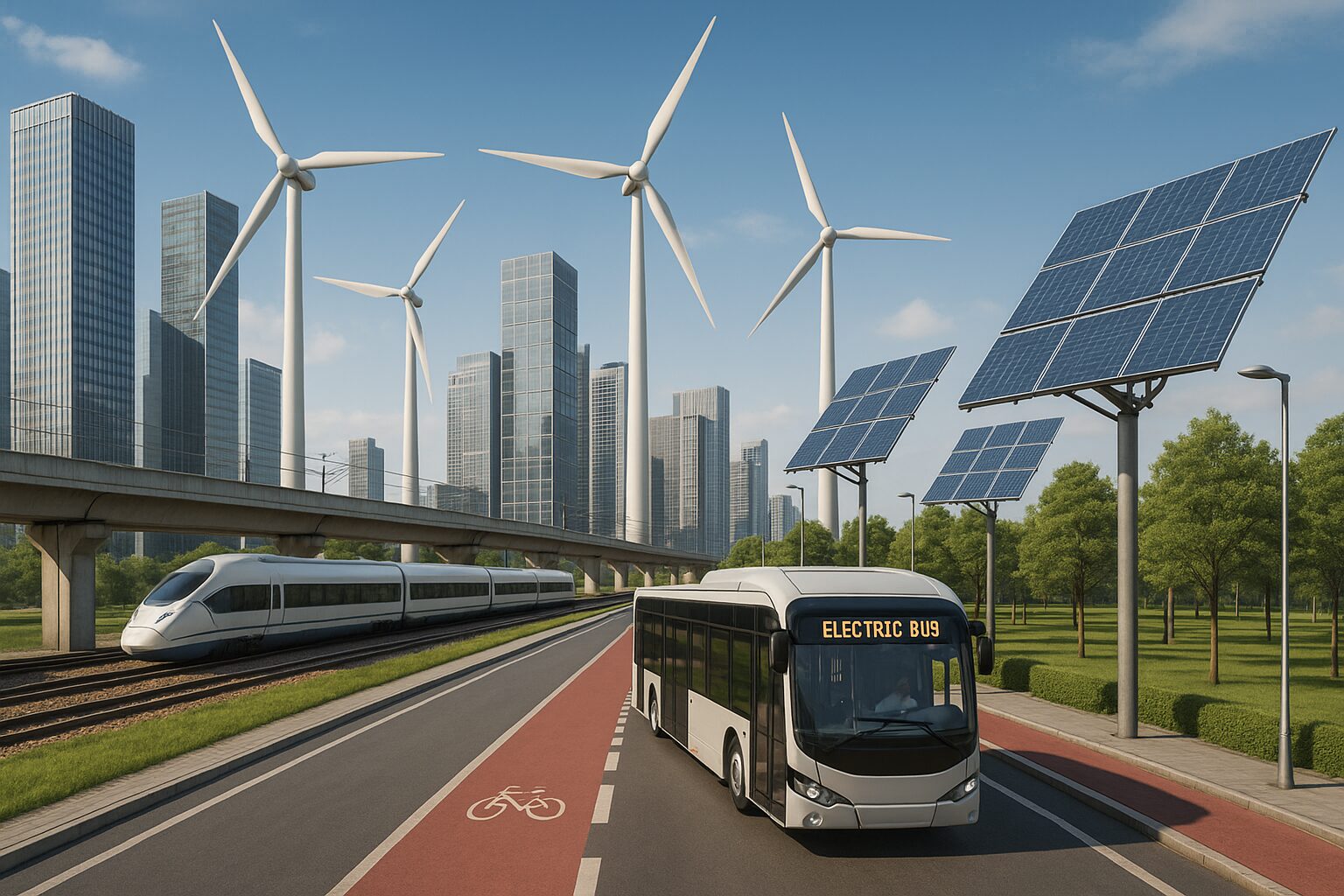
Discover How Infrastructure Innovation Transforms Cities, Improves Quality of Life, and Promotes Sustainable Development with Smart and Accessible Solutions.
Throughout history, infrastructure has always been one of the fundamental pillars for the development of civilizations.
Roads, bridges, aqueducts, sewage systems, railways, electricity, and communication systems represent examples of elements that have shaped the world as we know it.
According to historian Charles Merewether, innovations in infrastructure, such as the aqueducts of Ancient Rome, had a direct impact on the expansion and prosperity of ancient civilizations.
-
Employee Fired After Accumulating 114 Days of Medical Leave in One Year, Labor Court Upholds Company’s Decision

-
Employee Fired While Treating Depression Wins in Court and Vale Is Required to Rehire Him Following Decision Based on the CLT and INSS Benefits

-
Workers Should Be Aware! March 6 Will Be The Fifth Business Day Of March And The Final Deadline For Companies To Pay Salaries According To The CLT

-
2026 FGTS Anniversary Withdrawal Is Released According to Birth Month, Sets Amounts by Balance Range, Establishes Deadlines for March and April, and Changes Rules in Case of Dismissal


However, as centuries passed, these structures ceased to be mere support tools and became symbols of progress.
Today, we live in an era where infrastructure innovation is no longer an option but an essential necessity to ensure sustainability, quality of life, and economic growth.
To understand what infrastructure innovation is, it is necessary to look at the past.
In Ancient Rome, aqueducts represented a revolution that enabled the supply of water to the entire city.
During the Industrial Revolution, the emergence of railways and factories transformed the movement of people and goods, bringing regions closer together and boosting the economy.
With the advancement of industrialization, large infrastructure projects arose, such as sewage systems and city electrification.
In the 20th century, the construction of highways, hydroelectric plants, and telecommunication systems consolidated an infrastructure that shaped modern big cities.
Each of these advances broke with what existed before, generating more efficient solutions to the challenges of the time.
Modern Challenges Require Smart Solutions

Today’s society faces new challenges. Consequently, cities are more populated, natural resources are becoming increasingly scarce, and climate change demands more urgent action.
In this scenario, infrastructure innovation arises as a smart and necessary response to these new demands.
According to Brazil’s Ministry of Infrastructure, new technologies are transforming the way we deal with these challenges.
The implementation of data-driven solutions and renewable energy sources, for example, is one way to reduce environmental impact while meeting urban needs.
Examples of infrastructure innovation in the 21st century show how technology and urban mobility integrate to create more efficient cities.
According to the Institute for Applied Economic Research (IPEA), the use of real-time data has been essential in optimizing public transportation in various Brazilian cities.
Chaotic traffic has been minimized with the implementation of smart public transport systems.
These systems use real-time data to optimize routes, reduce delays, and improve user experiences.
Additionally, many cities are investing in electric transportation, with buses and trains powered by clean energy, significantly reducing carbon emissions.
According to the International Energy Agency (IEA), by 2030, about 30% of urban cars are expected to be powered by electric sources, representing a significant advancement in the transportation sector.
Energy, Sanitation, and Quality of Life
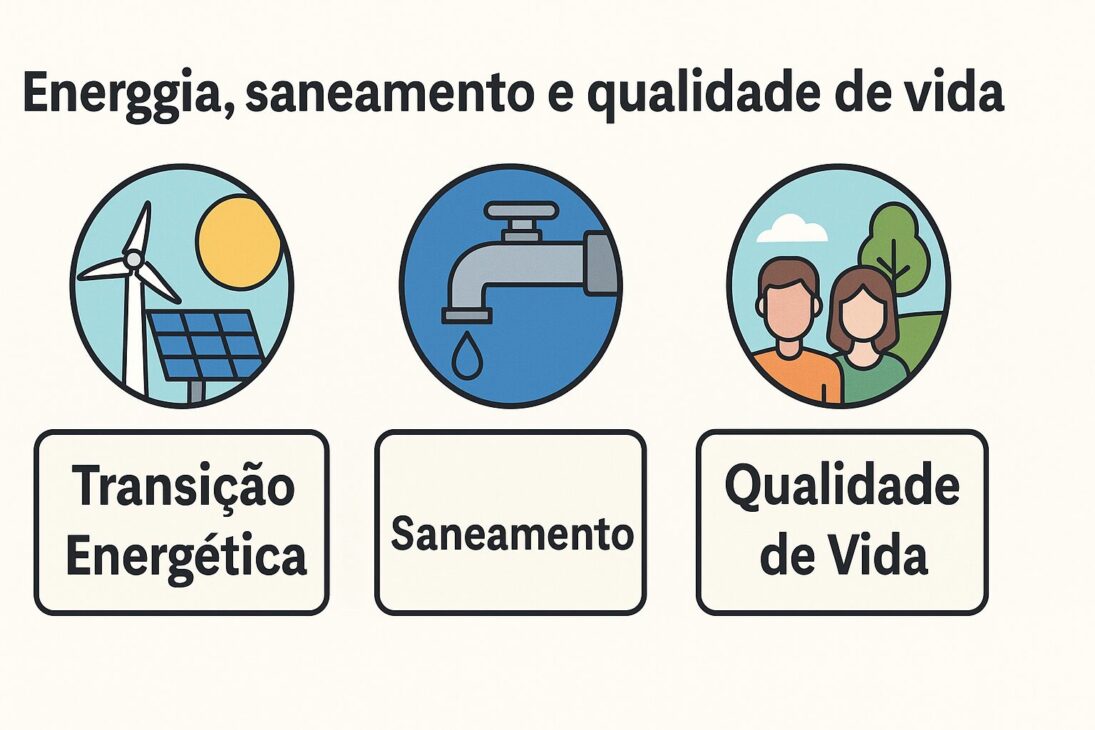
Another area where innovation stands out is energy transition. Smart grids have been deployed to enable more efficient energy use.
According to the Brazilian Solar Energy Association (Absolar), the use of solar energy grew by 65% in Brazil between 2020 and 2023, reflecting the growing interest in cleaner and more accessible energy solutions.
These grids not only increase the reliability of supply but also balance supply and demand, creating a more resilient and sustainable system.
According to the National Electricity Agency (ANEEL), the integration of renewable sources in Brazil has rapidly expanded, with a goal of reaching 33% of the national energy matrix with solar energy by 2030.
Sanitation has also undergone significant transformations.
Technologies for water reuse, leak detection by sensors, and sewage treatment with lower environmental impact are clear solutions of how innovation can enhance the quality of life of the population.
According to the World Health Organization (WHO), over 2 billion people still lack access to safe drinking water, and innovation in sanitation is crucial to address this issue.
In regions where access to drinking water remains a challenge, solutions like desalination and rainwater harvesting systems with purification offer hope and dignity to millions of people.
Smart Cities and Adaptive Infrastructure
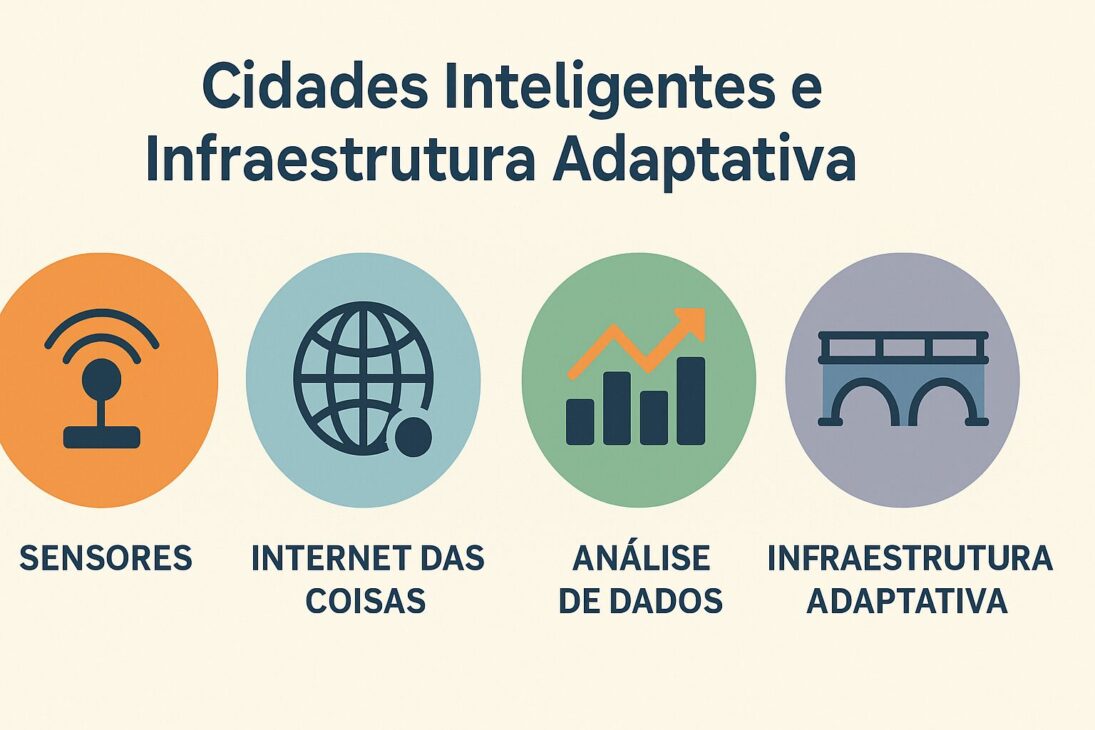
In the field of civil construction, the concept of smart cities (smart cities) stands out. Sensors, Internet of Things (IoT), and data analysis are optimizing resource use and improving public services.
For example, public lighting now adjusts automatically based on the presence of people or natural light, saving energy.
Moreover, monitoring systems for bridges and overpasses detect structural failures before they become dangerous, increasing safety and reducing emergency maintenance costs.
According to the United Nations (UN), by 2050, more than 70% of the world’s population will live in urban areas, which makes the implementation of smart solutions even more urgent.
Infrastructure innovation also involves a new approach to urban planning and social inclusion.
More sustainable and resilient cities take into account the diversity of the population and their needs.
Access ramps, wide sidewalks, well-distributed public spaces, and bicycle lanes promote accessibility and mobility for all.
Furthermore, innovation requires a new way of thinking and executing projects. In the past, large works were based on rigid methods and fixed forecasts.
Today, adaptive infrastructure stands out. It adapts over time, using durable, modular, and sustainable materials.
This approach aims not only to meet current needs but also to ensure the infrastructure necessary for future generations.
Investment, Training, and Sustainable Future
Investment in research and professional training also plays a fundamental role. Infrastructure innovation does not happen without continuous effort.
It depends on engineers, architects, urban planners, technicians, public and private managers who are updated, along with public policies that encourage sustainable development and the use of innovative technologies.
Without this foundation, transforming good ideas into concrete solutions would be impossible. The private sector also plays an essential role in this process.
Public-private partnerships (PPPs) have proven to be a viable alternative for executing large-scale projects.
They combine the capital and expertise of the private sector with public interest.
When well-structured, these partnerships can accelerate the implementation of works, ensure quality, and better meet the demands of the population.
According to the Institute for Applied Economic Research (IPEA), public-private partnerships have been responsible for executing several infrastructure projects in Brazil, such as the construction of highways and the provision of renewable energy.
Finally, infrastructure innovation is not an optional path, but essential.
It is not just a trend, but a real need to ensure the future of cities, the environment, and the upcoming generations.
Innovation is the link between tradition and modernity, uniting the wisdom of those who built the past with the creativity of those who dream of a better future.
Infrastructure innovation represents progress with awareness, growth with responsibility, and development that respects both humanity and nature.
Understanding its importance goes beyond a technical concept; it is also an ethical and social issue.
After all, infrastructure shapes the world we live in – innovating in this area is a way to build a fairer, more efficient, and better world for everyone.










Seja o primeiro a reagir!