





 Portuguese
  English
  Spanish
 3 min of reading
  0 comments


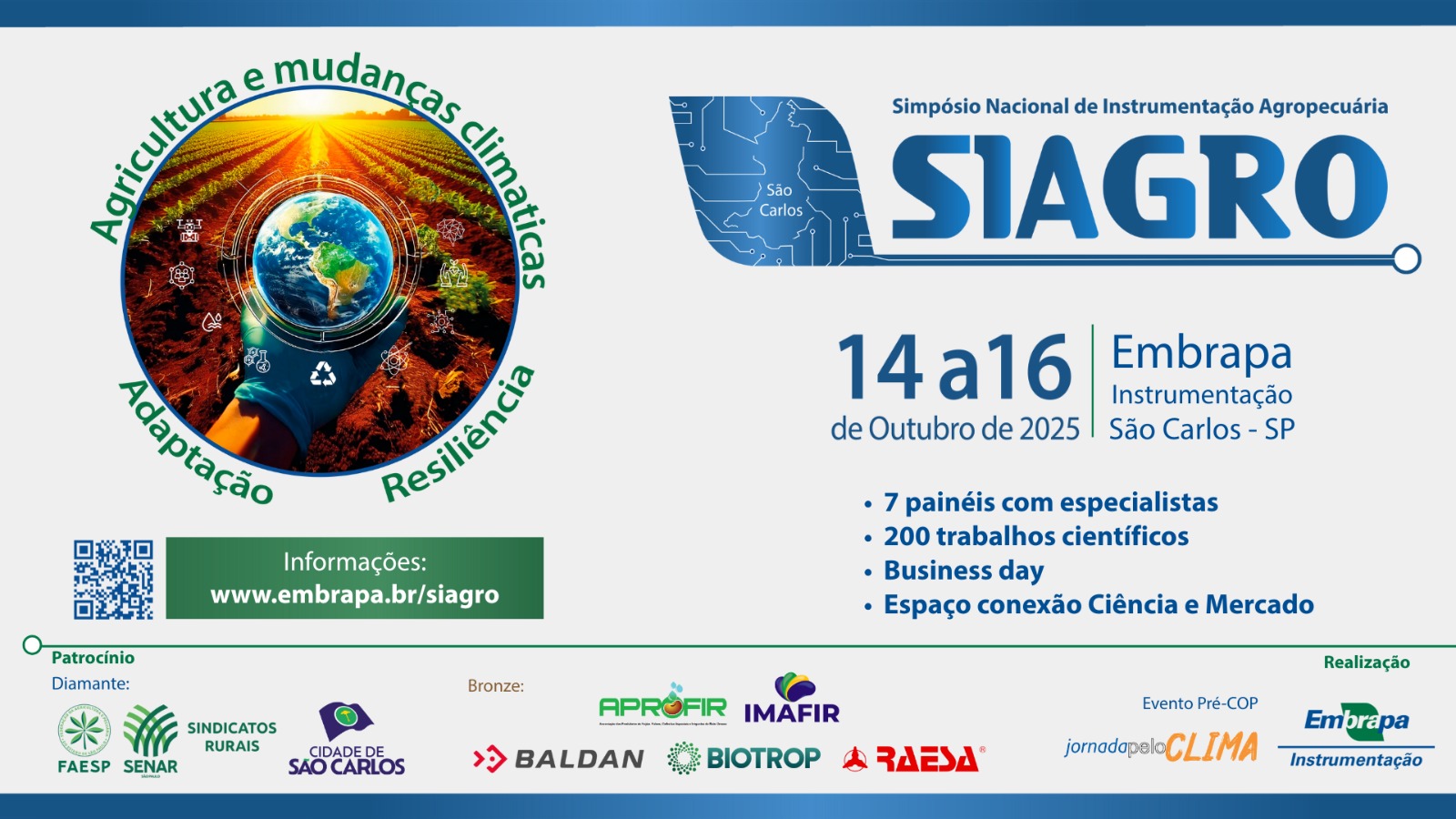
With A Focus On Siagro 2025, The Event In São Carlos Presents Innovations In The Brazilian Agricultural Sector, Strengthening Sustainability, Digital Agriculture, Nanotechnology, And New Technologies For The Field
The innovations in the Brazilian agricultural sector are transforming the way the field produces, manages, and adapts to climate change, according to an article published
From October 14 to 16, São Carlos (SP) will host the National Symposium on Agricultural Instrumentation (Siagro 2025), promoted by Embrapa Instrumentation, one of the most relevant scientific events in the sector.
The initiative will bring together researchers, producers, investors, and companies in an environment focused on applied science, emphasizing sustainable technologies.
-
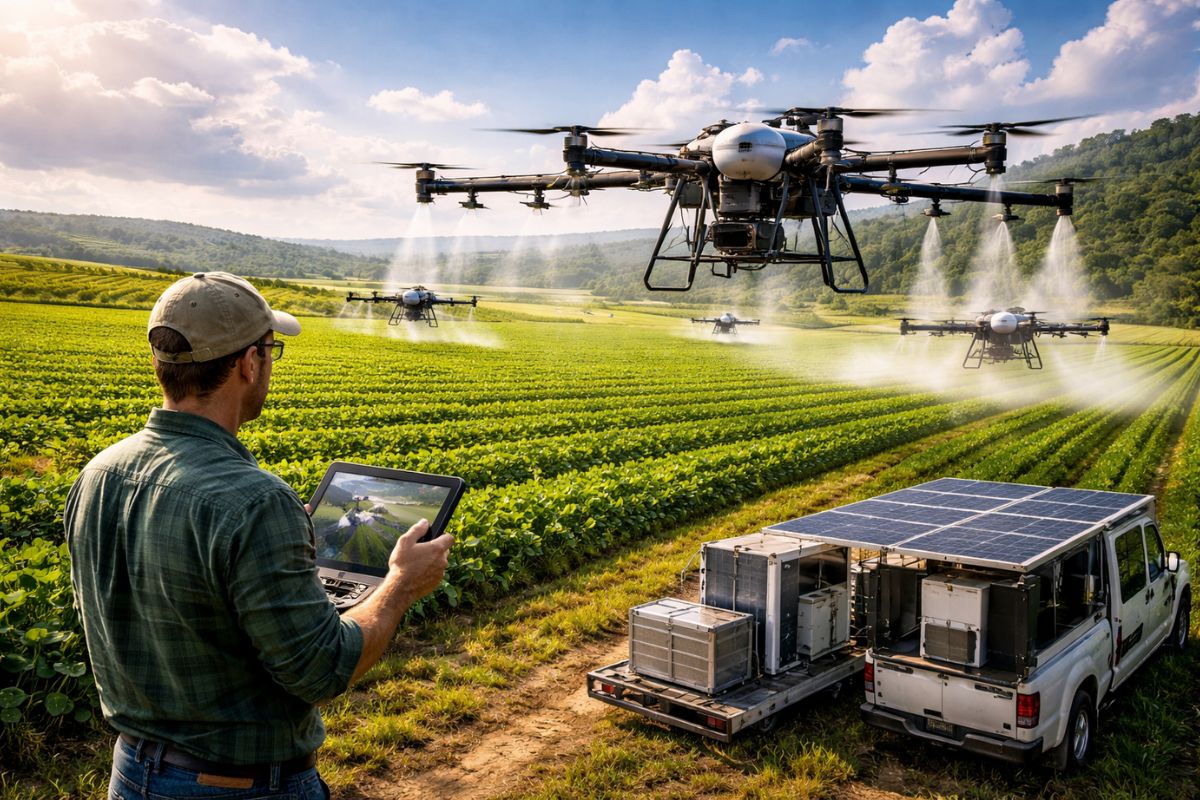
Alone, the producer applies 7,400 hectares with the T100 drone in an optimized structure, replaces the generator with a silent battery, and demonstrates how technology reduces costs, increases productivity, and even challenges the uniport in the field.
-
China banned the export of 22 tons of meat from Argentina.

-
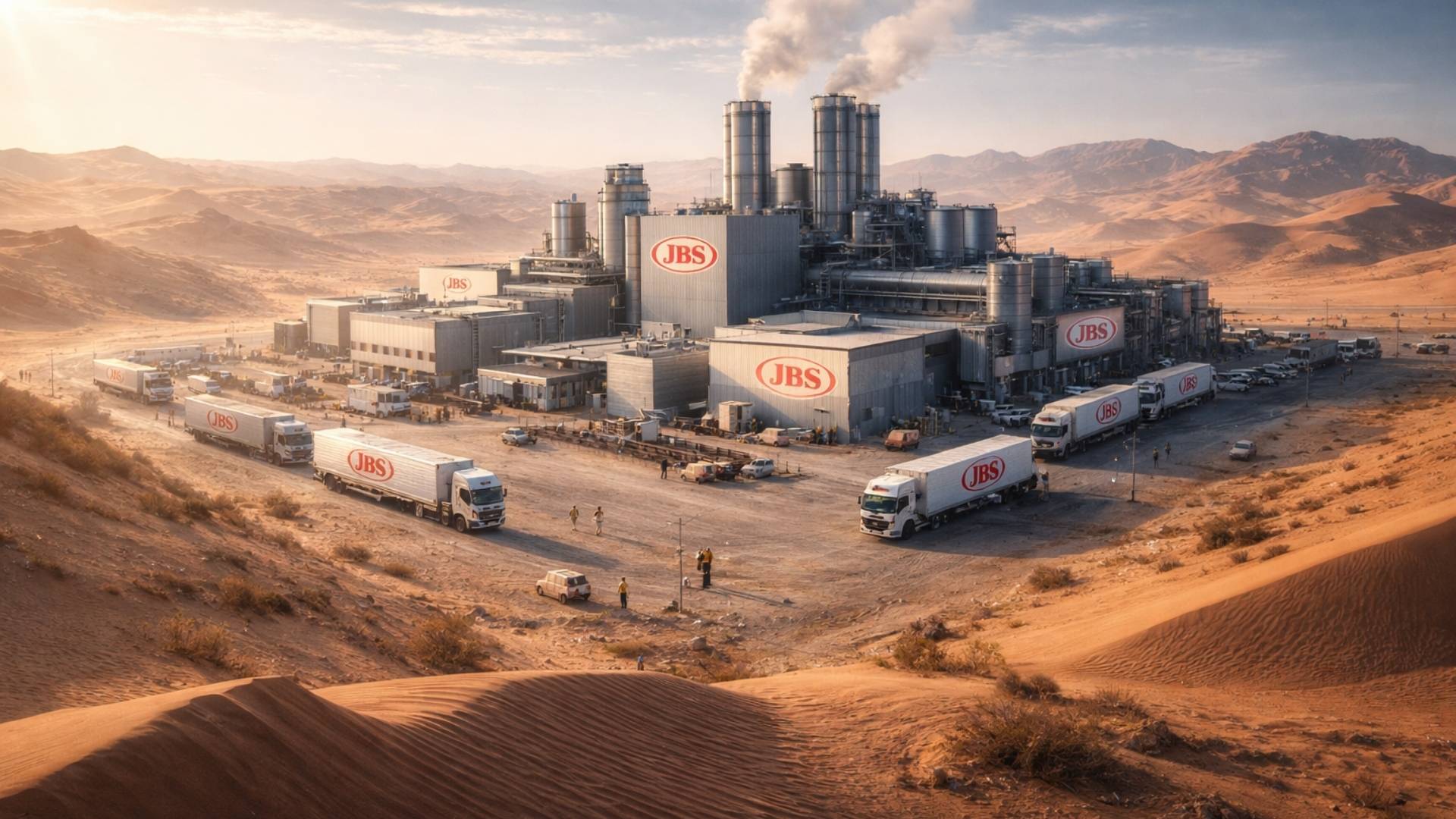
JBS, founded by the Batista brothers, continues to conquer the world: entrepreneurs built a ‘factory in the desert’ creating 3,000 jobs.
-
With only 1% of Brazil’s territory, Santa Catarina has built one of the most competitive industrial parks in the country, with 64,000 companies, nearly 1 million jobs, and a growth rate of 5.3% while the national industry is practically stagnant.


The meeting will showcase 21 technological assets and 199 scientific papers, authored by 793 authors from 125 institutions.
The focus is on the resilience of agriculture in the face of water, nutritional, and biological stresses, which affect crops such as soybeans, corn, and cotton.
These solutions mark a new stage of integration between science, innovation, and market, consolidating Brazil as a global leader in agricultural technology.
Sustainability And Precision Agriculture Transform The Brazilian Field
Among the highlights of Siagro are projects focused on sustainability and precision agriculture, which use sensors and smart software to improve input usage and reduce waste.
With 145 of the 199 papers focused on digital agriculture and nanotechnology, the 2025 edition demonstrates the advancement of Brazilian scientific research.
Soil mapping technologies and route-optimizing drones for unmanned aerial application of biological agents will be demonstrated in the field.
These initiatives reinforce how innovations in the Brazilian agricultural sector are directly linked to the use of real-time data, contributing to increased productivity and environmental preservation.
Nanotechnology And Intelligent Bioinputs Strengthen Production Chains
Solutions based on nanotechnology and intelligent bioinputs are among the most promising bets of the symposium.
Controlled-release fertilizers, new formulations for bioinputs, and novel methods for estimating soil density and carbon will be presented.
These technologies, developed in partnership with Embrapa and private institutions, have high potential for market transfer.
The presence of researchers like Silvio Crestana (Embrapa Instrumentation) and Ricardo César Aoki Hirata (USP) highlights the importance of integration between science and sustainability.
In this context, innovations in the Brazilian agricultural sector emerge as a concrete response to the demands for food security and adaptation to climate change.
Geopolitics, Science, And Innovation Guide The Future Of National Agriculture
Siagro also opens space for strategic reflections on geopolitics, science, and agricultural innovation, highlighting the participation of ambassador Rubens Ricupero, who will present, on October 15, at 11:15 am, the lecture “Geopolitics, Science, and Agriculture.”
Moreover, the event will result in a document of recommendations to guide public policies and investment strategies.
This articulation strengthens cooperation networks among companies, universities, and rural producers, enhancing Brazil’s role in forums such as the G20 and COP-30.
The convergence between technology and sustainability proves that innovations in the Brazilian agricultural sector are essential to consolidate a resilient, competitive production model aligned with the challenges of the 21st century.








-

Uma pessoa reagiu a isso.