





 Português
  Inglês
  Espanhol
  3 min de leitura


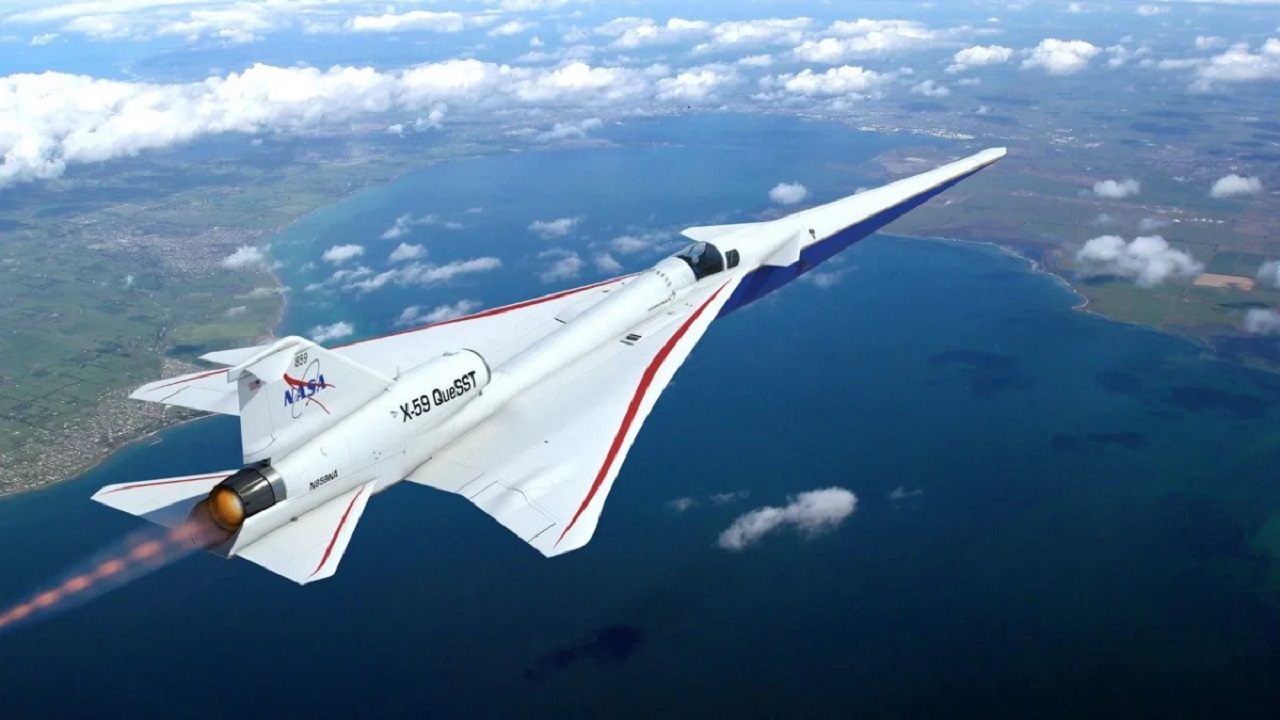
NASA Is Developing A Silent Supersonic Aircraft That Will Revolutionize The Market And Open Doors For Much Faster Commercial Air Travel.
Military aircraft are vehicles capable of supersonic flight, that is, flying at speeds greater than the speed of sound. However, commercial airplanes have been somewhat restricted on the ground due to the loud noises that accompany this type of flight. Known as sonic booms, these are a sequence of shock waves generated by supersonic aircraft that merge to form two deafening booms that can be heard for miles away.
NASA Finds Way To Reduce Supersonic Aircraft Noise

On the ground, these barriers generate unacceptable noise levels for the public, and while there have been some previous success stories, such as the now-retired Concorde, these were banned from flying over land. Since then, there have generally been few attempts to make supersonic flight something normal for commercial airplanes.
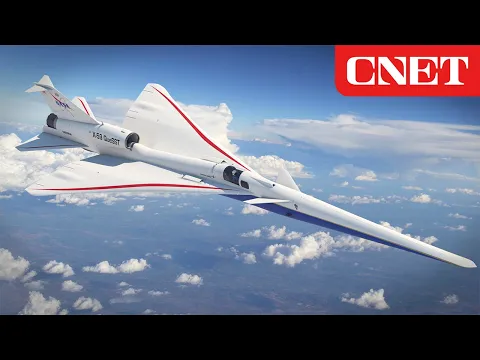
However, if means could be generated to reduce the noise created by these aircraft, especially on the ground, it could drastically reduce travel times. Thus, aircraft like the planned supersonic X-59 from NASA could be revolutionary for the air travel industry.
-
Found in one of the most radioactive places on Earth, this Chernobyl fungus may be doing something with radiation that no one has been able to explain to this day.

-
A bright yellow mushroom imported from Asia escaped from a cultivation farm in the United States in 2010 and is now aggressively spreading across 25 states, destroying entire communities of native fungi in American forests.

-
Buried under China, a colossal machine weighing 20,000 tons began operating as the largest neutrino detector on the planet and, in just 59 days, surpassed results that science took half a century to achieve.

-
Iran enters the center of a climate alert after the war emitted 5.6 million tons of CO2 in two weeks, surpassing the annual pollution of entire countries.


The vehicle is equipped with QueSST (Quiet Supersonic Technology), a sonic noise reduction technology being developed with the goal of making supersonic flight over land a real possibility in the future.
The X-59 is 29 meters long and has a wingspan of 9 meters. Like the Concorde, the plane has a long, pointed nose that obstructs the frontal view; however, this obstruction is compensated by an enhanced flight vision system, likely consisting of 4K cameras.
Supersonic Aircraft Aims To Generate Only 75 dB
>The 105-110 decibels of perceived level (PLDB) from the Concorde on the ground are much higher compared to the goals for the aircraft designed by NASA, which is 75 PLDB. According to its designers, the boom generated by this aircraft should not be louder than the sound of a car door closing.
To give an idea of these numbers for the aircraft, a whisper is about 30 dB, a normal conversation is around 60 dB, and the sound of a running motorcycle engine is approximately 95 dB. Consistently levels above 70 dB can harm human hearing, and levels above 120 dB can cause severe damage to the eardrums.
For Gautam Shah from NASA Langley Research Center, its characteristics will be discussed when he presents at the 183rd Meeting of the Acoustical Society of America the Quesst Mission – Community Response Testing Plans.
As part of the meeting taking place from December 5 to 9 this year at the Grand Hyatt Nashville Hotel, the presentation will be held on December 6 at 10:50 AM, Eastern Time, in the Summit Broom.
NASA Will Fly Over American Cities To Test Supersonic Aircraft
The X-59 model, according to Shah, is intended to validate and demonstrate the technologies and design tools that allow the development of an aircraft with a different shape that alters the behavior of supersonic shock waves.
Instead of merging to be heard as one loud bang, the shock waves do not merge, weakening quickly and resulting in a sound more like a gentle thump.
NASA will fly over various towns and cities in the U.S. to test this and determine how the public would react to various noise levels. Shah and his team will measure the aircraft’s sound and conduct surveys with the general population.
The organization aims to inform a supersonic ground sound standard, providing this knowledge to regulatory bodies.






Seja o primeiro a reagir!