





 Portuguese
  English
  Spanish
  6 min of reading
  2 comments





With the Migration of Dataprev Completed, INSS Reactivates Meu INSS and Central 135 After Days of Instability, Reduces the Processing Time for Benefits, Prioritizes Rescheduling, Invests in a Safer Architecture, and Admits that the Recovery May Start Slowly Before Achieving the Desired Stability for Millions of Retirees
INSS enters a new stage of its digital transformation by confirming the return of two highly anticipated services for retirees: the operation of Meu INSS and Central 135, after a period of technical failures and instability. The update of the systems, led by the Ministry of Social Security in partnership with Dataprev, reduces the payroll processing time for benefits and attempts to fix bottlenecks that had been hindering service.
At the same time, the agency admits that recovery will not be instantaneous. The official forecast is for initial slowness, especially in services that rely on biometrics and during peak access times. In practice, this means that INSS needs to deliver stability and safety while managing a surge of millions of insured individuals returning to use digital channels simultaneously.
What Changes With the Update of INSS Systems
The main change announced by INSS is the completion of the transfer of Dataprev’s last mainframe to a new technological architecture.
-
Unemployment rises again to 5.8% at the beginning of 2026, raising alarms about the end of temporary positions and its impact on the Brazilian job market.

-
Document organization can cut invisible costs in small businesses, a simple step that prevents waste, rework, and losses in daily operations.

-
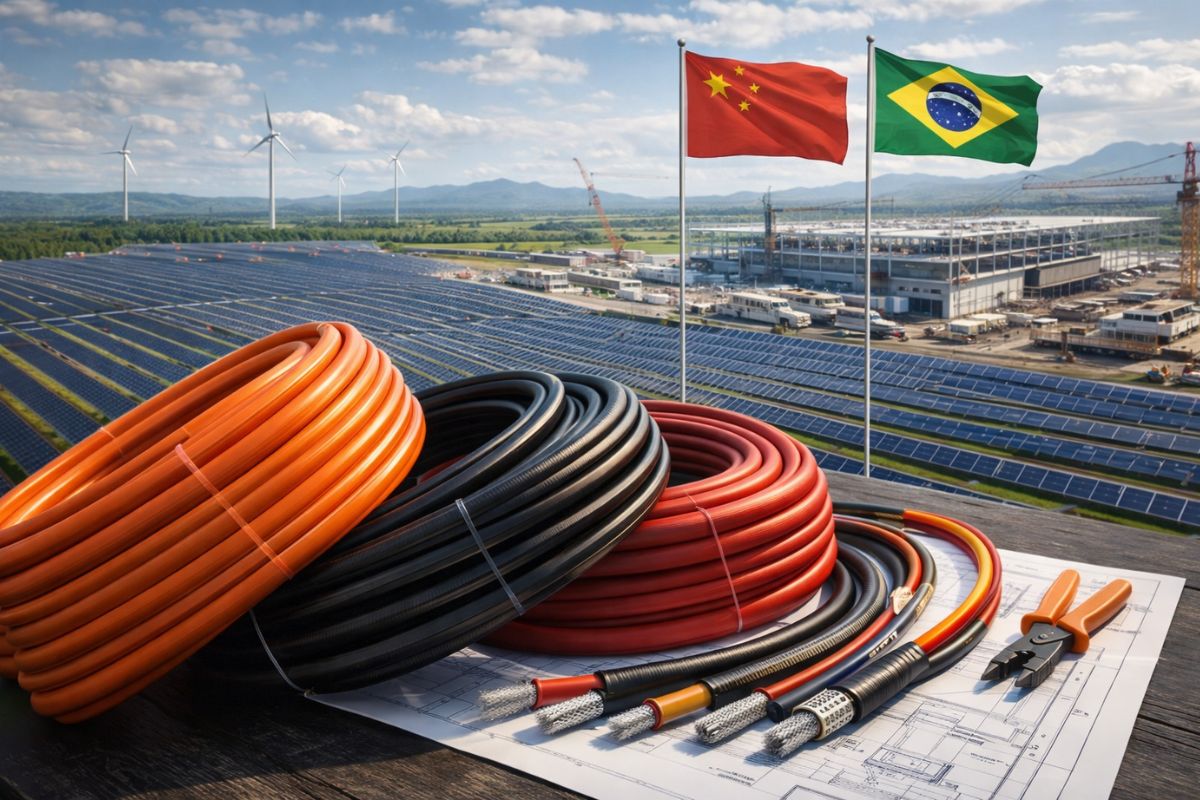
Chinese giant worth nearly R$ 4 billion that manufactures cables for electric cars, solar energy, and robotics wants to open a factory in SC.
-
Many employers do not know, but the law guarantees domestic workers a 25% increase in salary during trips, 50% for overtime, 20% for night shifts, and 17 additional benefits that can lead to labor lawsuits if not paid.


This reduced the payroll processing time from 96 to 48 hours, a cut in half for a critical routine that manages benefits nationwide.
This shortening of the timeframe is not just a technical gain, but an indicator that the system is better prepared to handle larger data loads in less time.
Besides the time issue, the architectural change involves the adoption of a more scalable and distributed platform.
In practice, this gives INSS more leeway to handle peak access times at Meu INSS and Central 135, something that has become routine with the advancement of digitalization.
The goal is for the system to simultaneously support a high volume of inquiries, benefit requests, process tracking, and rescheduling without repeating the outages recorded in recent days.
From Dataprev to Meu INSS: Why the Migration Was Inevitable
Dataprev, responsible for processing pension data, had been operating with mainframe-based infrastructure, a robust model but also expensive, inflexible, and difficult to scale at the speed required by today’s digital demand.
With the growth of Meu INSS as the entry point for virtually all services, the volume of access ceased to be an exception and became the norm.
The natural course was to migrate to a more modular structure capable of distributing load and responding better to sudden peaks.
For INSS, this migration is not just a technical decision but a response to the behavior of the insured individuals themselves.
More and more, retirees, pensioners, and active workers are attempting to resolve everything via cell phone or computer, including inquiries, proof of life, benefit requests, and appeals.
Without a technological base adjusted to this movement, the risk is repeating cycles of instability that directly affect those who depend on the benefit to pay basic bills.
Meu INSS and Central 135: What Has Returned and What Will Still Take Time
With the end of the maintenance window, INSS reported that the Meu INSS app and Central 135 are already back in operation, albeit with possible slowdowns in the first few days.
The exception is the retirement simulator, which is expected to return only starting Wednesday, February 4, after additional adjustments.
This means that services such as benefit inquiries, statements, and appointments can already be accessed, while calculation tools will remain in calibration phase.
At Central 135, the restoration is especially important for those who have difficulty using the app or do not have stable connections.
The reopening of the phone channel allows for registering requests, clarifying doubts, and rescheduling appointments canceled during the instability period.
Nevertheless, INSS acknowledges that wait times on the line may fluctuate, especially in the first hours of the full resumption of systems.
Initial Slowness, Biometric Systems, and Digital Queues: What INSS Admits
The government itself alerts that, despite the return of services, the user experience will not be immediate and perfect.
Services requiring biometrics, for example, may present longer response times as they depend on additional validations and the transit of sensitive data.
In a stabilization phase, any sudden increase in access tends to translate into screens taking longer to load, operations being frozen, and the need to repeat attempts.
Therefore, technical teams have been placed on constant monitoring, tracking performance indicators and failures in real-time.
The logic is to quickly identify where slowness is most severe, adjust infrastructure parameters, and prevent Meu INSS and Central 135 from becoming unavailable again.
The agency tries to balance the narrative of modernization with a dose of realism: the platform is more robust but may still fluctuate until the new environment is fully fine-tuned.
Priority for Rescheduling and Impact on Those Who Had Appointments Canceled
During the maintenance period, consultations and appointments were canceled, which generated frustration among retirees and insured individuals awaiting exams, benefit analyses, or in-person services.
INSS promises priority for those directly affected, allowing rescheduling before opening new broader slots.
In practice, this means a reorganized queue where the recent history of cancellations will weigh on the order of service.
This type of prioritization is crucial to avoid pushing people in more urgent situations further down the digital queue.
The modernization of the system, according to INSS itself, should also facilitate the management of these rescheduling through the Meu INSS app, reducing the need to travel to a physical agency.
If the model works as designed, what is currently a temporary inconvenience could turn into a more rational flow of services in the coming months.
Data Security and Stability: The Two Central Promises of the New Environment
In addition to agility, the modernization of INSS’s technological environment promises enhancements in data security.
The new distributed infrastructure allows for the application of additional layers of protection, segmentation of internal access, and more detailed logging of the path taken by information.
In a system that gathers sensitive data from millions of Brazilians, any security failure would have immediate social and political impact.
Stability is the other pillar. The goal is to minimize downtime, whether planned or unplanned, that prevents the use of Meu INSS and Central 135.
To achieve this, the scalable architecture needs to support both daily routines and peak demand periods, such as payment dates, announcements of new benefits, or changes in pension rules.
INSS’s credibility in the digital environment is directly linked to the perception that the system is available when the insured person needs it, not just when technology can support it.
How Digital INSS Alters the Routine of Retirees and Insured Individuals
With services gradually stabilizing, the trend is for INSS to continue pushing more demands into the digital environment.
The promise is to reduce queues in agencies, concentrate in-person services on more complex cases, and allow simple issues to be resolved through Meu INSS or Central 135.
For many retirees, this means less travel, less cost, and less exposure to long waits in physical environments.
On the other hand, digitalization requires a minimum familiarity with apps and automated phone support, which remains a challenge for parts of the older audience.
In this scenario, the stability promised by INSS needs to be accompanied by clarity on screens, understandable messages, and support channels that truly help users complete each step.
Technology only fulfills its role when it does not turn access to benefits into another barrier for those who already face financial and health difficulties.
INSS Under Test: Your Experience with the Resumption Will Determine Whether the Modernization Worked
The return of INSS systems, the migration of Dataprev, and the promise of a more stable Meu INSS put Brazilian Social Security in a sort of trial period before the population.
If the reduction in processing time, the new architecture, and the increase in security translate into fewer failures, the agency will gain momentum to advance in other digital services.
If, on the contrary, slowness and outages recur, trust in online services will be even more difficult to rebuild.
Given this scenario, how has your experience with INSS been after the resumption of services: have you managed to use Meu INSS and Central 135 with relative ease, or do you still face freezes, slowness, and difficulties in completing simple requests in the system?










Instabilidade no Meu INSS, indisponibilidade no serviço de desbloqueio para empréstimo.
Número continua caindo 135 enquanto isso meu pai e minha mãe estão sem saber de nada do benefício tá quase estourando prazo de 90 dia dado pelo INSS meu pai e minha mãe estão com quase 80 anos cada um eles deu entrada no Benício por idade foi no dia 26 de novembro do ano passado