





 Portuguese
  English
  Spanish
  6 min of reading
  1 comment


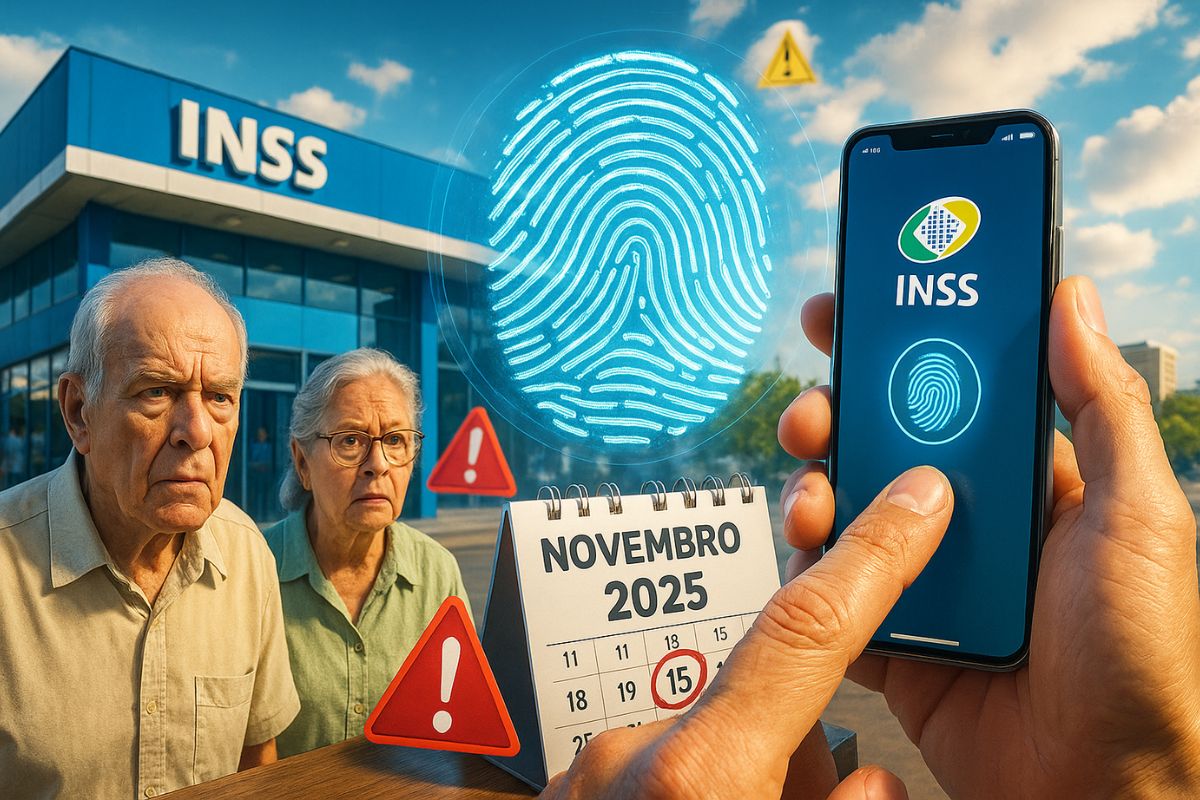


Focusing on Combating Fraud and Automatic Data Cross-Checking, INSS Starts Requiring Biometrics for New Benefits and Emphasizes That Failures in the Life Proving Process May Lead to the Suspension of Retirements, Pensions, and BPC Starting in November 2025, According to Specialist Lawyer Ricardo Azevedo.
According to lawyer Ricardo Azevedo, the INSS is adjusting the rules for beneficiary identification and verification of their continued existence, which directly affects retirees, pensioners, and those receiving BPC. The combination of mandatory biometrics for new requests and automatic life proving brings more security to the system, but also creates a concrete risk: those who do not understand the changes may have their benefits blocked without realizing it in time.
At the same time, the INSS states that, in most cases, the life proving process has become simpler and can be done automatically, without the insured having to leave home. The institute now uses movements in public services, banks, and official systems to validate the existence of the beneficiary. Only when it finds no activity records does it require direct action from the person to avoid suspension or blockage.
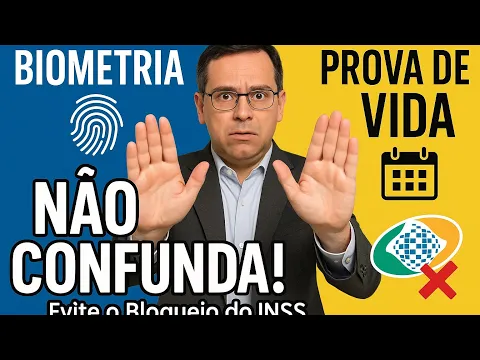
Biometrics and Life Proving Are Not the Same Thing
A common misconception is to think that biometrics and life proving mean the same thing. In practice, they are different steps with distinct objectives.
-
Brazilian city gains industrial hub for 85 companies that is equivalent to 55 football fields.

-
Peugeot and Citroën factory in Argentina cuts production by half and opens a layoff program for more than 2,000 employees after Brazil drastically reduced purchases of Argentine vehicles.

-
A Brazilian city gains a factory worth R$ 300 million with the capacity to process 200 thousand tons of wheat per year, a mill of 660 tons/day, silos for 42 thousand tons, and an industrial area of 276 thousand m².

-
Havan will leave the shopping mall in Blumenau to inaugurate something that the chain has never done before: a megastore in half-timbered style in the Historic Center of the city, which is expected to be completed in May and change the landscape of local retail.

Biometrics is the registration of a person’s identity. It works like when a citizen obtains an identity card, driver’s license, or voter ID with a photo and fingerprints.
This biometrics is recorded in government databases and serves for the state to know who that citizen is, based on unique physical characteristics. Generally, it is done once, unless there is a need to update documents.
Life proving, on the other hand, is a procedure for periodically verifying that the beneficiary is still alive, allowing the INSS to continue paying retirements, pensions, and assistance benefits.
It acts as a sort of annual renewal of the payment authorization and aims to prevent payments from continuing to be credited in the names of deceased individuals, reducing fraud and improper payments.
What Changes with the New Mandatory Biometrics
Starting November 21, 2025, biometrics registration will become mandatory for new benefits, such as BPC Loas and others, when the applicant does not already have biometrics registered in any government database.
In practice, this means that anyone requesting a particular benefit who does not have biometrics on their voter ID, driver’s license, new identity card, or other official documents may have to complete this registration for their request to be analyzed and approved.
The goal is to enhance security right from the entry into the system, reducing the risk of fraud in new benefits.
For those who are already retired, pensioners, or already receiving BPC, this change in biometrics does not affect their current benefits. The INSS will continue to use existing biometrics from other databases, without requiring immediate mandatory re-registration solely because of this regulation.
The point of attention for these beneficiaries remains the life proving process.
Automatic Life Proving: Responsibility Now Lies with INSS
Since 2023, the logic of life proving has been reversed. The obligation to prove that a citizen is alive is no longer solely the responsibility of the beneficiary and has become the responsibility of the INSS, which needs to verify, over a period, whether there has been any type of activity associated with that person.
The institute has started to function almost like a monitoring system for civil and financial activities linked to the beneficiary’s CPF. If, within a 10-month interval from the month of their birthday, the citizen performs certain actions recorded in official databases, the INSS considers the life proving to be done automatically, without the insured having to visit a bank or agency.
This model reduces travel for elderly individuals and those with reduced mobility, but requires attention to potential failures: if the system does not identify any valid activity, the benefit risks being blocked if the insured does not respond to the notification and fails to provide proof within the time frame.
The 13 Situations That Count as Proof of Life
To consider that the proof of life has been completed automatically, the INSS cross-references information from various sources. If the beneficiary has performed at least one of the following actions within the 10-month window, the proof of life tends to be confirmed without any extra actions:
- Accessing the Meu INSS app with a gov.br account of silver or gold level
- Taking out a personal loan with facial recognition
- Being attended to in person at an INSS agency
- Undergoing a medical examination by the INSS
- Receiving care in a public hospital or health clinic
- Getting vaccinated registered in an official system
- Voting in elections using biometrics
- Renewing the driver’s license
- Renewing the identity card
- Renewing the passport
- Updating the Cadastro Único (CadÚnico)
- Performing banking transactions using biometrics at the counter
- Completing the digital proof of life through the gov.br app or Meu INSS
This set of indicators forms a sort of “official traces” that the beneficiary is active. Any of these actions can be sufficient for the INSS to consider the proof of life valid within that annual cycle, as long as they are correctly recorded in the systems.
When INSS Cannot Find Activity and Benefits Are at Risk
If, when cross-referencing data, the INSS does not locate any of these activities for the beneficiary within the analyzed period, the system understands that the proof of life has not yet been confirmed. In this scenario, the institute starts to require direct action from the individual.
First, a notification is sent to the insured, usually through one of the following channels:
- Meu INSS app
- ATM of the bank where the benefit is received
- Physical correspondence sent to the registered address
From this notification, the beneficiary usually has 30 days to perform the proof of life manually. If not done within this time frame, the benefit may be blocked or suspended until the situation is regularized.
Therefore, frequently monitoring the Meu INSS app and the bank notifications is crucial, especially for those who do not typically use digital services or rarely move their bank accounts.
How to Prove Life Using Your Cell Phone
If the INSS system cannot confirm the proof of life automatically, one of the most practical and secure ways to regularize the situation is through your cell phone, using the gov.br app and Meu INSS.
Some basic requirements include:
- Having the gov.br app installed
- Having the Meu INSS app installed
- Having a gov.br account at silver or gold level
- Having biometrics registered on the voter ID or driver’s license, which will be used for facial recognition
The step-by-step usually follows this logic:
- Open the gov.br app and log in with CPF and password
- On the home screen, look for the service option related to proof of life
- Check if there is any pending proof of life and select the indicated procedure
- Authorize the camera for facial recognition
- Follow the on-screen instructions, such as positioning your face, turning to one side and then the other, smiling, or removing glasses
- Wait for validation, which, once completed, changes the status to authorized
The process is done remotely and usually takes only a few minutes, reducing the need to travel to bank branches or physical units of the INSS, except in cases of technical difficulty or for people without access to compatible cell phones.

Best Practices to Avoid Blockages and Headaches
Even with technological advancements, the central message remains: monitoring the status of benefits is the insured’s responsibility. Automatic life proving is an advancement but does not entirely eliminate the risk of communication failures, outdated registrations, or biometric reading problems.
Some measures can help reduce this risk:
- Always keep your address and contact information updated in Meu INSS
- Regularly check the app for alerts or pending issues
- Keep records of medical appointments, updates in CadÚnico, and other actions that may count as proof of life
- Seek specialized advice in case of blockage or doubts about the requirement for biometrics and deadlines
By understanding the difference between biometrics and life proving, and knowing how the INSS cross-references this information, the beneficiary is better positioned to anticipate issues, avoid blockages, and ensure the continuity of payments.
In light of these changes, have you checked in the Meu INSS app whether your life proof has been recorded or if there are any pending issues for your benefit in 2025?










Pq vcs não falam que em caso de dificuldades o beneficiário pode fazer prova de vida na agência bancária?