





 Portuguese
  English
  Spanish
 6 min of reading


São Paulo, November 2022 — Construction industry companies need to integrate the supply chain to incorporate agility, innovation, quality, and sustainability into projects and works. This is one of the main challenges of the sector, reveals the study “Productivity and Opportunities for the Construction Chain”, conducted by Deloitte, the largest professional services organization in the world, with support from various organizations in the sector. The report presents an extensive market survey based on a unique research with 144 companies and statistical data analyses and major trends for the sector.
According to the study, the construction chain has around 23 thousand companies that generated net revenues of R$ 2.31 trillion and employed more than 3.6 million people in 2021. The report also estimates that between 2021 and 2030, the construction, infrastructure, and base industry segments must invest R$ 2.7 trillion.
“This study, unprecedented in Brazil, makes an important contribution by showing that being productive in this sector, in the current digital and regulatory environment, is more than doing more with less. It is to activate the chain intelligently, in a synergistic relationship with a network of providers that will add agility, innovation, quality, and sustainability to the projects,” says Eduardo Raffaini, partner-leader of Infrastructure & Capital Projects at Deloitte.
-
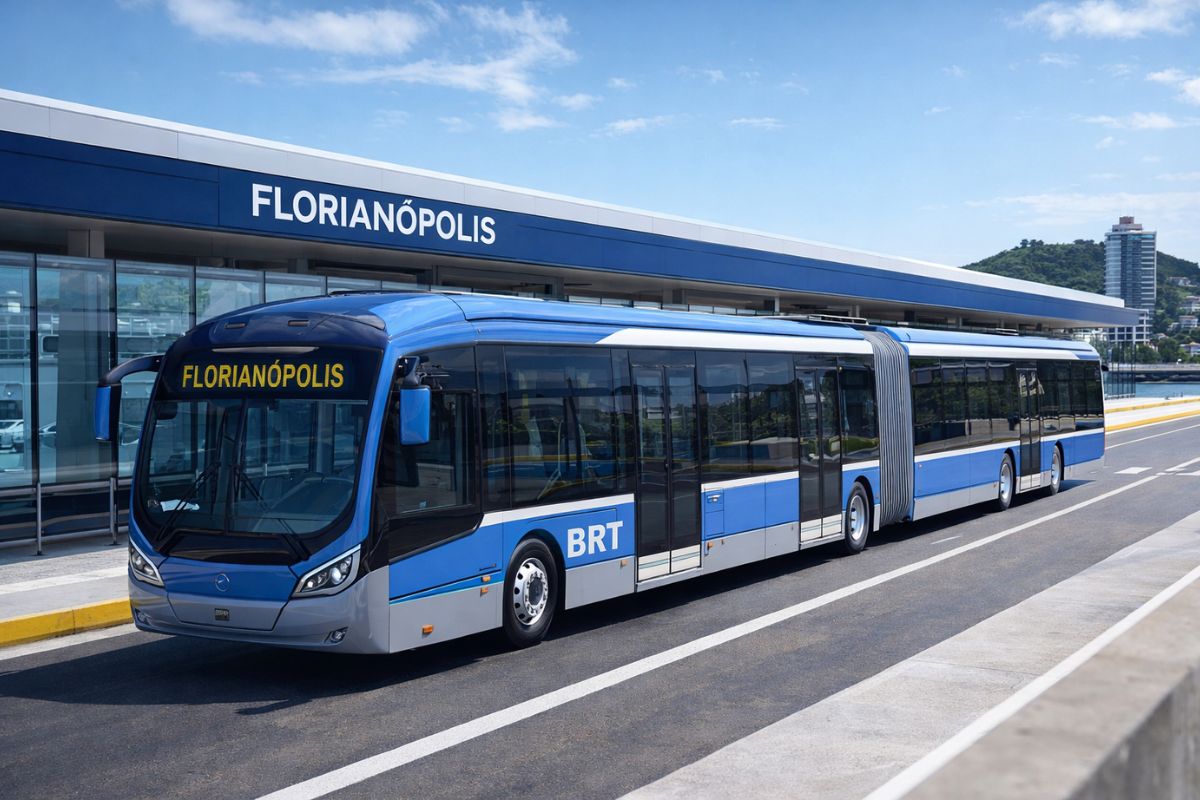
Florianópolis will receive a million-dollar BRT that will begin construction in 2026 with nearly 400 million in funding from the federal government and the Inter-American Development Bank, and the map already shows the routes for the exclusive bus corridors.
-
Without a blueprint, without an engineer, and using scrap from the dump, a father spends 15 years building an 18-room castle for his daughter, featuring tram tracks, 13 fireplaces, and over 700 m², which may now be demolished.

-
A megaproject worth R$ 89 billion is advancing in Iraq and promises to change the game in global trade by creating a new corridor between Asia and Europe, reducing traditional routes and repositioning the country as a logistics powerhouse.

-
Goodbye bedside table: floating shelves become a trend in 2026 by freeing up space in the bedroom, improving circulation, bringing visual lightness, and integrating technology without taking up floor space.


According to the research conducted with construction companies, most partially adopt methods, tools, or parameters to measure efficiency or productivity gains in their projects and sector activities. Base and Construction industry companies are the ones that measure the efficiency and productivity gains achieved with investments in new technologies the most. On the other hand, the Related Services sector is the least to adopt this practice, indicating yet another challenge for these companies in making the impact of different factors on productivity tangible.
The unpredictability of costs, supplier delays, and material shortages are the main challenges for construction companies in project or work preparation. In terms of execution, labor efficiency is the biggest challenge for four of the five sectors surveyed (construction and incorporation, related services, trade, and construction material industry). Dealing with execution errors and rework was also mentioned by these companies, corroborating the perception of a gap in the training and qualification of sector professionals to handle the challenges of an increasingly digitized operation.
The increase in costs is the main impact on the budget identified by companies across all sectors of the construction chain surveyed. This item is especially critical for companies operating in construction and incorporation, which are at the forefront of the process and end up absorbing all the cost increases in the chain, and also for the construction materials trade sector, sensitive to increases in raw materials and supplies costs.
Challenges for Supply Chain Integration
The research also investigated the challenges related to the supply chain by segment. In the Construction and incorporation sector, the biggest challenge is the guarantee and management maturity of suppliers. For companies in Related Services to construction, technology, and consulting, changes in the initial project or plan cause rework and impact labor management and costs and deadlines. In the construction materials trade and supply sector, the biggest barrier to the supply chain is the hiring of qualified labor. Meanwhile, in the base industry, it is the search for new partners, both suppliers and customers.
Among the companies in the Construction and incorporation sector, all exchange ideas, information, and challenges with suppliers, third parties, or partners in order to gain efficiency in project and processes. In contrast, in the Related Services sector, nearly a quarter do not conduct these initiatives, making it the segment with the least interaction with the ecosystem. Common to all sectors surveyed is the fact that most of these interactions occur with part of the ecosystem, not with all third parties involved.
In this ecosystem, the study highlights the participation of startups, which help these construction chain companies integrate into a broader ecosystem, such as construction tech companies and fintechs. The high indication of startups working in partnership with companies in this chain shows that there is a range of diversity and opportunities to be explored.
Technological Advancement Faces Budget And Lack Of Strategy For Implementation And Digital Skills
Although aware of the need for investment in technology for productivity gains, most organizations surveyed invest a maximum of 3% of their net revenue in technology, and anticipate increasing these investments by less than 10% in the 2022-2023 biennium.
The challenges for expanding the use of technology in construction are diverse. For companies in the service, trade, and industry sectors related to construction, the main challenge is the high maintenance cost. Meanwhile, organizations operating in construction and incorporation face a lack of coordinated strategy for implementing new technologies, followed by the lack of definition on which technology to adopt. In other words, beyond budget, this sector faces challenges in designing the guidelines that will guide its technological transformation.
In the Construction and incorporation sectors and in Related Services to construction, technology, and consulting, the main focus of technology investments is project and schedule management. Among companies in the construction materials trade, suppliers of construction inputs, and base industry sectors, technologies are mainly applied in the productive activity itself and in service execution.
With the exception of the services sector, which is more advanced in terms of education and training of professionals, all other sectors presented a lack of digital skills and training in this area as an important challenge. This issue is even more delicate for companies in the industrial segments. However, it is possible to see an effort from the sector to respond in a structured way to the challenges of digitalization throughout the transformation journey.
“The digital transformation of operations allows for better management in the constant pursuit of efficiency and improves risk forecasting and mitigation starting from the planning stage of a new project. Furthermore, technology will be fundamental for the collection, analysis, and correct management of productivity indicators,” notes Eduardo Raffaini, partner-leader of Infrastructure & Capital Projects at Deloitte.
Construction, Infrastructure, And Base Industry Must Invest R$ 2.7 Trillion By 2030
The study also shows the potential of the chain by estimating that, between 2021 and 2030, the construction, infrastructure, and base industry sectors must make a total investment of R$ 2.7 trillion. Of this amount, 58% should be allocated by the segments related to infrastructure, driven by the approval of legal milestones related to their activities. Next comes the base industry (30.7%) and the construction sector (11.8%). This estimate was made based on a survey of announcements and forecasts of investments to be made.
Less Than Half Of Construction Companies Expect An Increase Greater Than 10% In Sales In 2022
In an uncertain economic scenario, less than half of the construction chain companies surveyed expect to register an increase greater than 10% in their sales in 2022. The situation is more delicate for the base industry sector, where only 15% expect to see an increase of more than 10% in revenue, followed by Related Services to construction, technology, and consulting (39%), construction materials trade (42%), and suppliers of inputs for construction (48%). In the Construction and incorporation segment, 64% of companies expect sales above 10% this year.
Methodology
The study “Productivity And Opportunities In The Construction Chain” presents an extensive market survey based on a unique research with 144 companies and statistical data analyses and major trends for the sector. Primary survey participants included companies from the construction/incorporation branches, related construction services, technology and consulting (equipment rental, construction execution, engineering and architecture); materials trade; suppliers of construction inputs and base industry from all regions of the country. Responses were collected between October and November 2021. Most respondents (95%) held executive positions and worked in family-owned companies (62%) with revenues below R$ 100 million (57%) that year.
Source: Ideal HKS | For more information, visit the site









Seja o primeiro a reagir!