





 Portuguese
  English
  Spanish
  4 min of reading
  1 comment




In 2023, Trade Between China and Latin America Reached US$ 480 Billion, with Brazil as the Main Partner, Standing Out in Soybean and Other Product Exports.
In 2023, the trade exchange between China and the countries of Latin America reached a historic milestone, exceeding US$ 480 billion, according to estimates based on data from the General Administration of Customs of the People’s Republic of China (AGA).
This figure contrasts significantly with the approximately US$ 14 billion recorded in 2000, according to the Economic Commission for Latin America and the Caribbean (ECLAC). In the year we celebrate 50 years of trade relations with the Asian country, Brazil stands out as China‘s main trading partner in Latin America.


Trade Between Brazil and China in 2023
In 2023, bilateral trade between Brazil and China totaled US$ 181 billion, of which US$ 122 billion represented Brazilian exports, resulting in a trade surplus of US$ 63 billion.
-
Unemployment rises again to 5.8% at the beginning of 2026, raising alarms about the end of temporary positions and its impact on the Brazilian job market.

-
Document organization can cut invisible costs in small businesses, a simple step that prevents waste, rework, and losses in daily operations.

-
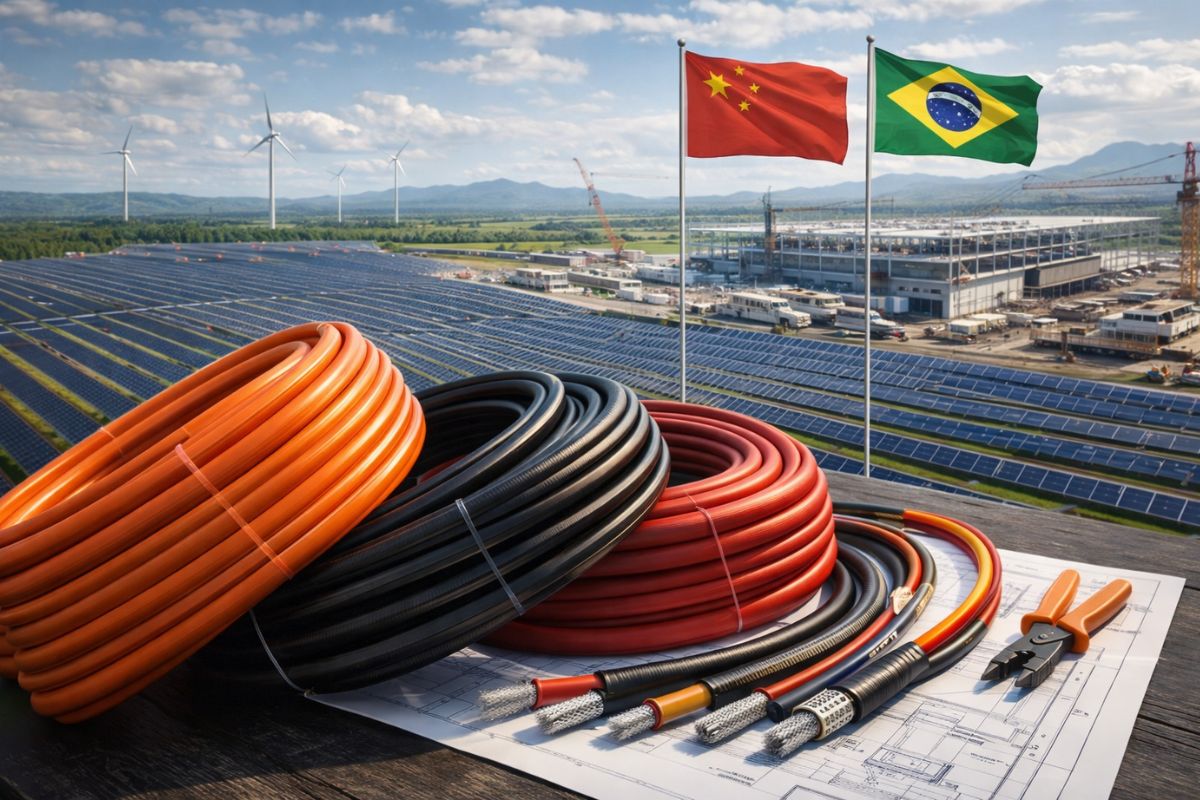
Chinese giant worth nearly R$ 4 billion that manufactures cables for electric cars, solar energy, and robotics wants to open a factory in SC.
-
Many employers do not know, but the law guarantees domestic workers a 25% increase in salary during trips, 50% for overtime, 20% for night shifts, and 17 additional benefits that can lead to labor lawsuits if not paid.


This trade relationship is constantly rising, highlighting a scenario of opportunities and mutual progress, according to data from the Ministry of Development, Industry, Trade and Services (MDIC) for the first quarter of 2024.
Brazilian imports from China increased by an average of 12.7%, reaching US$ 14 billion, while exports to the Asian country also increased, totaling US$ 23 billion, representing an average increase of 9.8%. These figures reflect an increase in trade transactions and a favorable balance for Brazil, with a surplus of 5.5% over China.
Main Products Exported by Brazil to China
Soybean leads exports, representing 35.4% of Brazilian exports to China. In addition to the golden grain, products such as iron ore (20.2%), frozen beef (8.82%), and pulp (3.36%) also stand out among the main items exported, according to data from the Observatory of Economic Complexity (OEC).
The trade relationship between the two countries continues to grow, with 15 bilateral trade agreements valued at around US$ 10 billion (R$ 51 billion).
Brazil’s Trade Balance in 2024
According to trade balance data released in April by the Foreign Trade Secretariat (Secex) of the MDIC, Brazilian foreign trade recorded a surplus of US$ 19.08 billion in the first quarter of 2024, an increase of 22.2% compared to the same period last year (US$ 15.61 billion).
The result reflects exports of US$ 78.27 billion in the quarter, against imports of US$ 59.19 billion, totaling US$ 137.47 billion in trade flow during the period. Compared to the first quarter of 2023, exports grew by 3.2% and the trade flow was 1.0% higher. Meanwhile, imports fell by 1.8%.
Highlighted Sectors
When looking at the sectors and products exported, the highlight was the extractive industry, with an increase of US$ 3.22 billion (18.7%) in the first quarter of 2024 compared to 2023. In imports, the highlight was agriculture, with an increase of US$ 0.07 billion (5.6%).
In March, despite the quarterly growth, there were declines compared to March 2023. Exports totaled US$ 28 billion in March 2024, compared to US$ 32.83 billion last year (a decrease of 14.8%). Imports also dropped by 7.1%, totaling US$ 20.5 billion in 2024 compared to US$ 22.07 billion in 2023.
The trade flow in March 2024 totaled US$ 48.5 billion (-11.7%), and the surplus stood at US$ 7.5 billion (-30%).
Forecasts for 2024
According to Secex, the estimate for the trade balance in 2024 points to a 1.9% growth in trade flow, reaching US$ 592 billion.
There was also an increase in expectations regarding imports, now projected at US$ 259 billion (7.6%). Meanwhile, export expectations dropped by 2.1%, now at US$ 333 billion. The reduction in export expectations, combined with the possible increase in imports, has decreased the forecast for the trade surplus this year, now set at US$ 74 billion.
On the other hand, the decline in commodity prices accelerated in March, contributing to the outlook for a decrease in the expected value of external sales. Additionally, global demand exhibits slow growth, and there is reduced domestic availability of agricultural goods for export.
What Does China Buy Most from Brazil?
China is the main buyer of various Brazilian products, particularly soybeans, iron ore, frozen beef, and pulp.
Soybean is the main item, representing 35.4% of Brazilian exports to China. This grain is essential for animal feed production in China, which is the largest global producer of pigs and poultry.
Why Does China Buy So Much from Brazil?
China buys so much from Brazil due to the high quality and competitiveness of Brazilian products, as well as the economic complementarity between the two countries.
Brazil has vast agricultural areas and large reserves of natural resources, allowing it to meet the growing Chinese demand for food and raw materials.
How Is Trade Between Brazil and China?
The trade between Brazil and China is characterized by a relationship of interdependence and complementarity.
Brazil primarily exports agricultural and mineral commodities, while China exports manufactured and technological products to Brazil. This relationship benefits both countries, providing economic growth and industrial development.
Which Country Does Brazil Export Most To?
China is the country that buys the most from Brazil, establishing itself as the main destination for Brazilian exports. The Chinese demand for Brazilian commodities has been a crucial factor for Brazil’s trade surplus and the positive trade balance between the two countries.
What Is China Investing In Brazil?
China has significantly invested in Brazil, acquiring stakes in various strategic sectors such as energy, infrastructure, and agribusiness. Chinese companies own important assets in Brazil, including hydroelectric plants, power transmission lines, and large agricultural areas.









A dependência comercial tem seu risco, assim como a dependência do gás russo vivida pela Europa.
A diversificação dos parceiros comerciais é uma estratégia de suma importância num mundo cuja economia está cada vez mais globalizada e sua geopolítica cada vez mais instável.