





 Portuguese
  English
  Spanish
  4 min of reading
  38 comments


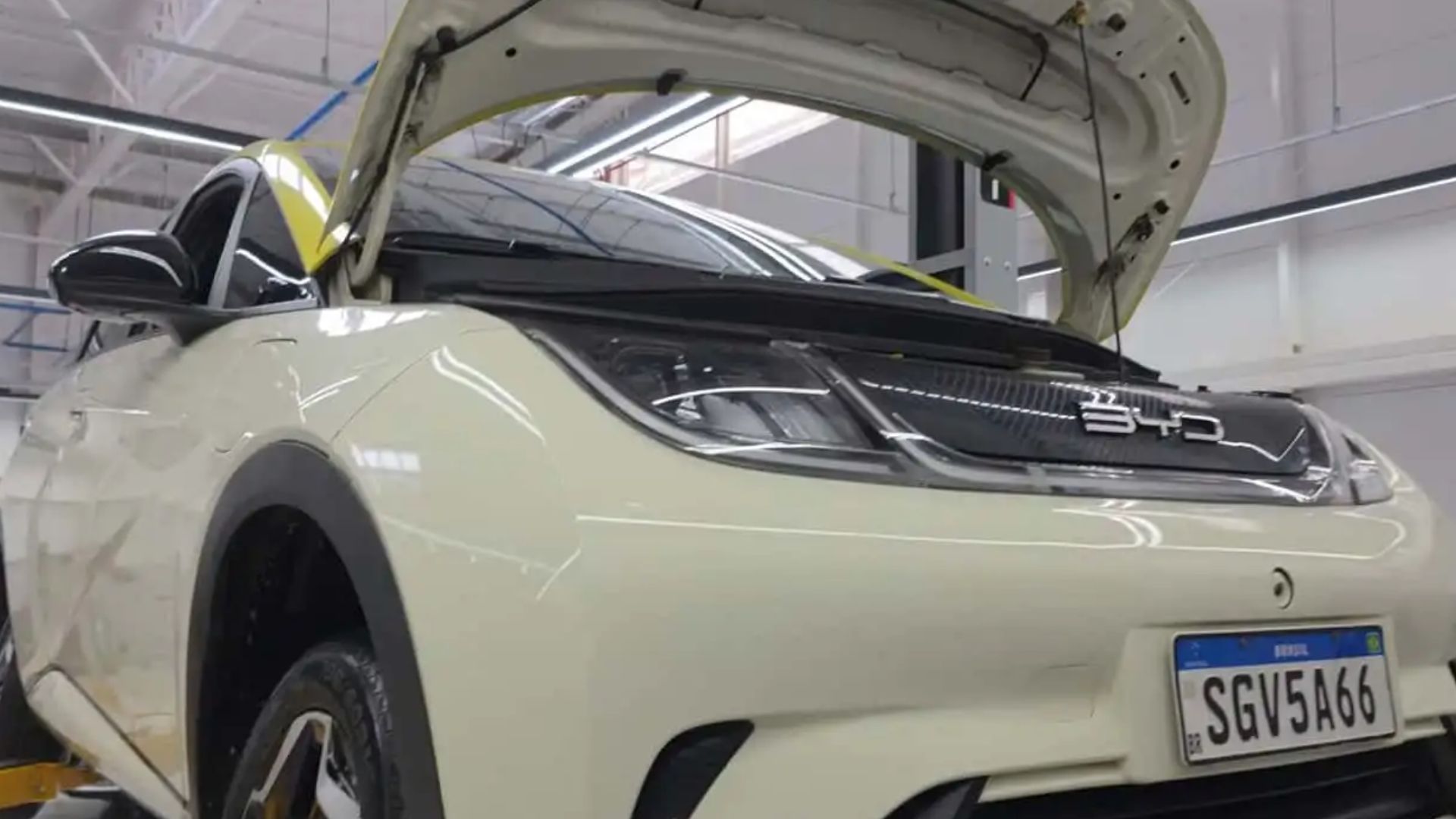


Chinese Electric Car BYD Dolphin Hits 220 Thousand Km in Brazil and Remains in Good Condition, Surprising Durability in Intensive App Usage.
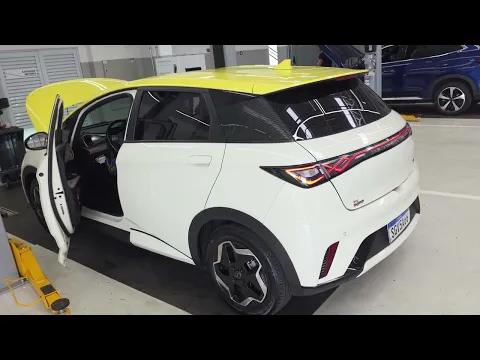
A Brazilian BYD Dolphin has just reached 220 thousand kilometers driven in just two years of use, and the result impresses: the vehicle maintains original brakes, good autonomy, and few signs of wear besides the interior.
This case reignites the debate about the durability of Chinese electric cars in Brazil.
The Dolphin in question belongs to Elio, an app driver partner of the channel InsideEVs Brazil, who closely monitors the performance of BYD models.
-
An irregular parking case gains attention after a Mercedes Classe A was removed in such a strange way that it even raised doubts about damage to the car.

-
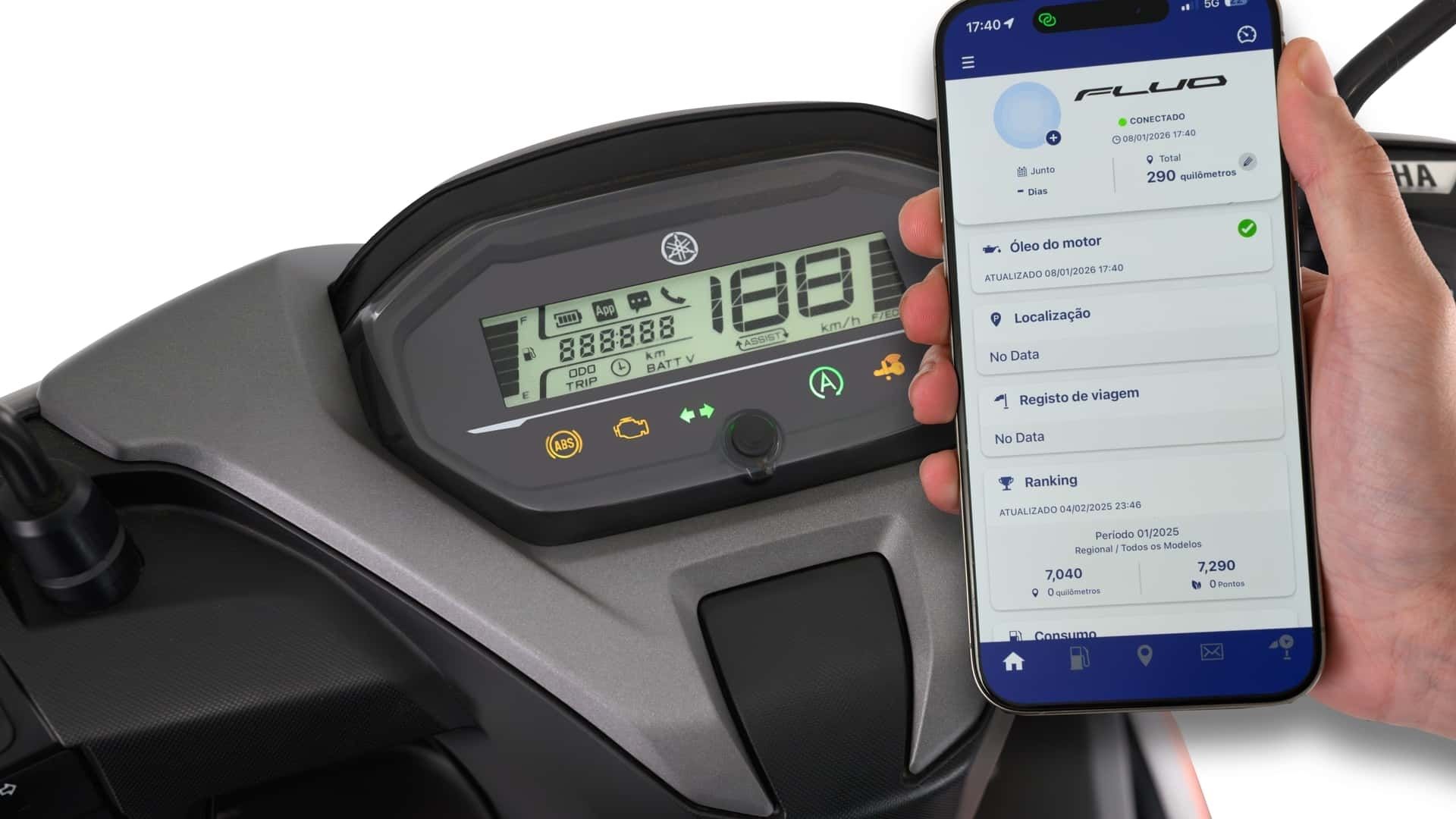
Costing R$ 16,000, the new Yamaha features a 125 cc hybrid engine with electric assistance, delivers 8.3 hp, includes ABS, optimized fuel consumption, Y-Connect connectivity, 25 liters of storage space, and a surprising 4-year warranty in the urban segment.
-
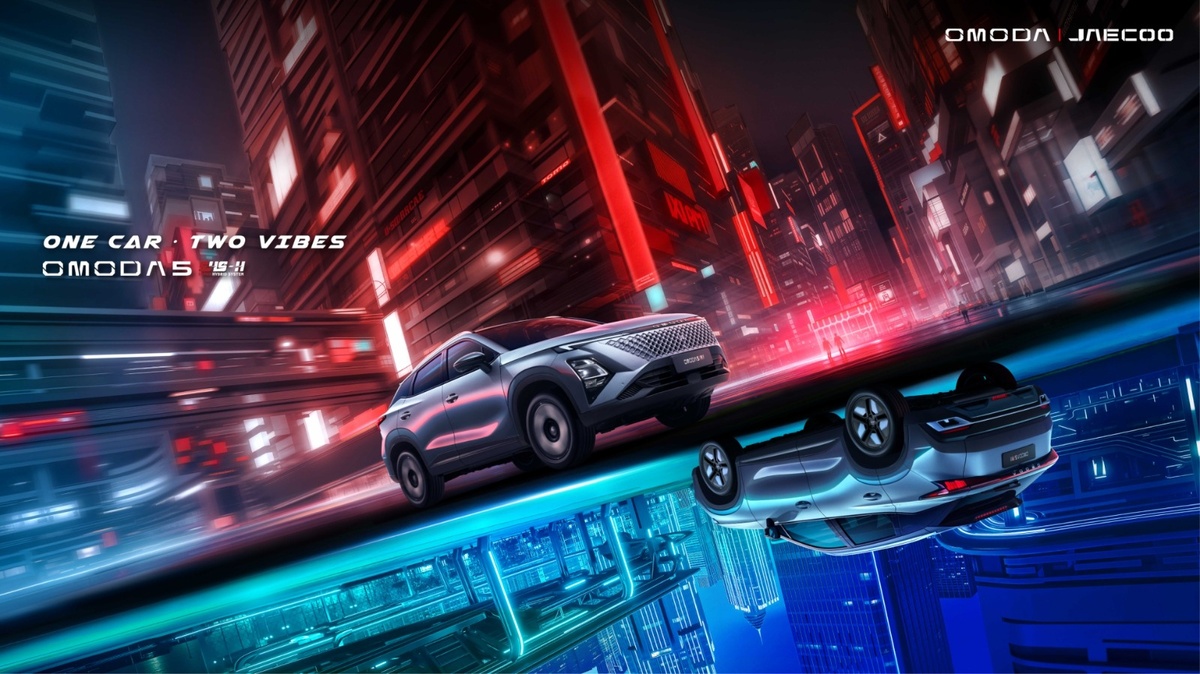
OMODA & JAECOO grows in Europe in 2026 with an integrated strategy of sales, innovation, local production, and technological advancement in the United Kingdom, Italy, and Spain.
-
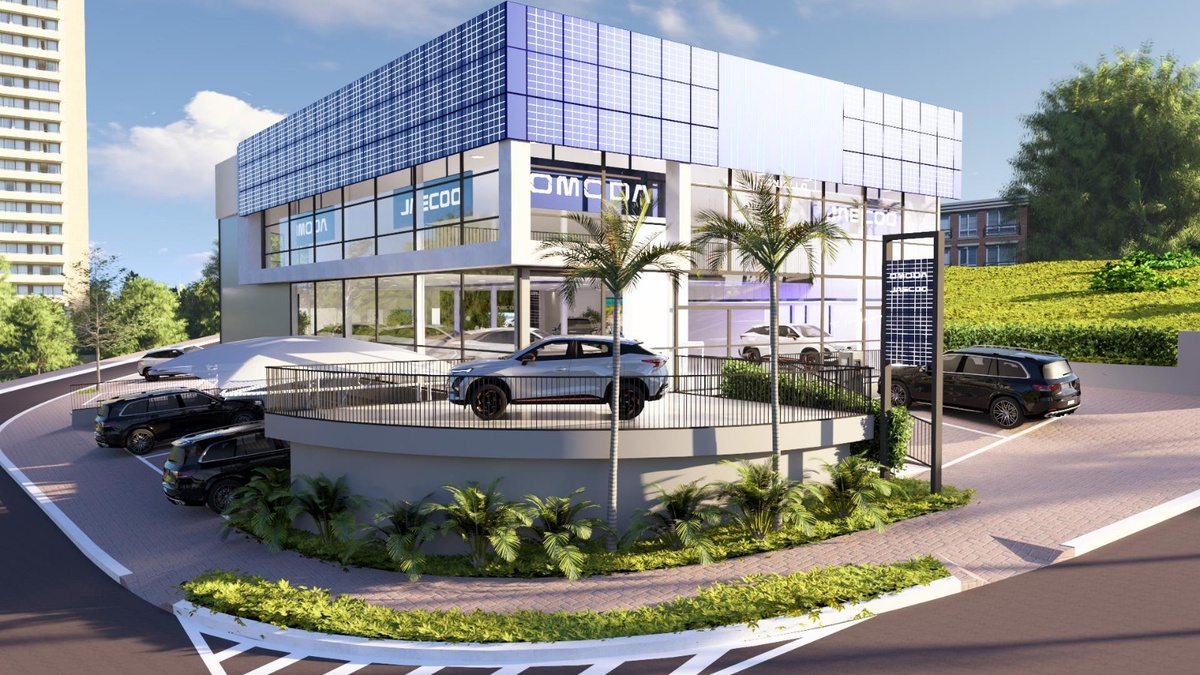
OMODA & JAECOO expands after-sales service in Brazil with competitive maintenance, a 7-year warranty, and high availability of parts for technological SUVs.

The electric vehicle, equipped with a front motor of 95 hp and a 45 kWh battery, maintains autonomy close to what is indicated on the dashboard — over 400 km — and has essential systems in good condition, which challenges the common perception of the resistance of Chinese cars outside of China.

Performance of the Dolphin with High Mileage
According to Elio, the brake discs and pads are still the originals, even after 220 thousand km.
Preventive maintenance has been properly followed, with changes of engine, differential, and brake fluid as recommended.
The care shown by the driver is pointed out as a decisive factor for the longevity of the vehicle.
In a video on the channel, he states: “Everything is in order. I have nothing to complain about”.
According to the dashboard, even after driving hundreds of kilometers, the Dolphin continues to show approximately 405 km of autonomy per charge, surpassing the 290 km officially reported by the manufacturer.
Intensive Use Affects Mainly the Interior
Although the mechanics and battery are preserved, the interior of the Dolphin shows a more evident impact from continuous use.
The synthetic leather upholstery accumulates oiliness and dirt after intense driving with passengers.
Despite this, Elio classifies the interior as “good,” reminding of the importance of regular cleaning.
The wear on the upholstery was expected, but the rest of the cabin remains in good condition.
This scenario reinforces the idea that, in addition to technical maintenance, care for the interior is essential to preserve the feeling of a new car.
Other Cases Reinforce BYD’s Resistance
This is not the only Dolphin with advanced mileage analyzed by the channel.
Another unit, imported as Dolphin Mini (Seagull), has driven 100 thousand km without major structural problems.
Only parts of the lower protection needed repair due to pothole-filled roads, and the only service performed was the replacement of the air conditioning filter.
Gilson, responsible for the channel, stated that he maintains constant monitoring of these cars.
The systematic follow-up allows gathering data on usage and maintenance, building a real history of the durability of Chinese models in the Brazilian market.
BYD Stands Out in the New Generation of Electrics
The widespread attention on the video with the Dolphin of 220 thousand km is justified by several aspects:
- Brake System Performance, with original parts even after intense use.
- Simple and Periodic Maintenance, with specific swaps recommended by the manufacturer.
- Autonomy Above Official Figures, with the dashboard indicating over 400 km per charge.
- Demanding Daily Use, with passengers, long routes, and challenging urban scenarios.
Chinese vehicle brands were recently associated with inferior quality products.
Poorly finished clones, fragile structures, and questionable finishing were common reports among models that arrived in Brazil until the 2000s.
However, the sector has responded with rapid evolution: today, China is the global leader in electric and hybrid vehicles, gathering manufacturers that invest heavily in development, research, and improvements.
Evolution of Electrics in the Brazilian Market
BYD, a company founded in Shenzhen in 1995, has expanded strongly since the middle of the last decade.
Its modern cars have been circulating in Latin America for years, with operations in Chile, Mexico, and Brazil, and are beginning to show consistent results in durability and performance, as in the aforementioned case.
Globally, Chinese electric vehicles continue on a growth curve.
The context of electrification, incentive policies, and rising fuel prices reinforce the relevance of these models.
Nevertheless, doubts about quality, after-sales service, and infrastructure persist — even more so outside of China.
Cases like the Dolphin with high mileage help to support the positive narrative.

The Longevity of Electrics in Real Testing
The preventive maintenance conducted by Elio reinforces the need for good after-sales and technical support established in the country, especially for electric vehicles newly introduced to the market.
Availability of parts, support network, and local assistance are decisive factors for the success of the brand.
Currently, few electric cars in Brazil reach such high mileage numbers.
Comparing with traditional models like the Fiat Uno, which accumulates hundreds of thousands of kilometers from intense usage, is natural.
Still, it is premature to state that Chinese EVs are equivalent to national popular vehicles in historical durability — as their introduction has been recent.
Nevertheless, the trajectory of the Dolphin in Brazil, with long usage cycles, low maintenance needs, and stable performance, suggests a trend of reliability and resistance.
For experts, time and regular user testing will be essential to consolidate this image.
The Expectation for the Next 300 Thousand Km
To validate the durability thesis beyond 220 thousand km, it will be necessary to monitor BYD cars running beyond 300 thousand km — as expected by the InsideEVs Brazil channel.
The extrapolation of real, well-monitored usage data is a sure path to build credibility and trust in these vehicles.
Do you believe that a well-cared-for Chinese electric can exceed 300 thousand kilometers of use in Brazil, as happens with cars like the Uno?








Coloca qq elétrico pra rodar em estradas de terra como o Uno (de mais 20 anos e ainda na ativa) e verão que não duram 6 meses, se tanto. Isso se não explodir devido às “pedras do caminho” que poderão atingir a bateria etc. Claro que comparou em durabilidade, mas tem muito BYD pouco rodado por aí cheio de problema. Não dá pra endeusar um modelo de carro (ou marca) com um percentual ínfimo de exemplares comparado às suas vendas totais. Ainda bem que a tecnologia melhora a cada dia e espero que isso seja a realidade da grande maioria dos elétricos, num futuro próximo. E que todos tenham condições de carregar seus carros em casa (ou prédios) com total segurança. Mas isso é outro assunto, que vai demorar ainda mais pra acontecer.
Quem mora ou tem casa de veraneio nestas regiões tem que ter carro específico. Se liga meu caro.
Deus me livre conviver com uma pessoa tão negativa por perto. 😂 😂 😂
Tenho um trabalho com ele todos os dias me da 400 reais limpo todos os dias.. so trabalhar. Ótimo carro.
Carro elétrico barato é excelente para uber, que só têm uso urbano e aumentam bastante o lucro. O valor de revenda é alto por isso. Mas fora dessa aplicação carro elétrico é roubada e as vendas estão caindo no mundo inteiro, menos na China, porque multa quem tem outro tipo de carro.