





 Portuguese
  English
  Spanish
  4 min of reading
  0 comments


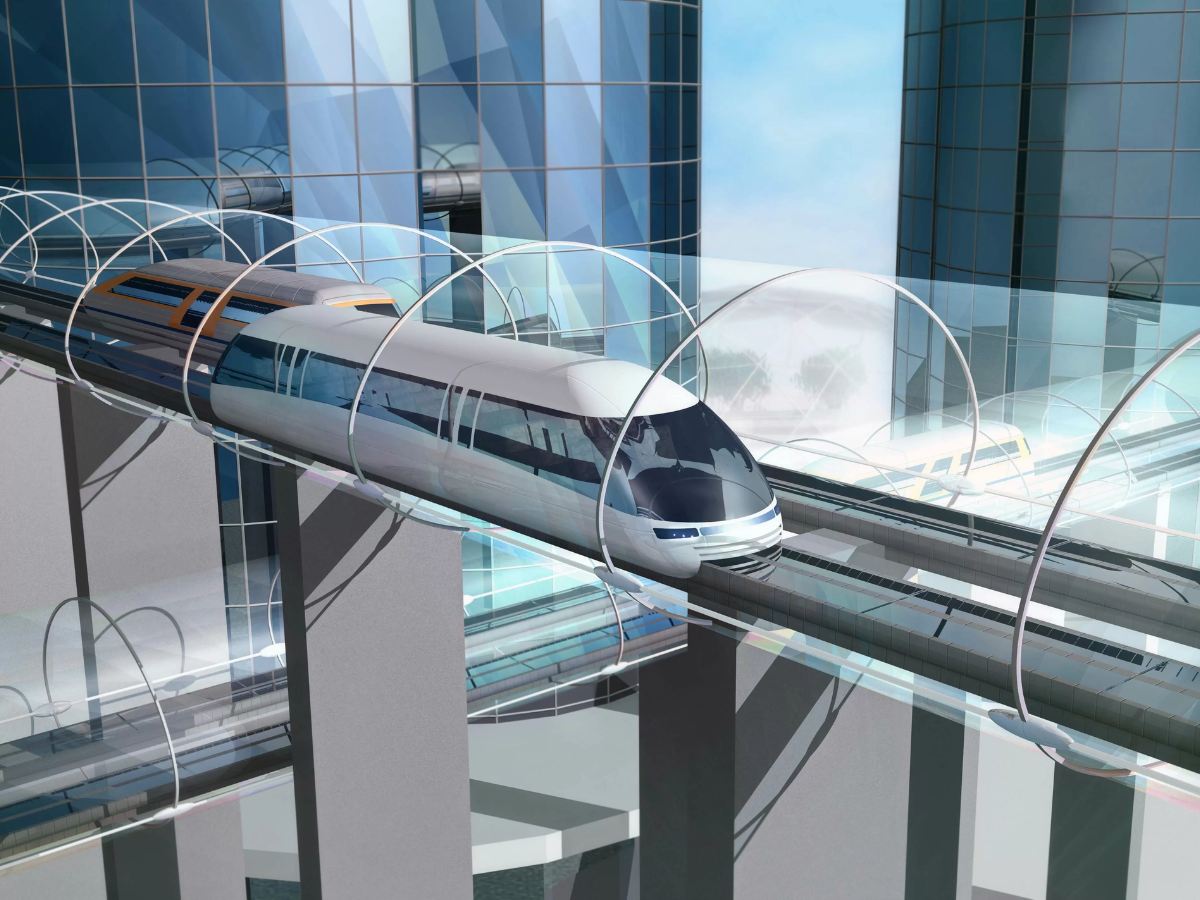
With Investment in R&D and Leadership from KRRI, South Korea Develops the Hyper-Tube Train, a Maglev System in Nearly Vacuum That Promises to Connect Seoul to Busan in Less Than 20 Minutes.
South Korea has embarked on an ambitious national project, the “K-HyperTube”, aimed at developing an ultra-high-speed transportation system. The goal is to revolutionize domestic connectivity, allowing travel between the two largest cities in the country, Seoul and Busan, in a surprisingly short time. This Hyper-Tube train is viewed as a strategic tool for balanced regional development and to position the country at the forefront of advanced mobility.
The project, led by the Korea Railroad Research Institute (KRRI), has entered a new three-year research and development (R&D) phase (2025-2027). Despite technical and financial challenges, the initiative is considered of great importance for the future of South Korea.
What Is the K-HyperTube and the South Korean Vision for Ultra-High-Speed Transportation?
The K-HyperTube initiative aims to establish a next-generation magnetic levitation (maglev) transportation system, operating within a nearly vacuum tube. The main goal is to achieve speeds of up to 1,200 km/h, far exceeding current high-speed trains like the KTX (300 km/h).
-
New CCR concrete paving technology promises roads up to 3x more durable, less maintenance, and cost reduction in Brazil.
-
Made from recycled plastic, plastic wood is gaining space in the construction industry because it does not rot, resists moisture, and reduces maintenance costs over the years.

-
Florianópolis will receive a million-dollar BRT that will begin construction in 2026 with nearly 400 million in funding from the federal government and the Inter-American Development Bank, and the map already shows the routes for the exclusive bus corridors.
-
Without a blueprint, without an engineer, and using scrap from the dump, a father spends 15 years building an 18-room castle for his daughter, featuring tram tracks, 13 fireplaces, and over 700 m², which may now be demolished.


This speed would reduce the travel time between Seoul and Busan to less than 20 minutes, a drastic improvement from the current 1 hour and 52 minutes of the KTX. The Ministry of Land, Infrastructure, and Transport (MOLIT) sees the Hyper-Tube train as a solution to “address the provincial extinction crisis caused by balanced regional development and demographic decline”. The project also aims for leadership in the global railway technology market. The Ministry of Science and ICT (MSIT) is also involved in the initiative.
The Fundamentals of the Hyper-Tube Train in South Korea
The K-HyperTube operates based on two fundamental principles: magnetic levitation (maglev), which lifts the train eliminating friction with the tracks, and a tube with significantly reduced atmospheric pressure (0.001 to 0.01 atm), minimizing air resistance. This combination allows for ultra-high speeds with greater energy efficiency.
The current R&D phase (2025-2027) focuses on developing essential technologies: a dedicated track, a superconducting electromagnet (High-Temperature Superconductor – HTS), train control systems, and the design of the body. KRRI has expertise in HTS magnets and Electrodynamic Suspension (EDS). Aerodynamic challenges, such as the “Kantrowitz limit” (choked airflow at high speeds within the tube), are being addressed with mitigation strategies, including the design of axial compressors within the capsule.
The Timeline and Funding of the Hyper-Tube Train K-HyperTube
South Korea has declared 2025 as the “inaugural year” for the K-HyperTube R&D. The budget for the 2025-2027 phase is 12.7 trillion South Korean won (approximately US$8.5-8.8 million). Previously, a larger project for a testing field in Saemangeum, costing 900 billion won, was halted in 2023 due to concerns about economic viability.
Despite the recent start of focused R&D, the long-term vision includes planned tests for 2037 and potential commercialization in 2038. Interestingly, the commercial launch of the Hyper-Tube train is linked to advancements in nuclear fusion research, indicating an integrated approach to innovation in transportation and energy.
What the Hyper-Tube Train Represents for South Korea and the World?
The K-HyperTube has the potential to significantly improve regional connectivity, combating population decline in rural areas and promoting balanced development. It is expected to spur economic growth and job creation, influencing sectors such as infrastructure and trade.
Environmentally, the Hyper-Tube train is promoted as “eco-friendly” and “carbon-neutral”, with less impact than aircraft. The global hyperloop technology market is projected to experience robust growth, and South Korea aims to lead this market by leveraging its existing railway technology base.
The Obstacles to Implementing the Hyper-Tube Train and the Prospects
Implementing the K-HyperTube faces significant technical obstacles, such as maintaining vacuum in the tubes, structural integrity, and aerodynamic stability at extreme speeds. Financial viability is also a challenge, given the high costs of investment in infrastructure.
It will be necessary to develop a regulatory framework and specific safety standards for this new form of transportation. Public acceptance is also crucial. Looking forward, South Korea focuses on R&D of core technologies, fostering public-private and international collaboration, and mitigating identified risks, aiming to position the Hyper-Tube train as a transformative mobility solution.









Seja o primeiro a reagir!