





 Português
  Inglês
  Espanhol
 4 min de leitura
  0 comentários


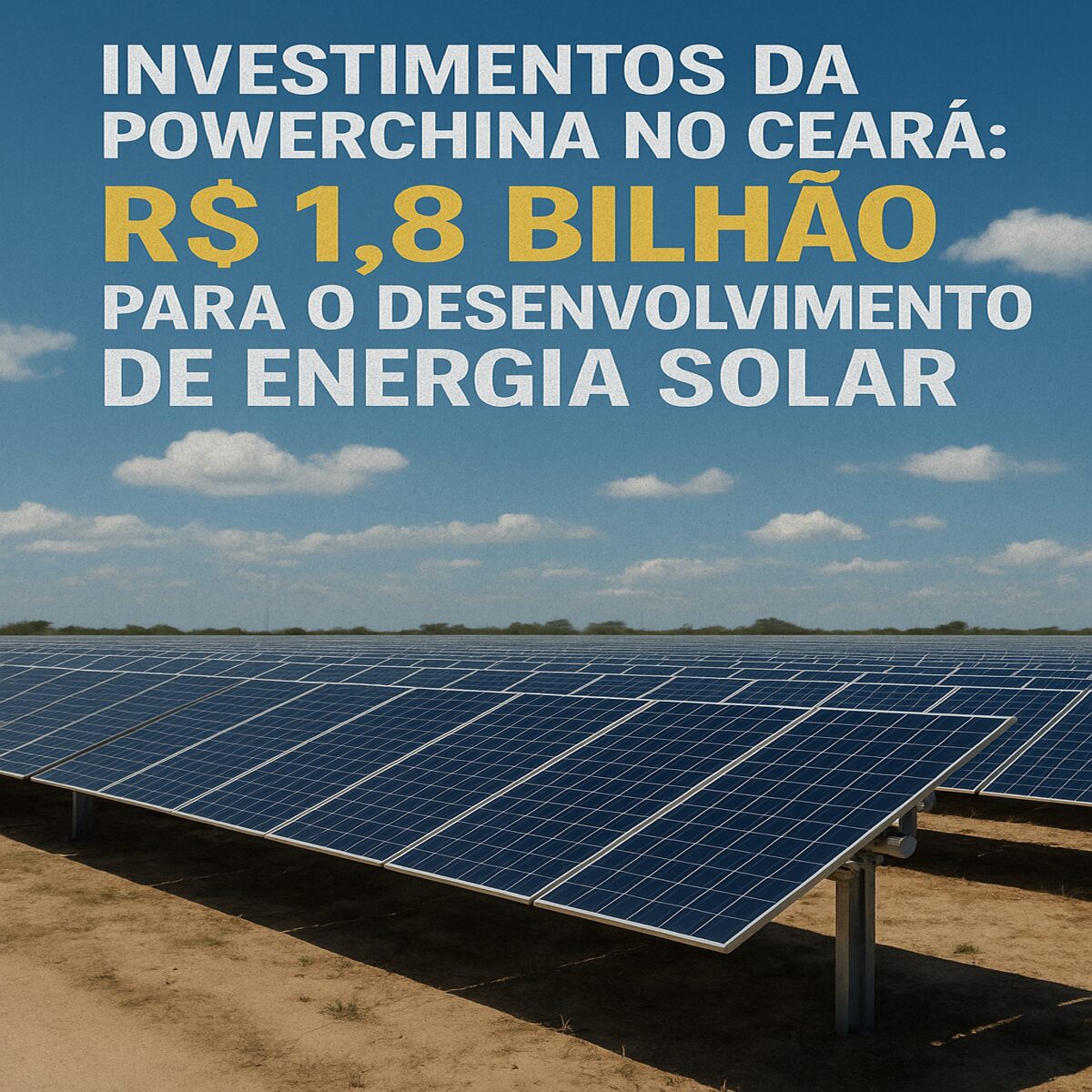
Know The PowerChina Project in Ceará, Its Impact on Clean and Sustainable Energy Generation, and the Impact on Jobs and the Regional Economy.
Since August 2023, PowerChina, a company specialized in energy infrastructure, has begun construction of a solar park in the interior of Ceará, specifically in the municipalities of Mauriti and Milagres.
This project aims to strengthen clean energy generation and contribute to the energy transition in Brazil, according to the company’s plans.
The investment of R$ 1.8 billion aligns with PowerChina’s strategy to expand its operations in the renewable energy sector in Brazil, one of the growing markets in the area.
This solar park aims to contribute to the diversification of the Brazilian energy matrix, highlighting the importance of photovoltaic solar energy in the country.
Growth Projection and Impact on Clean Energy Generation Until 2025
By 2025, the park is expected to reach a capacity of 343 megawatts, representing a significant advance in solar energy generation in Ceará.
The project is being developed according to the established schedule, with direct impact on energy supply for the local population.
-
Renewable energy advances over protected areas in Brazil, and a survey by the Energy Transition Observatory reveals silent impacts that challenge environmental conservation and pressure sensitive traditional territories.

-
Rio Grande do Sul accelerates energy transition: State invests in renewable technologies and consolidates decarbonization strategies and pathways to attract billions in new industrial investments.

-
With 160,000 m² of collectors, an area larger than 20 football fields, Silkeborg, in Denmark, hosts a solar thermal plant that heats 19,500 homes and could become the largest solar heating plant in the world.

-
A study reveals the expansion of renewable energy procurement in Brazil and shows how companies are taking advantage of opportunities to reduce expenses, ensure energy efficiency, and strengthen strategic environmental commitments.


With the completion of the project’s first phase, scheduled for February 2025, the expectation is that the solar park will have the capacity to supply up to 350 thousand households, according to estimates from ABSOLAR (Brazilian Association of Photovoltaic Solar Energy).
This project contributes to the growth of renewable energy in Brazil, particularly emphasizing the reduction of greenhouse gas emissions.
Increase in Jobs and Regional Economic Development with the Construction of the Solar Park
By early 2024, the construction of the solar park had already generated over 1,100 direct and indirect jobs in the region of Mauriti and Milagres.
These jobs have been crucial for the boost of the local economy, positively impacting sectors such as food, transport, and services.
The Ceará Secretary of Economic Development highlights that the project has also collaborated with the inclusion of family farmers in the supply chain, providing additional income for local families.
Furthermore, Ceará is becoming a reference in renewable energy, with a favorable environment for the development of sustainable projects that generate value for the population and the environment.
Ceará as a Leader in the Generation of Renewable Energies and Attraction of International Investments
The state of Ceará has stood out, especially since 2020, as a hub for renewable energies, with increasing capacity for generating wind and solar energy.
The state is recognized for its favorable climatic conditions for solar energy production, attracting investments such as that of PowerChina.
The public policy of tax incentives and support for sustainable initiatives have encouraged new international renewable energy projects to establish themselves in the state.
These projects are essential for meeting Brazil’s goals for energy transition and decarbonization of the economy.
Expansion of International Investments and Partnerships for the Renewable Energy Sector
The visit of Governor Elmano de Freitas to China in October 2023 was a milestone for expanding investments in renewable energy in Ceará. During this mission, PowerChina reaffirmed its interest in expanding its operations in Brazil, focusing on solar energy.
Additionally, the company is seeking new opportunities to establish renewable energy ventures in the Northeast, especially in Pernambuco, Bahia, and Rio Grande do Norte. These actions align with the strategy to promote technical training and research in renewable energy in Brazil.
Impact of Partnerships in Infrastructure and Sustainable Exports in Ceará
A proposal discussed between PowerChina and the Government of Ceará is to direct part of the energy from the solar park to companies in the ZPE. This would allow companies operating with clean solar energy to have a competitive advantage in sustainable exports.
Moreover, the use of solar energy to optimize refrigeration systems in the ports of Ceará, such as Pecém and Mucuripe, is being studied. This could transform the state into a hub for sustainable export infrastructure.
Growth of Solar Energy in Brazil: Impact on the National Energy Matrix
According to ABSOLAR, Brazil reached 42.4 gigawatts of installed solar energy capacity by April 2024. This represents 15% of the electric matrix.
Solar energy is a key alternative for diversifying the Brazilian energy matrix, especially in light of the search for cleaner and renewable sources.
Since 2012, the solar sector has prevented the emission of 30 million tons of CO2. Additionally, it has generated 780 thousand direct and indirect jobs, according to ANEEL.
Ceará: A Hub of Innovation and Sustainability in the Renewable Energy Sector
In addition to generating clean energy, Ceará invests in research and development (R&D), with local universities creating over 40 projects in renewable energies.
The Renewable Energy Hub at Pecém Port has also been a center for innovation, connecting startups, universities, and companies.
These investments in innovation and sustainable technology position Ceará as a model of sustainability in Brazil and worldwide.










Seja o primeiro a reagir!