





 Portuguese
  English
  Spanish
  5 min of reading
  0 comments


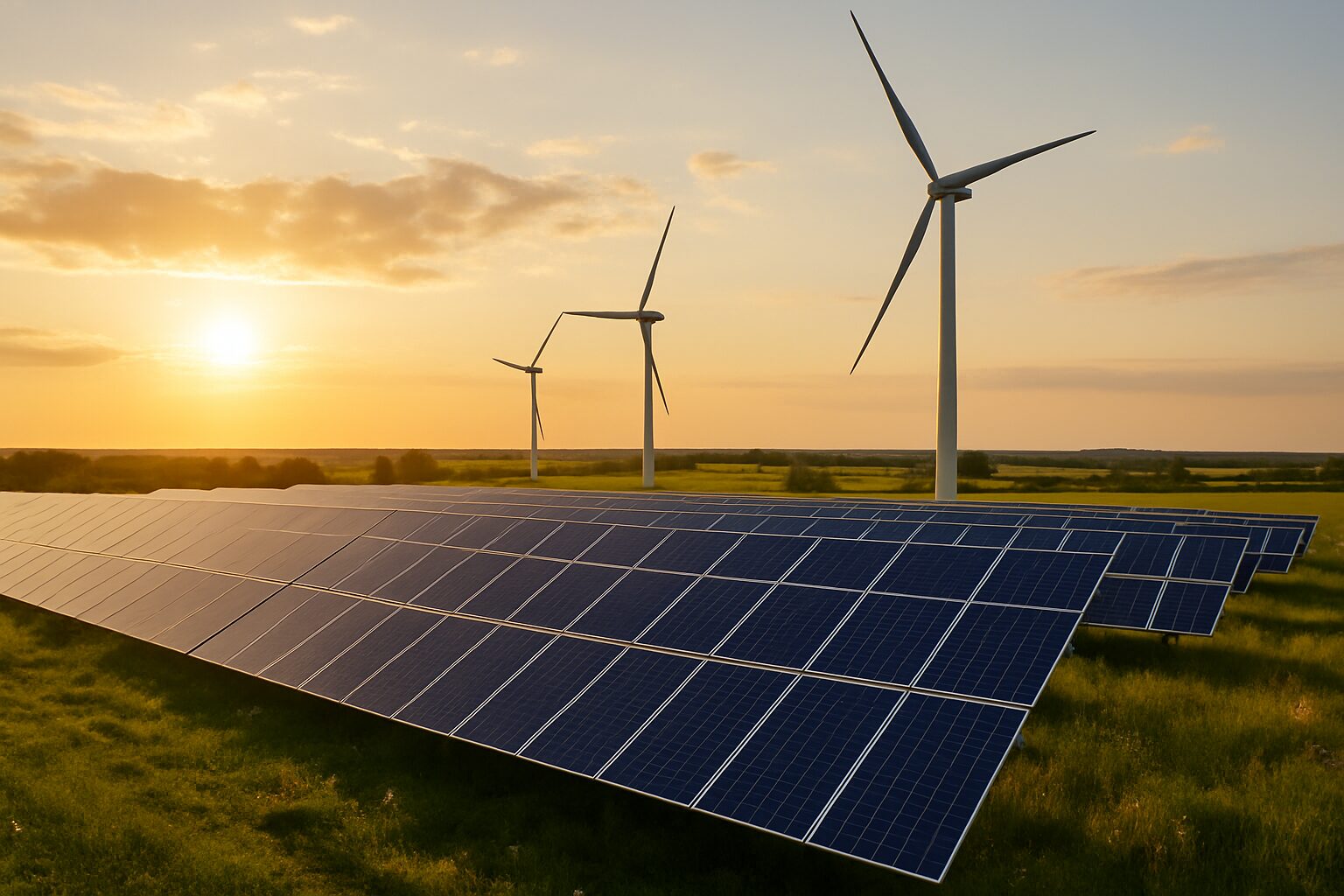
Understand How Renewable Energy Investments Are Transforming the Global Landscape by Uniting Sustainability, Innovation, and Long-Term Financial Returns.
In recent decades, the world has undergone significant transformations in the energy field.
In fact, the growing concern for the environment, climate change, and the need to preserve natural resources have led countries, companies, and investors to pay more attention to renewable energy investments.
But, after all, what does this mean in practice? Why has investing in this sector become increasingly common? And how did this change begin?
-
Renewable energy advances over protected areas in Brazil, and a survey by the Energy Transition Observatory reveals silent impacts that challenge environmental conservation and pressure sensitive traditional territories.

-
Rio Grande do Sul accelerates energy transition: State invests in renewable technologies and consolidates decarbonization strategies and pathways to attract billions in new industrial investments.

-
With 160,000 m² of collectors, an area larger than 20 football fields, Silkeborg, in Denmark, hosts a solar thermal plant that heats 19,500 homes and could become the largest solar heating plant in the world.

-
A study reveals the expansion of renewable energy procurement in Brazil and shows how companies are taking advantage of opportunities to reduce expenses, ensure energy efficiency, and strengthen strategic environmental commitments.


To understand renewable energy investments, we need to go back in time and comprehend how the world came to depend on non-renewable sources, such as oil, coal, and natural gas.
However, over time, it became clear that these resources, besides being finite, caused significant environmental impacts.
The burning of fossil fuels releases huge amounts of greenhouse gases, such as carbon dioxide (CO₂), which directly contribute to global warming.
Since the 1970s, scientists and environmental organizations, such as the Intergovernmental Panel on Climate Change (IPCC), have warned about the need for an energy transition.
That is, the gradual shift from pollutant sources to clean energy sources.
According to the IPCC report of 2023, actions to reduce emissions need to be rapid and deep to avoid severe climate impacts.
Additionally, another factor that has driven the search for renewable energy has been energy security.
Countries that rely heavily on imported fossil fuels become vulnerable to international crises, price fluctuations, and geopolitical conflicts.
Therefore, investing in local renewable sources helps reduce this dependency and brings greater stability to the economy.
What Are Renewable Energies and Why Are They Important?
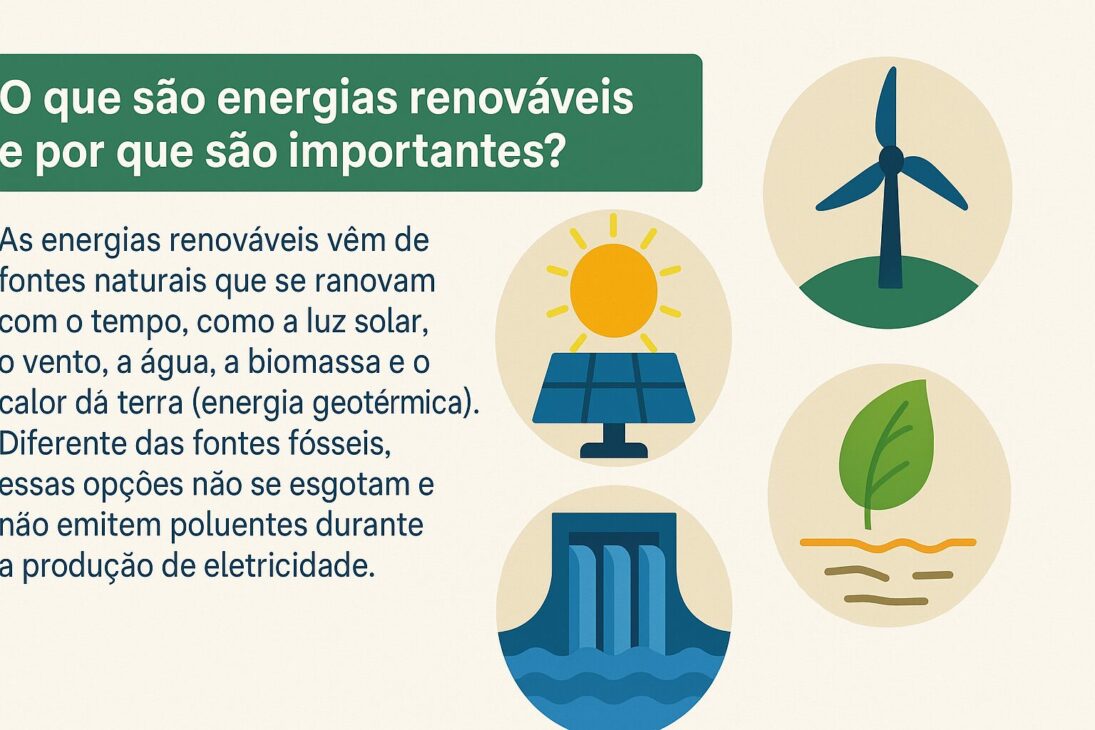
Renewable energies come from natural sources that are replenished over time, such as sunlight, wind, water, biomass, and geothermal heat.
Unlike fossil sources, these options do not deplete and do not emit pollutants during electricity production.
The great attraction of renewable energies lies in sustainability.
They allow economic development to occur in harmony with the environment, without compromising the future of the next generations.
For this reason, this sector has begun to attract the attention of governments and investors seeking both financial returns and positive impact.
Moreover, another important point is the advancement in energy storage technology, such as lithium-ion batteries, which enable the use of renewable energy even when the sun isn’t shining or the wind isn’t blowing.
These advancements make the system more reliable and help integrate renewable sources into the conventional electric grid.
According to the International Energy Agency (IEA), global battery storage capacity grew over 40% annually between 2010 and 2020.
The Potential of Brazil and Benefits of Investments
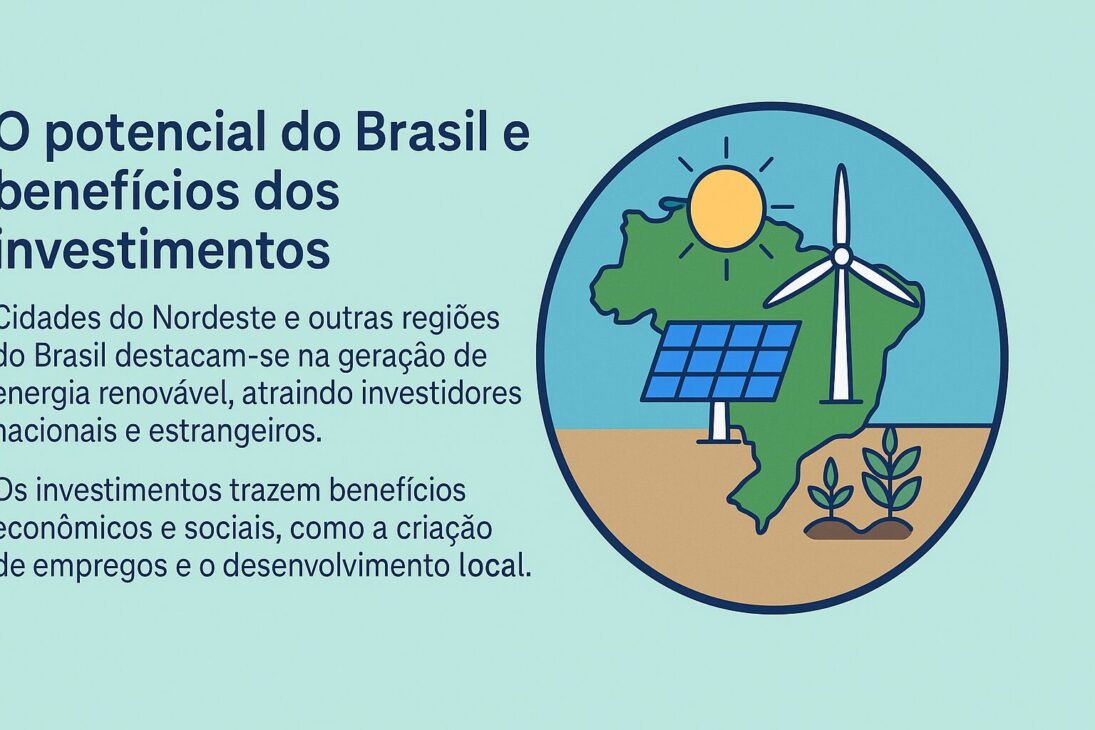
City areas in northeastern Brazil have become references in energy generation from wind, while the interior of states such as Minas Gerais, São Paulo, and Bahia stand out in the installation of solar farms.
These projects attract national and foreign investors interested in combining profitability with environmental responsibility.
Furthermore, Brazil has an abundance of natural resources, which makes the production cost more competitive compared to other countries.
For this reason, the country is positioned as a key player on the international stage, potentially becoming a powerhouse in renewable energies.
According to the World Bank report of 2023, Brazil has the potential to triple its installed renewable energy capacity by 2035.
From an economic standpoint, the renewable energy investments are promising for various reasons. First, the sector is expected to grow continuously over the next decades.
The demand for clean energy is rising, and the market is fully expanding.
Another important factor is the positive social impact. The generation of renewable energy, especially in less developed regions, creates jobs and encourages local development.
This occurs during the construction phase of power plants, maintenance, and operation, benefiting surrounding communities.
According to the International Labour Organization (ILO), the renewable energy industry already generates over 12 million jobs globally, and this number could grow to 42 million by 2050.
Why Are Renewable Energy Investments Advantageous?
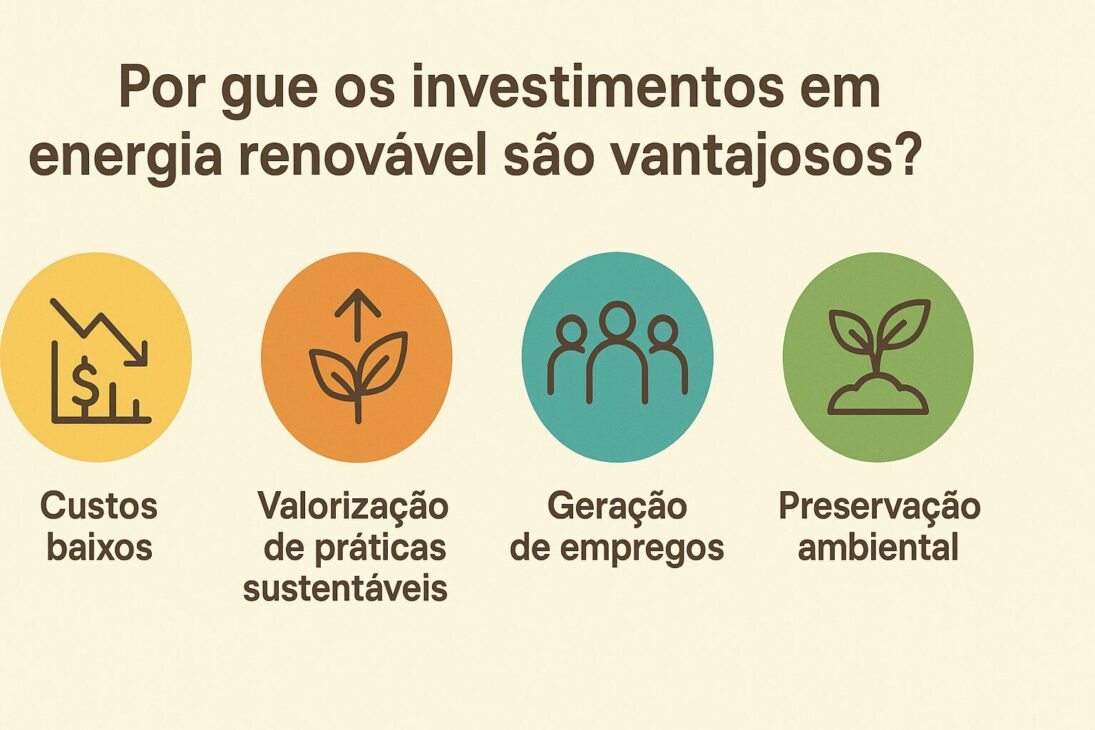
Moreover, costs are becoming increasingly lower. Today, producing solar or wind energy costs much less than it did 10 or 20 years ago.
As a result, projects that once seemed risky have become viable and profitable.
The appreciation of companies that adopt sustainable practices also deserves highlight.
Consumers and investors are increasingly aware of the environmental impact of their choices, and this directly influences the market value of companies.
Businesses linked to clean energy often attract more resources and have a good reputation.
Finally, investing in renewable energies means contributing to a healthier planet.
Reducing pollutant emissions, preserving natural resources, and providing a clean alternative for future generations is a collective responsibility—and investments play a fundamental role in this mission.
Additionally, investing in renewable energy stimulates technological innovation.
The development and implementation of new technologies in the sector not only improve energy efficiency but also create opportunities for startups and new businesses, generating a dynamic and sustainable economic ecosystem.
The Future of Clean Energy Investments
We still face many challenges, such as the need to improve energy transmission infrastructure, develop more efficient storage technologies, and ensure consistent public policies.
However, advancements are constant, and the expectation is that renewable energies will dominate the market in the coming decades.
With global pressure to achieve carbon neutrality by 2050, renewable energy investments are expected to grow even more.
Developed and developing countries are setting ambitious goals, and this opens more opportunities for those wishing to allocate resources strategically, safely, and with a positive impact.
According to the IPCC report of 2023, the massive adoption of renewable sources is essential to limit global warming.
Therefore, renewable energy investments have ceased to be a distant bet and have become a solid and necessary reality.
More than a trend, they represent a profound transformation in how we produce, consume, and think about energy.
By investing in this sector, we seek not only financial returns but also contribute to a more sustainable, fair, and balanced future.
And this is a commitment worth making—for ourselves and for future generations.










Seja o primeiro a reagir!