





 English
  Francês
  Alemão
  Italiano
  Japonês
  Norueguês
  Portuguese
  Spanish
  3 min of reading
  1 comment



More Than R$ 96 Billion in Works and Concessions Will Transform the National Port Infrastructure and Strengthen Foreign Trade
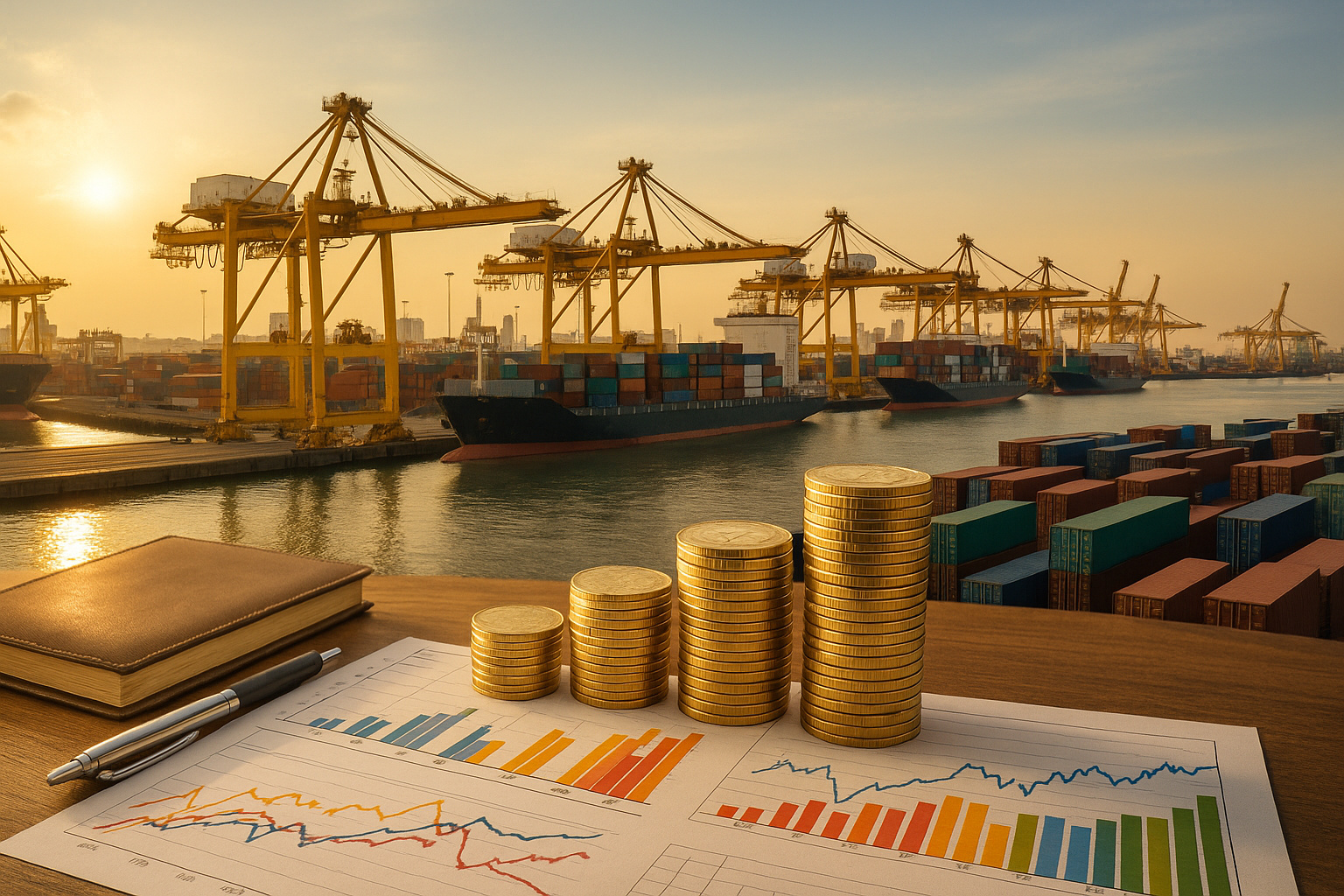
In August 2025, during the Ports & Coasts Brazil congress in Itajaí (SC), the acting director of the National Ports Secretariat, Julio Cesar de Sousa Dias, announced that the Brazilian port sector will receive R$ 96.7 billion in investments by 2030. Thus, the plan combines public and private contributions and projects an unprecedented expansion.
This amount, considered historic, includes dredging, concessions, new terminals, and emblematic works. Additionally, according to official data, ports already account for 26% of the national GDP, handling over 780 million tons of cargo between January and July 2025. Therefore, the investments represent a strategic logistical leap.
Strategic Expansion with a Focus on Sustainability
Thus, the announcement reinforces the role of ports as pillars of foreign trade and as engines of the national economy. Therefore, the investments, besides increasing logistics competitiveness, also aim to stimulate the regional economy and ensure operational sustainability.
-
Expansion of Federal Institutes: 38 new campuses and R$ 200 million for public education; see the cities included.

-
Lula’s government changes rule in important benefit and thousands of Brazilians will no longer receive it; see what has changed.

-
New Gripen fighter makes Argentines surrender to Brazil, and the heavy reaction exposes envy, frustration, and shock at Brazil’s technological leap.

-
This discovered deposit near the Andes could change the future of Argentina, attract billions, and even shake up the global metals market.


Consequently, this plan up to 2030 is seen as a watershed moment for the sector, as it creates conditions for greater efficiency, safety, and technological innovation.
Santa Catarina Takes National Center Stage
On the other hand, the state of Santa Catarina concentrates a significant portion of the contributions, totaling R$ 5.3 billion by 2030.
Among the main projects planned are:
- Dredging of the Babitonga Channel in Itapoá, with an estimate of R$ 300 million.
- Reinforcement of the Imbituba Breakwater, with an investment of R$ 87 million.
- Bulk Terminal of Santa Catarina, budgeted at R$ 884.2 million.
- Babitonga Bulk Terminal, estimated at R$ 1.15 billion.
- Leasing for fertilizers at the Port of Imbituba, valued at R$ 30.1 million.
- Concession of port services at the Port of Itajaí, estimated at R$ 2.83 billion.
Moreover, the state will have dividend resources for improvements in road access and support infrastructure, such as:
- R$ 17 million for the Port of Imbituba.
- R$ 12.6 million for São Francisco do Sul.
- R$ 14 million for road access in southern Santa Catarina.
- R$ 2.2 million for a Navy advanced post in Imbituba.
Thus, Santa Catarina establishes itself as one of the most strategic logistics hubs in Brazil.
Emblematic Works at the National Level
Similarly, on a national scale, the investments include emblematic projects.
The largest of them is the Santos-Guarujá Tunnel, valued at R$ 6.8 billion. This work will represent the largest investment in transport infrastructure in the country, featuring 1.5 km in length, six lanes, a bike lane, a pedestrian walkway, and a light rail transit system. Additionally, construction is expected to start in 2026, with a concession term of 30 years.
Another highlight is the first concession for dredging of the Access Channel of the Port of Paranaguá (PR), which anticipates:
- R$ 1.23 billion in CAPEX.
- R$ 2.35 billion in operation and maintenance.
These resources cover dredging, rock removal, nautical signaling, and integrated environmental management. Therefore, the model will be pioneering in the sector.
Additionally, by 2030, R$ 3.7 billion in dredging at public ports is planned, ensuring adequate access conditions and greater safety for navigation.
The Weight of the Port Sector in the Brazilian Economy
According to the National Confederation of Transport (CNT), the investments already represent more than 2.2% of federal GDP. Thus, the importance of the maritime modal for Brazil’s sustainable development becomes evident.
Thus, experts believe that the contributions are strategic for consolidating Brazil in the global market, as they expand export capacity, strengthen logistics chains, and create new regional growth opportunities.
What to Expect by 2030?
Therefore, with emblematic works, defined deadlines, and billion-dollar contributions, the coming years will be decisive for the modernization of the Brazilian port sector.
On one hand, the national infrastructure will be strengthened with concessions and works that will bring efficiency and innovation. On the other hand, the challenge will be to ensure social and environmental sustainability in all projects.
In this context, the question remains: Should Brazil accelerate investments to achieve immediate competitiveness or proceed gradually, prioritizing sustainability and security?








Nao foi mencionado na reportagem os 36 bilhões de reais em investimento privado nos 2 portos que serão construídos em Arroio do Sal no Rio Grande do Sul ,deve estar incluído no valor de 96 bilhões descrito no início da reportagem