





 Portuguese
  English
  Spanish
  5 min of reading
  0 comments


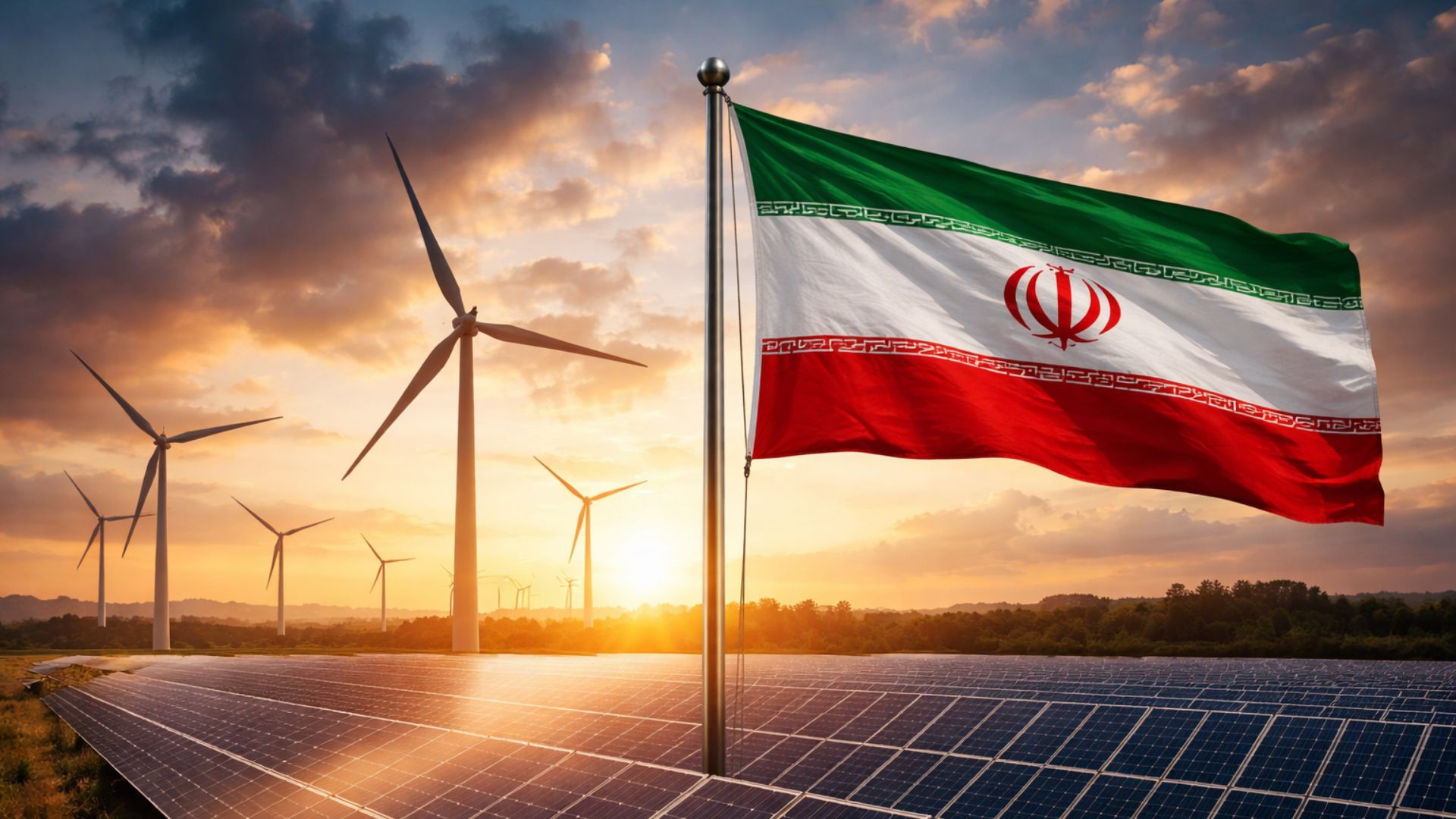
Iran Boosts BRICS By Rapidly Expanding Renewable Energy, Strengthening The Energy Transition With Investments In Solar And Wind Energy And Global Impacts
In November 2025, BRICS countries reinforced their prominence in the global climate and energy agenda. One of the most emblematic examples comes from Iran, which more than doubled its installed capacity of renewable energy in less than two years, consolidating a significant advance in the energy transition and the use of solar and wind energy.
According to data released by Revista Fórum, based on information from Tehran Times, Iran reached 3,000 megawatts (MW) of installed capacity in renewable sources by the end of November 2025, representing an increase of 157% in just 18 months. This result positions the country as one of the most relevant cases within the BRICS regarding the accelerated expansion of renewable energy, especially in emerging economies.
BRICS And Renewable Energy At The Center Of The Global Energy Transition
This advancement occurs in a context of increasing energy demand, the need to reduce emissions, and the search for greater supply security. The speed of expansion draws attention as it demonstrates that the energy transition is already underway, with measurable results and structural impacts.
-
Renewable energy advances over protected areas in Brazil, and a survey by the Energy Transition Observatory reveals silent impacts that challenge environmental conservation and pressure sensitive traditional territories.

-
Rio Grande do Sul accelerates energy transition: State invests in renewable technologies and consolidates decarbonization strategies and pathways to attract billions in new industrial investments.

-
With 160,000 m² of collectors, an area larger than 20 football fields, Silkeborg, in Denmark, hosts a solar thermal plant that heats 19,500 homes and could become the largest solar heating plant in the world.

-
A study reveals the expansion of renewable energy procurement in Brazil and shows how companies are taking advantage of opportunities to reduce expenses, ensure energy efficiency, and strengthen strategic environmental commitments.


The growth observed in Iran is not an isolated movement. It reflects a broader trend within the BRICS, where renewable energy has become central to strategies for economic development, energy security, and climate change mitigation.
Member countries have increased investments in clean sources to reduce dependence on fossil fuels and enhance the resilience of their electrical systems. The doubling of capacity in less than two years underscores a new level of ambition, demonstrating that emerging economies can lead the energy transition at scale and speed.
Furthermore, the expansion of solar and wind energy may strengthen the BRICS’ position in international forums, enhancing their influence in discussions on climate financing and just transition.
Regional Distribution Of Renewable Energy Reveals Strategic Poles
The expansion of renewable energy in Iran has occurred unevenly across provinces, revealing the formation of strategic generation poles. According to data from Tehran Times, the province of Markazi led the national ranking with 459 MW of installed capacity, followed by Isfahan, with 395 MW, and Yazd, which reached 326 MW.
This regional concentration indicates planning guided by technical criteria, such as the availability of natural resources, existing infrastructure, and proximity to consumption centers. The decentralization of electrical generation reduces losses in the system and increases energy security, an essential aspect for BRICS countries undergoing industrial expansion.
At the same time, the creation of these poles boosts regional economic development, generating jobs and strengthening productive chains linked to renewable energy.
Solar And Wind Energy Gain Prominence In Iran’s Matrix
Within the recorded expansion, the solar and wind energy segment has shown significant prominence. In the case of wind energy, the province of Qazvin has established itself as the main hub in the country, with 164 MW of installed capacity. Following are East Azerbaijan and Razavi Khorasan, occupying the second and third positions in the national ranking.
This performance confirms the strategy of diversifying the energy matrix, reducing dependence on fossil sources, and increasing complementarity between technologies. Solar and wind energy reinforce each other, ensuring greater stability in the system throughout the day and across seasons.
In the context of BRICS, the expansion of these sources is seen as essential to sustain the energy transition without compromising economic growth.
More Than 600 Projects Broaden The Horizon Of The Energy Transition
Another central piece of data released by Tehran Times is the volume of projects in development. According to official information, more than 600 initiatives related to renewable energy are underway or in the planning phase, with a projected launch by September 2026.
The majority of these projects focus on solar and wind energy, as well as other smaller-scale technologies. This robust pipeline indicates continuity and long-term planning, dismissing the idea that the growth observed is merely an isolated event.
Within the BRICS, the predictability of investments is considered fundamental to attract private capital, reduce financial costs, and ensure the sustainability of the energy transition in the coming years.
Public Policies Boost Renewable Energy In BRICS
The progress of renewable energy in Iran has been supported by a set of regulatory and financial measures adopted throughout 2025. These include the provision of specific credit lines for solar plants and the implementation of new rules allowing industries and agricultural producers to develop projects connected directly to the distribution network. These policies lower entry barriers, increase the economic attractiveness of projects, and accelerate the deployment of plants.
The role of the state as an initial driver has been a common characteristic within BRICS, especially in strategic sectors like energy. Thus, the energy transition ceases to be just an environmental commitment and becomes part of the country’s industrial and economic policy.
Professional Training Strengthens Renewable Energy
Besides infrastructure, the Iranian government has invested in strengthening technical and vocational training centers aimed at developing a specialized workforce in renewable energy. The goal is to meet the growing demand for qualified professionals for the implementation, operation, and maintenance of projects.
The qualification of the workforce is a decisive factor for the sustainability of growth, ensuring operational efficiency and reducing costs over time. Within the BRICS, this investment in human capital is viewed as essential to consolidating the bloc’s leadership in the global energy transition.
Environmental Impacts Of The Energy Transition And Renewable Energy
The effects of the expansion of renewable energy in Iran go beyond installed capacity. According to the data released, the use of these sources resulted in savings of approximately 29 billion liters of water and a reduction in the consumption of about 30 billion cubic meters of fossil fuel.
Moreover, it is estimated that there was a reduction of approximately 65 million tons of carbon dioxide during the analyzed period. These environmental impacts reinforce the relevance of the energy transition, especially in regions with water stress and high dependence on fossil fuels.
Within the BRICS, results of this magnitude strengthen the bloc’s position in international climate negotiations.
What BRICS Advancement Signals For The Global Energy Future
The accelerated growth of renewable energy in Iran highlights that BRICS is taking on an increasingly relevant role in redefining the global energy system. Doubling installed capacity in less than two years demonstrates technical, economic, and institutional viability.
The progress of solar and wind energy, combined with consistent public policies and investments in training, indicates that the energy transition has ceased to be a distant goal and is now being realized in a structural manner.
For the global scenario, this movement signals that emerging economies can lead the expansion of clean sources, contributing decisively to energy security, reducing emissions, and constructing a more sustainable development model.









Seja o primeiro a reagir!