





 Portuguese
  English
  Spanish
  3 min of reading
  0 comments


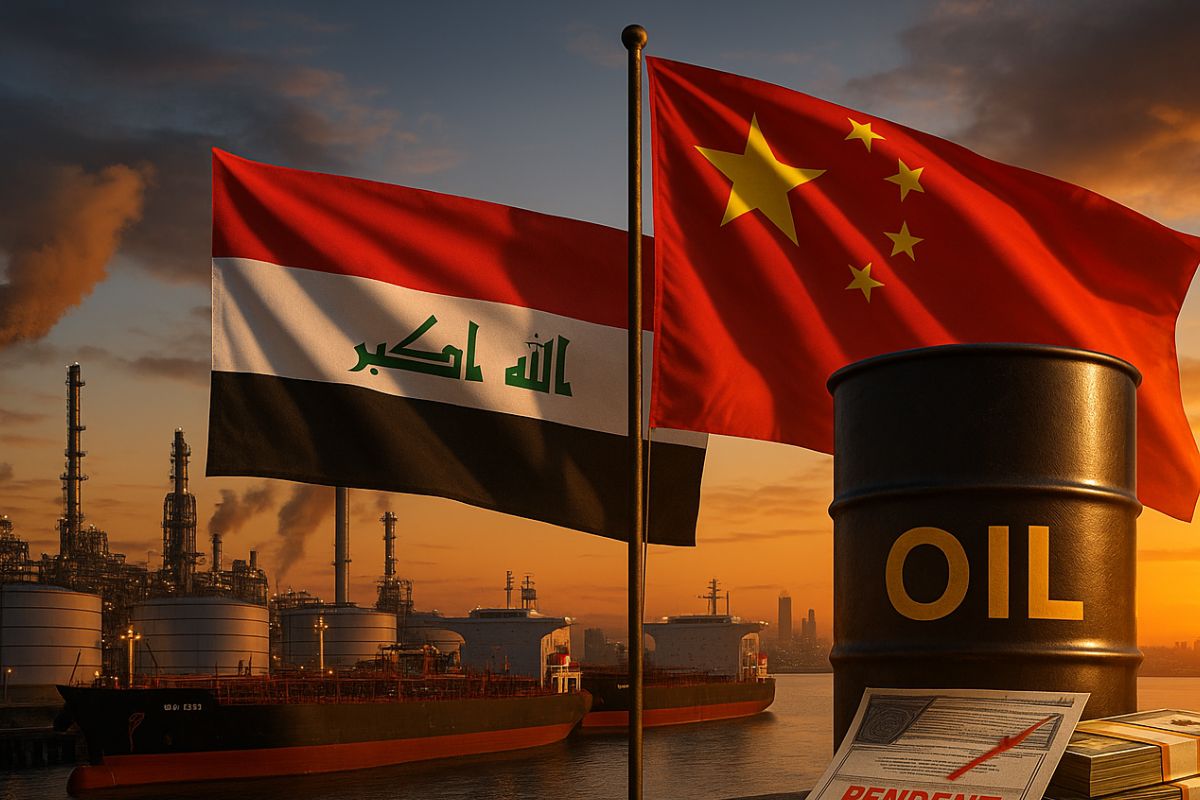
Iraq Reached Advanced Agreements With ExxonMobil in Singapore, Not Only for Refining and Storage, but Also for Profit Sharing in Derivatives Trading, Consolidating Its Position as a Key Supplier to China in the Asian Market.
The Iraq announced on Saturday (09/06/2025) a strategic agreement with ExxonMobil in Singapore, involving refining, storage, and profit sharing in the trading of oil and its derivatives. According to IstoÉ Dinheiro, the measure consolidates the country as a key supplier to China, currently the world’s largest buyer of the commodity.
The Iraqi State Organization for Oil Marketing (Somo) confirmed that the contract goes beyond infrastructure: it includes profit-sharing clauses from derivatives, something unprecedented in Baghdad’s recent energy policy.
The goal is to maximize national revenues and reduce dependence on crude oil exports, in an increasingly competitive global market for consumer markets.
-
Offshore industrial demand in Macaé skyrockets with the recovery of oil and gas and could grow by up to 396% by 2026 in the Campos Basin.
-
Offshore industrial demand in Macaé surges with the recovery of oil and gas and could grow by up to 396% by 2026 in the Campos Basin.
-
Brazilian giant expands borders in the Southeast: Petrobras confirms new oil discovery in ultra-deep waters in the pre-salt of the Campos Basin.

-
Alert in the global energy market: Severe tropical cyclone hits the coast and disrupts gas production at major plants in Australia, threatening global supply.


Singapore as a Strategic Hub
The choice of Singapore carries strategic weight. The country is one of the largest energy hubs in Asia, with advanced refining and logistics distribution capabilities.
For the Iraq, securing space in this hub means privileged access to the trade routes supplying China, expanding not only crude oil exports but also higher value-added refined products.
According to IstoÉ Dinheiro, this presence reinforces Iraq’s position in a market that, according to Somo itself, is “the only one in the world expanding in terms of refining capacity and demand.”
As a result, Iraqi oil gains prominence in an accelerated consumption environment.
Profit Sharing: A New Model
The most innovative aspect of the contract is the profit-sharing clause for refined oil.
Until now, Iraq’s revenue model was concentrated on the direct export of barrels, making it vulnerable to international market price fluctuations.
With this change, the country will begin to capture additional margins from refining and trading, creating a more diversified financial flow.
According to experts consulted by IstoÉ Dinheiro, this strategy could serve as a model for other producing countries seeking greater resilience against oil price fluctuations in the global market.
Oil as a Pillar of Asian Geopolitics
The agreement also reflects a structural transformation in energy geopolitics.
Europe and the United States show stable or declining demand, while China and India lead the growth in oil consumption.
For the Iraq, being part of this axis means market security and greater political influence.
Somo highlighted that the measure reinforces Baghdad’s long-term strategy: revenue diversification, integration with refined oil value chains, and strengthening its position as an indispensable player in the Middle East and Asia.
This movement places the country on a path to greater economic stability and international relevance.
Oil remains the main source of economic and geopolitical power for Iraq, and the agreement with ExxonMobil in Singapore marks a strategic pivot: from a simple exporter of barrels to a participant in the margins of refining and global trading.
This change could alter the balance of power in the Asian market and ensure the country greater resilience in the future.
Do you believe that this profit-sharing model could be a game changer for oil-producing countries? Or do you see risks of even greater dependence on Asia?
Leave your opinion in the comments — we want to hear your perspective on this movement.










Seja o primeiro a reagir!