





 Portuguese
  English
  Spanish
  3 min of reading
  0 comments


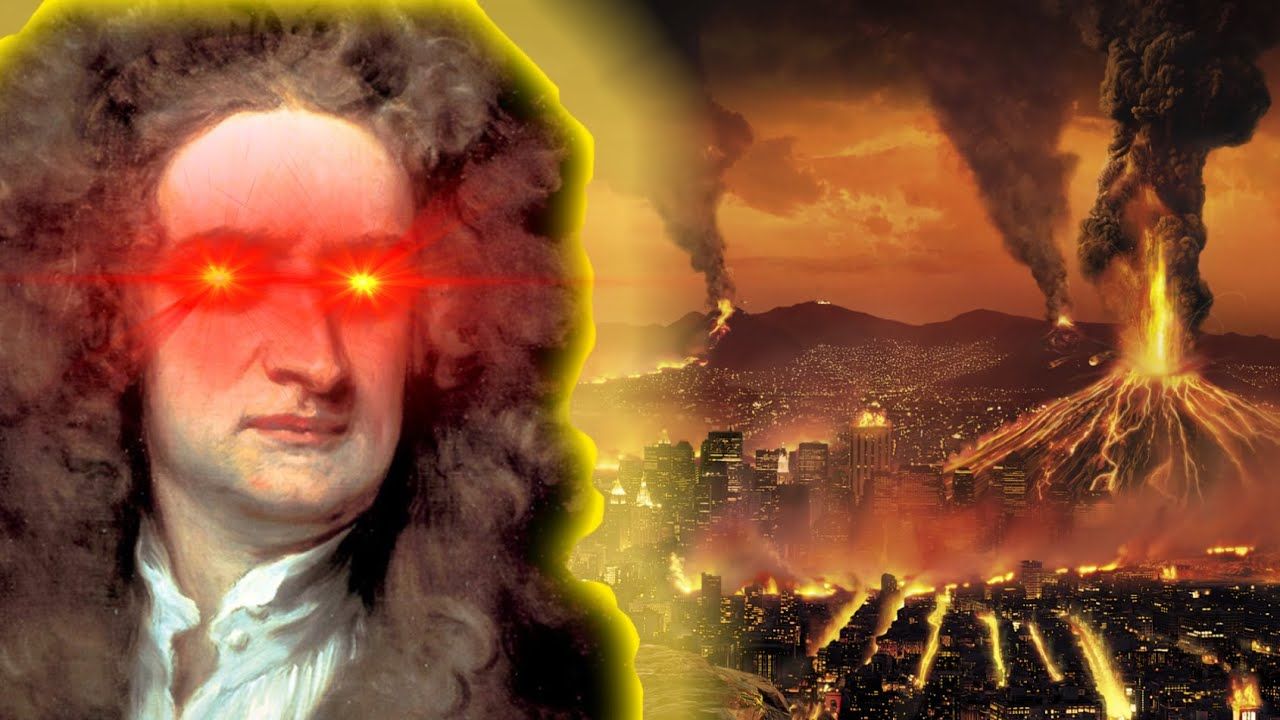
Around 1665, England was taken by chaos. The bubonic plague, coming from Amsterdam on a cotton ship, devastated London, killing about one hundred thousand people. The streets were filthy, hunger was spreading, and to make matters worse, Cambridge had to close its doors. It was in this scenario that a young and brilliant Isaac Newton found refuge in his family’s home in Woolsthorpe Manor.
It was in this isolation that he began to develop his revolutionary ideas. The famous story of the apple falling on his head may be an exaggeration, but there is no doubt that Newton used this period to create some of the foundations of modern science. However, what many do not know is that he also dedicated a great deal of his time to theology and alchemy, obsessed with a curious theme: the end of the world.
The Historical Context That Influenced Newton
The Great Plague forced the closure of several cities, including Cambridge. With academic life paused, Newton found in isolation the opportunity to deepen his research. While the population feared for their own future, he dedicated himself to understanding the mysteries of the universe – and of faith.
It was during this period that Newton had insights into gravity and optics. But his curiosity was not limited to physics. He believed that the sacred scriptures hid secrets about the fate of humanity and decided to study these texts with the same rigor he applied to science.
-
Scientific studies indicate that drought may be strengthening a much greater silent threat: more resistant superbugs.

-
Man builds functional 5-meter submarine in his garage using gas cylinders, PVC pipes, and a refrigerator motor, and navigates with the vessel on a lake in Colombia.

-
Millions of people have been eating yam for centuries without knowing that this humble tuber contains a compound called diosgenin, which scientists have now discovered can improve memory and help control blood sugar levels.

-
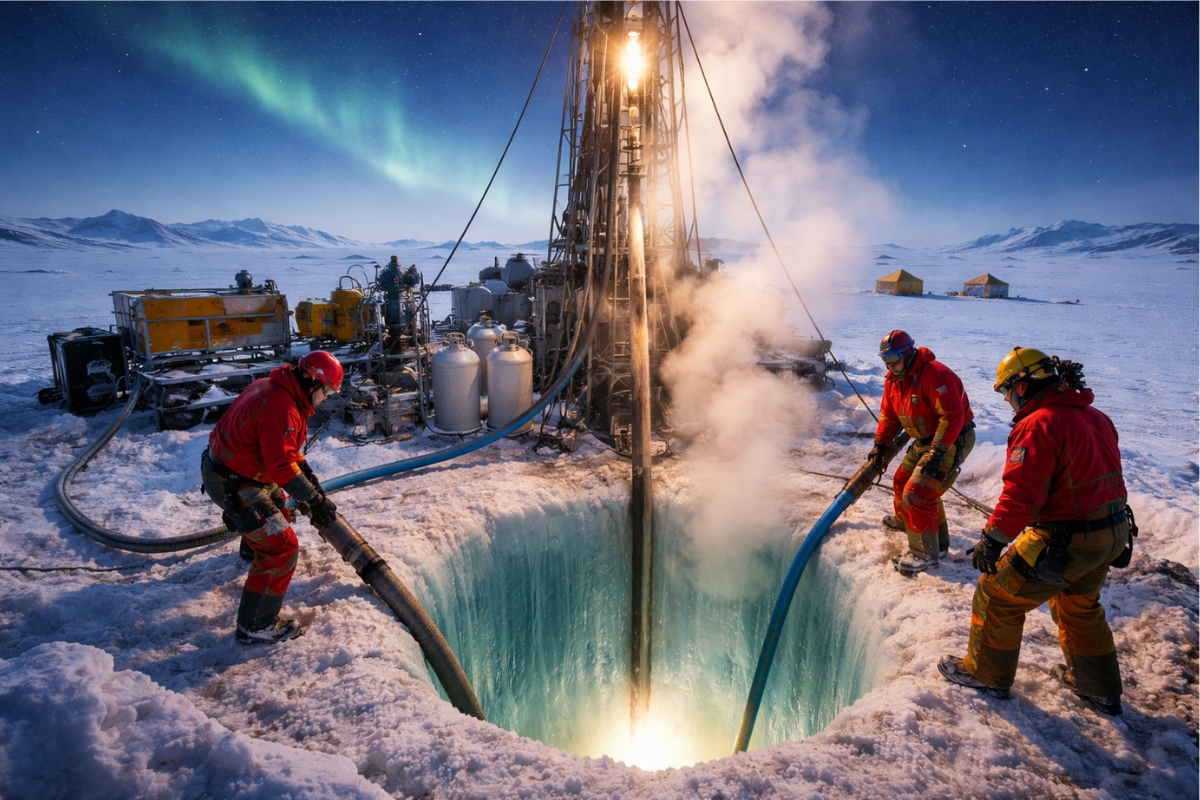
Scientists from an international project drill 1,800 meters of ice in Antarctica using hot water and discover details about one of the most intriguing places on planet Earth.

The Brilliant Mind of Isaac Newton Beyond Science
Many people imagine Newton only as a scientist, but the truth is that he spent more time studying theology and alchemy than physics and mathematics. He believed that God had left clues about the future in the Bible and wanted to decipher them.
Newton believed that predictions about the end of the world were being made incorrectly. By analyzing the Book of Daniel and the Apocalypse, he concluded that many were hastening the arrival of the apocalypse and that the actual date was still far off.
Newton’s Prediction About the End of the World
Newton identified the year 800 A.D. as the beginning of the Great Apostasy, a crucial moment for future events. From that date, he applied a period of 1260 years, arriving at the year 2060. He believed that the world as we know it would not end before that period.
Despite the alarming date, Newton did not see 2060 as an apocalyptic event in the traditional sense. According to Stephen Snobelen, a professor at King’s College, Newton viewed this date as a transition to a new era, a spiritual and moral rebirth of humanity.







-

-

-

4 pessoas reagiram a isso.