





 Portuguese
  English
  Spanish
  5 min of reading
  0 comments


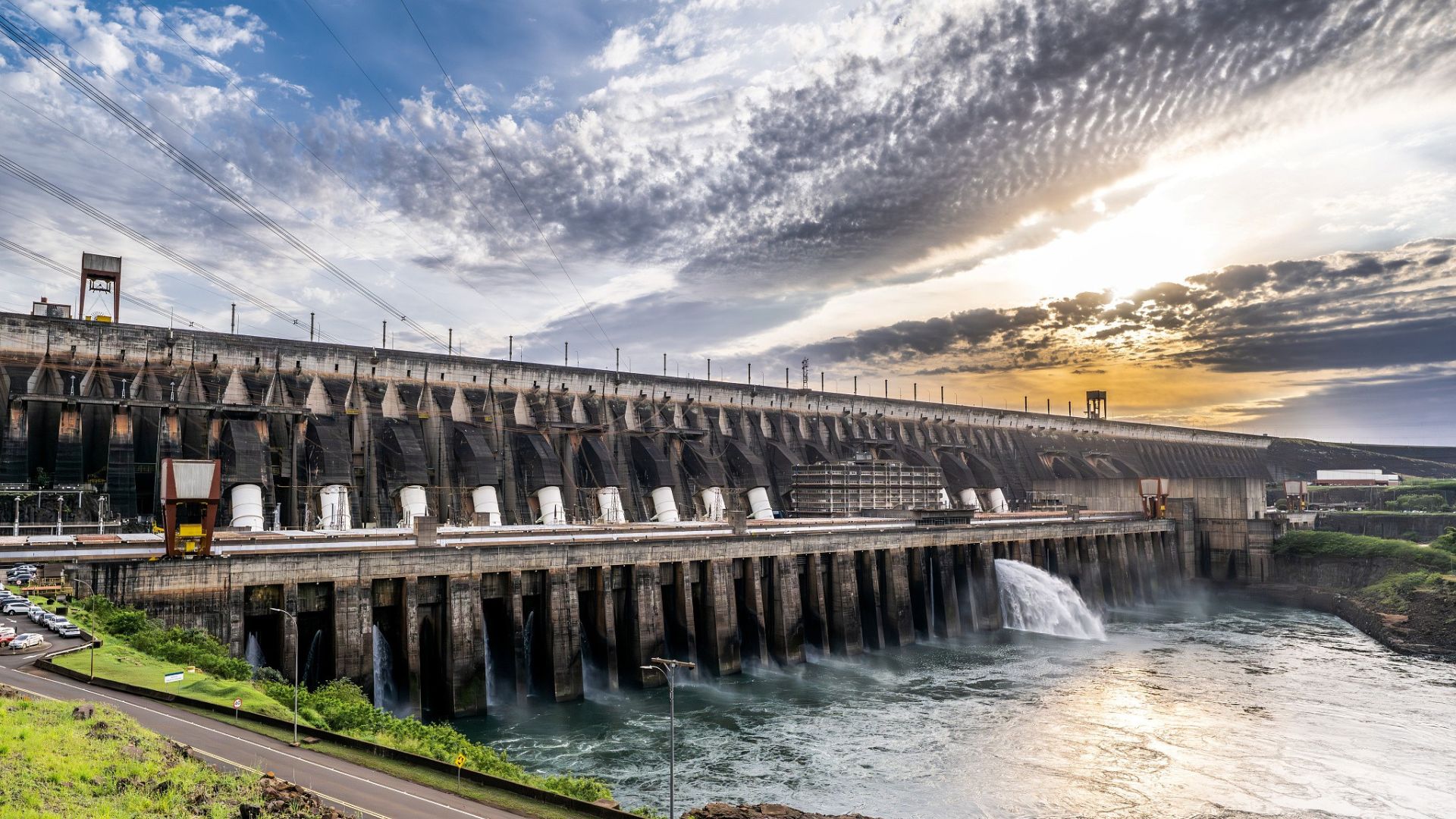
Itaipu Records High Performance in 2025, Increases Renewable Energy Production, and Reinforces the Role of Hydropower in the Energy Security of Brazil and Paraguay, with Direct Impact on the Regional Electric System.
Itaipu Binacional closed 2025 with a historic energy production of 72,879,287 megawatt-hours (MWh), a volume 8.63% higher than that recorded in 2024. The generation from the hydropower plant is, symbolically, sufficient to supply the entire planet for about a whole day, highlighting the scale and relevance of the enterprise for the energy security of Brazil and Paraguay.
The official data, released by Itaipu on January 2, confirms the strategic role of the plant in providing clean, renewable, and reliable energy for both countries. In addition to meeting a significant portion of Brazilian national consumption and practically sustaining the Paraguayan electrical system, the plant’s energy production reinforces the stability of the regional electric system in a scenario of increasing demand and greater participation from intermittent sources.
Itaipu’s Energy Production Guarantees Stability to the Electric System
The energy production achieved by Itaipu in 2025 had a direct impact on regional energy security. Of the total generated throughout the year, 36% was allocated to Paraguay, a volume sufficient to meet approximately 87% of the country’s total electricity consumption. Meanwhile, Brazil accounted for 64% of the produced energy, which corresponded to about 7% of all electricity consumed nationally in 2025.
-
Renewable energy advances over protected areas in Brazil, and a survey by the Energy Transition Observatory reveals silent impacts that challenge environmental conservation and pressure sensitive traditional territories.

-
Rio Grande do Sul accelerates energy transition: State invests in renewable technologies and consolidates decarbonization strategies and pathways to attract billions in new industrial investments.

-
With 160,000 m² of collectors, an area larger than 20 football fields, Silkeborg, in Denmark, hosts a solar thermal plant that heats 19,500 homes and could become the largest solar heating plant in the world.

-
A study reveals the expansion of renewable energy procurement in Brazil and shows how companies are taking advantage of opportunities to reduce expenses, ensure energy efficiency, and strengthen strategic environmental commitments.


This division highlights the central role of the hydropower plant in balancing supply between Brazil and Paraguay. In a context of economic expansion, population growth, and increasing electricity consumption, Itaipu’s contribution remains crucial in preventing risks of shortages and ensuring predictability for the electric system.
Hydropower Plant Itaipu in Numbers: Comparatives Reinforce Its Dimension
The 72.879 million MWh generated in 2025 help to measure the magnitude of Itaipu. This volume would be sufficient to supply Brazil for approximately 40 days, Paraguay for almost three years, or the state of São Paulo, the largest consumer in the country, for about six months and ten days. It would also allow for simultaneous supply to 123 cities the size of Foz do Iguaçu.
In the Brazilian electrical system, the energy production from the hydropower plant accounted for 11.6% of all hydraulic energy used in the country in 2025. Compared to other large plants, Itaipu’s supply was 59% higher than Belo Monte, 78% greater than the Tucuruí Hydropower Plant, 2.75 times greater than Santo Antônio, and 2.94 times larger than Jirau. These numbers reinforce Itaipu’s position as one of the largest and most relevant hydropower plants in the world.
High Inflow Boosts Energy Production in 2025
The historic performance recorded by Itaipu in 2025 is directly linked to an inflow 8.57% higher compared to the previous year. The higher volume of available water, combined with the increasing demand from the Brazilian and Paraguayan electrical systems, allowed the plant to operate at a high level of efficiency throughout the year.
This scenario underscores the importance of water management and integrated operation of the hydropower plant, ensuring the sustainable use of natural resources and the maintenance of energy security, even in the face of increasingly frequent climate variations.
Itaipu, a Strategic Hydropower Plant in the Energy Transition
With the accelerated expansion of intermittent renewable sources, such as solar and wind, Itaipu has taken on an even more significant role in the electric system. The hydropower plant has increasingly been called upon in the late afternoon and early evening, when solar generation rapidly decreases and energy consumption increases.
Thanks to its high availability and fast response capability, Itaipu serves as a kind of “natural battery,” compensating for fluctuations in generation from other sources and meeting load ramps in a short period of time. This operational attribute is fundamental for the energy security of Brazil and Paraguay, reducing risks of instability and blackouts.
Energy Security in Brazil and Paraguay Gains Strength with Itaipu
The Brazilian General Director of Itaipu, Enio Verri, emphasized that the results achieved in 2025 confirm the strategic importance of the plant. According to him, the results confirm the strategic importance of Itaipu in ensuring energy security for Brazil and Paraguay.
Verri also emphasized that the performance is the result of a joint effort between Brazilian and Paraguayan professionals, with a high technical level and commitment. This binational cooperation continues to be one of the pillars of the hydropower plant’s success over more than four decades of operation.
Technological Update Strengthens the Hydropower Plant Itaipu
To sustain high performance and reliability indices, Itaipu Binacional is executing the most comprehensive technological update plan since the beginning of its operation. The program foresees approximately US$ 670 million in contracted investments and began implementation in May 2022, with an estimated duration of 14 years.
The update includes the replacement of control and protection systems for the 20 generating units, the gas-insulated substation, auxiliary services, spillway gates, and the dam, as well as the modernization of the Right Bank Substation. These actions enhance operational reliability and extend the plant’s lifespan.
Heavy electromechanical equipment, such as turbines and rotors, are not included in the plan, as they remain in excellent condition and far from the end of their useful life.
Binational Training Drives Innovation and Efficiency
In January 2025, Itaipu inaugurated the Center for Systems Integration and Training (Cintesc), a binational space with 1,257.59 m² capable of training up to 100 professionals simultaneously. The center houses laboratories dedicated to the integration and testing of the plant’s new digital systems.
In addition to speeding up processes and reducing operational costs, Cintesc strengthens Itaipu’s technical autonomy and contributes to the continuous training of teams from Brazil and Paraguay, enhancing the efficiency and energy security of the enterprise.
A Historic Milestone That Projects Itaipu’s Future
Closing 2025 with historic production solidifies Itaipu as a global reference in hydropower generation. Throughout its history, the plant has already surpassed the mark of 3.1 billion MWh produced since 1984, enough energy to supply the planet for approximately 44 days.
This historic performance demonstrates that Itaipu remains prepared for the challenges of the future, combining high energy production, operational flexibility, and continuous investments in technology. Thus, the hydropower plant continues to be one of the main pillars of energy security for Brazil and Paraguay, contributing to the stability of the electric system, sustainable development, and integration between the two countries.









Seja o primeiro a reagir!