





 Portuguese
  English
  Spanish
  6 min of reading
  1 comment


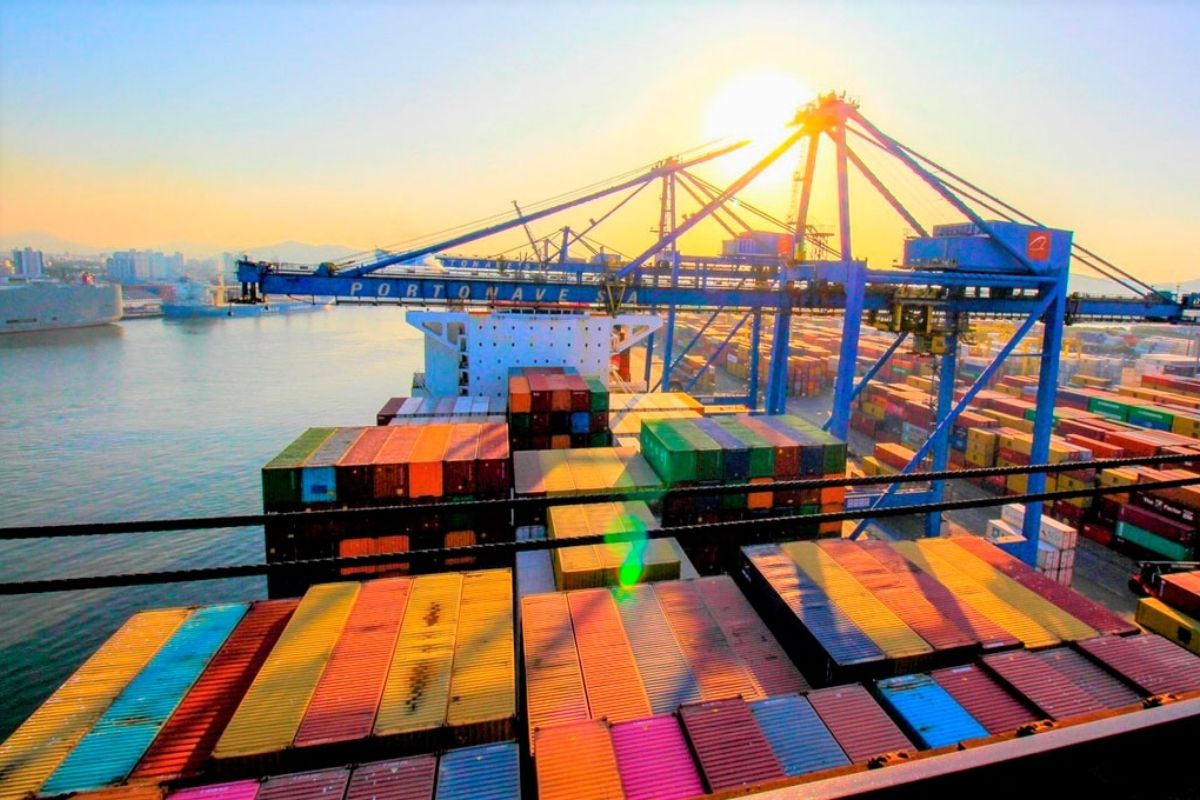


Itajaí Resumes Its Role In International Trade In The South, With Accelerated Port Resumption, JBS’s Interest In Definitive Leasing, And A New Cycle Of Federal Auctions In 2026. Operations Grow, Attract Routes, Expand Reefers, Modernize Gates, And Reopen The Competition Among Giants For Strategic Terminals In The Country.
Itajaí has returned to the center of the national logistics agenda with the recovery of the Port of Itajaí after the paralysis that affected production chains in Santa Catarina. The resumption, driven by the operation of JBS Terminals since October 2024, reposition Itajaí as a strategic asset for international trade in the South and rekindles the competition for leases in the 2026 federal cycle.
Amid ANTAQ’s and the Ministry of Ports and Airports’ schedule, Itajaí is again on the radar of major private groups. With auctions scheduled to start on February 26 and larger-scale projects on the horizon, Itajaí is being treated as a sensitive piece on the Brazilian logistics board, due to its capacity to reorganize routes, pressure competing hubs, and redefine regional efficiency.
Operational Reconstruction: How Itajaí Emerged From Paralysis And Returned To The Radar
Itajaí has gone through a recent period of paralysis that affected exporters and importers, especially in Santa Catarina, and opened space for a reorganization of cargo flow in southern Brazil.
-
50 viaducts, 4 tunnels, 28 bridges, and 40 kilometers of bike paths: BR-262 in Espírito Santo will receive 8.6 billion reais for the largest engineering project in the state’s history, inspired by the Immigrant Highway in São Paulo.

-
Brazil produces too much clean energy and doesn’t know what to do with it: over 20% of solar and wind capacity was wasted in 2025 while investors flee and 509 renewable generation projects were abandoned in the last year.

-
Piauí will produce a new fuel that replaces diesel without needing to change anything in the truck’s engine and reduces pollutant gas emissions by half: truck drivers from all over the Northeast are already celebrating the news that will arrive later this decade.

-
A new Brazilian shopping center worth R$ 400 million will be built in an area equivalent to more than 4 football fields, featuring 90 stores, 5 cinemas, a supermarket, a college, and parking for 1,700 cars, potentially generating 3,000 jobs.

The turning point begins to take shape with the entry of JBS Terminals, which took over the management of the leased area in October 2024 and accelerated the recovery of the terminal.
The recovery of Itajaí was not just talk. In 15 months under the management of JBS Terminals, the volume has already exceeded 430,000 TEUs, serving approximately 3,000 clients.
This number indicates a strong market recovery for an asset that had lost traction, precisely because it is at the center of production chains that depend on predictability and competitive logistical costs.
2025 As Proof Of Recovery: TEUs, Vessels And Regular Lines
The year 2025 was the first complete operational cycle under JBS Terminals and served as a thermometer for the recovery in Itajaí. Nearly 390,000 TEUs were handled in 2025, a volume 11% higher than in 2022, the period preceding the paralysis.
This data is relevant because it compares the current operation with a reference level prior to the operational shock that halted the terminal.
In addition to TEU movement, Itajaí also recovered scale and service regularity. Throughout 2025, the terminal received 384 vessels, operating with 10 regular shipping lines and seven weekly calls.
For 2026, the addition of new services is expected, including a route linking Brazil to Northern Europe, which reinforces Itajaí’s position as a direct connection hub for international markets.
Structure And Capacity: Area, Docks, Berths, Depth, And Technology
The infrastructure described for Itajaí helps explain why the asset is being contested again. The terminal boasts 180,000 square meters of operational area, 1,030 meters of dock, four berths, and 14 meters of depth, allowing the berthing of large vessels and operational efficiency compatible with the standards required by regular lines.
To sustain the performance gain in Itajaí, JBS Terminals executed investments amounting to R$ 220 million in technological and operational modernization. This package includes:
MHC Konecranes Gottwald ESP.9 Mobile Cranes
Two units were acquired, with capacity for 125 tons and reach of up to 20 container rows, expanding handling capacity and productivity at the dock.
Reefers: 1,708 Connections For Refrigerated Containers
The expansion of the infrastructure for refrigerated containers increases Itajaí’s competitiveness in sensitive cargo, especially in an export agenda where meat has significant weight.
Eight Reversible Gates At The Land Access
The implementation improves the fluidity of entry and exit according to demand, reducing bottlenecks during peak operations and increasing the capacity to process road traffic.
What Itajaí Exports And Imports: Meat, Wood, Plastics, Animal Feed, And Machinery
Itajaí operates as a bridge between the economy of Santa Catarina and global markets, and the cargo agenda reflects this.
In exports, meat leads, followed by wood, while in imports, plastics, prepared animal feeds, and high-value-added machinery gain ground.
This cargo mix makes Itajaí a cog in multiple supply chains, impacting not only logistics but also timelines, inventory costs, industrial dynamics, and the international competitiveness of regional companies.
Jobs And Port Routine: Fixed Team And Daily Mobilized Port Workers
The resumption of operations in Itajaí is also reflected in the local impact. The operation involves 345 direct employees and around 600 Daily Port Workers mobilized.
In a port, this daily activity is an indicator of operational intensity because it reflects the demand for stevedoring, terminal handling, inspection, truck flow, and vessel turnaround, all in a chain.
JBS Confirms Interest: Why The Definitive Lease Of Itajaí Became A Target
JBS’s interest in competing for the definitive lease of Itajaí aligns with the strategy to expand presence in logistics and infrastructure.
The group is evaluating the modeling of the bidding notice before formally participating, but the signal is clear: Itajaí is viewed as a strategic asset for efficiency, predictability, and competitiveness in global supply chains.
Itajaí’s position in the South of the country and its direct connection to markets in Asia, Europe, the Americas, the Middle East, and Africa reinforce the asset’s value.
In port logistics, transit time, reliability of service, and capacity to handle refrigerated cargo are differentiators that can establish a terminal as a regional hub.
The Board For 2026: Port Auctions, R$ 229 Million Initials, And The Weight Of Tecon Santos 10
The advancement of Itajaí happens within a broader reorganization of the federal portfolio of concessions and leases.
The cited timeline indicates that the first auctions are scheduled for February 26, with an initial mobilization of around R$ 229 million. This start paves the way for larger-scale projects.
The main symbol of this scale is Tecon Santos 10, estimated at up to R$ 6.4 billion over the contract duration.
The comparison with an asset like Itajaí is not only based on absolute size but also on systemic effect: when terminals gain capacity and regularity, supply chains reposition routes, companies recalculate costs, and competition among hubs intensifies.
Itajaí As Competitive Pressure: Routes, Efficiency, And Competition Among Giants
Itajaí is becoming sensitive again as it acts as a real alternative for the South, shortening shipment and landing decisions while offering scale and predictability.
The combination of operational resumption, investment, and infrastructure reinforcement places Itajaí back as a point of contention among groups seeking to dominate logistics corridors.
This repositioning of Itajaí has the potential to redefine routes and influence decisions regarding congestion, availability of berthing windows, and costs per container, especially when considering the goal of reducing bottlenecks and increasing efficiency in the national network.
Volume In Tons: Leap Of The Complex And The Contrast Between 2025 And 2024
The tonnage numbers reinforce the scale of recovery in Itajaí.
From January to November 2025, the Itajaí Port Complex accumulated 14,225,986 tons, with an 11% increase compared to the same period in 2024, when 12,804,927 tons were recorded.
In the specific segment of the Port of Itajaí (public dock plus commercial area), the leap is even more significant: 4,277,115 tons in 2025, compared to 754,052 tons in 2024.
This difference shows how quickly the recovery of Itajaí alters the pace of movement and places the port back in a position of operational relevance.
What Changes Going Forward: Itajaí As A Central Chapter In The Port Agenda
Itajaí enters 2026 as a central chapter in the Brazilian port agenda for three combined reasons. First, the operational resumption has already occurred and has been measured in TEUs, vessels, and tons.
Second, JBS’s interest signals appetite for permanence and consolidation in the asset. Third, the cycle of port auctions creates an environment of competition and national repositioning, where each strategic terminal can alter the layout of Brazil’s international trade routes.
Whether Itajaí will establish itself as the major hub in the South or become the most contested point on the federal calendar depends on the agreement format and the appetite of other groups.
Itajaí is once again the port that decides routes and investments in the South, but who do you think will be attracted to the competition for the definitive lease?









Esqueceram de frisar que a reativação foi uma decisão do governo federal e que 99 por cento de Santa Catarina era contra a federalização