





 Portuguese
  English
  Spanish
  4 min of reading
  0 comments


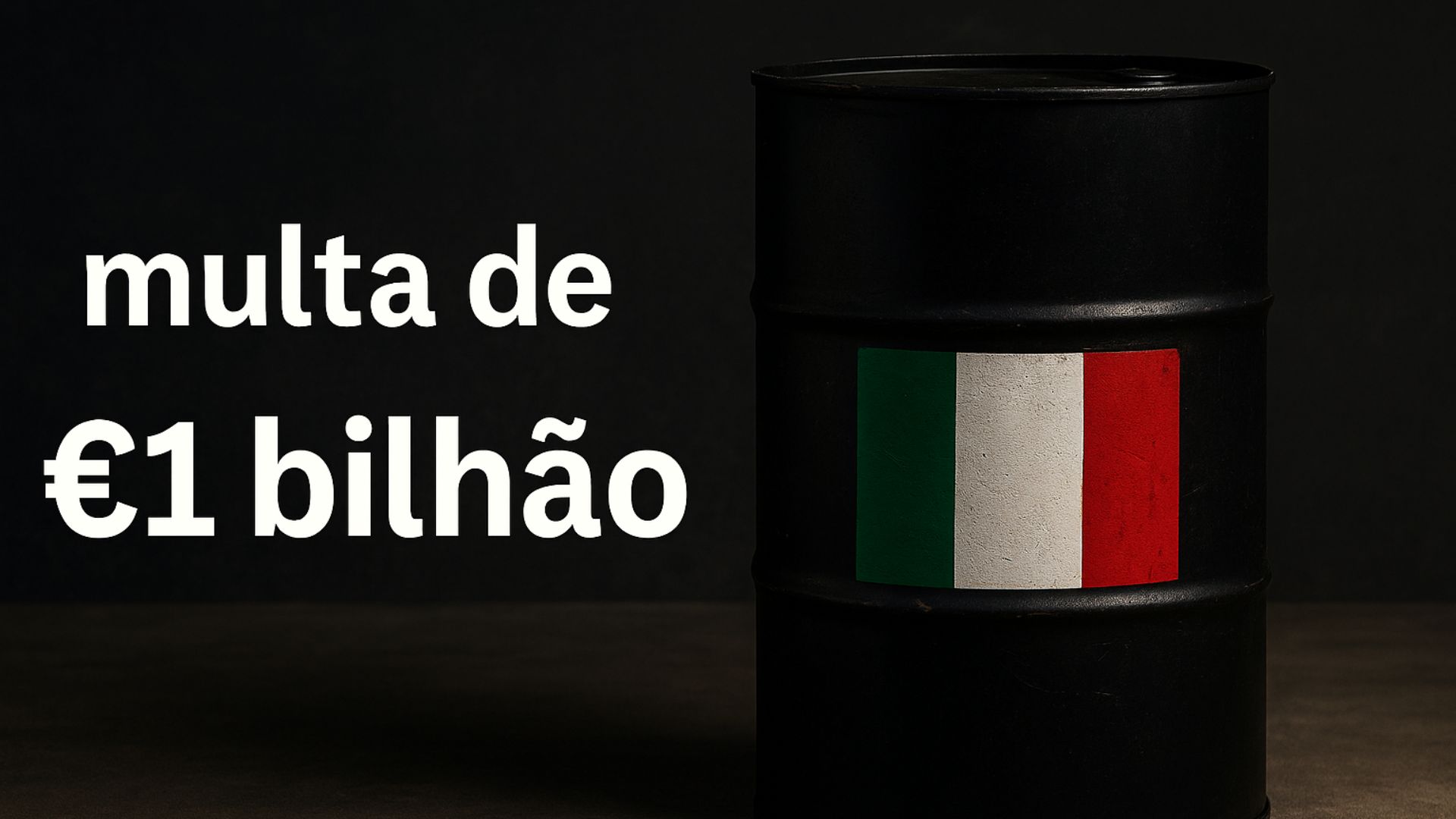
Italy Imposed €1 Billion Fine on Oil Companies Like ENI, Esso, IP, Q8, Saras, and Tamoil Following Investigation of Cartel Formation in the Energy Sector
The Italian Competition Authority (AGCM), the antitrust body of Italy, announced this Friday (26) one of the largest penalties ever imposed in the European energy sector.
Six oil companies — ENI, Esso, IP, Q8, Saras, and Tamoil — were fined a total of €936.7 million for involvement in cartel formation in the marketing of eco-friendly fuels.
The decision marks a turning point in the regulation of the energy market in the country and raises discussions about anti-competitive practices in the sector.
-
Offshore industrial demand in Macaé skyrockets with the recovery of oil and gas and could grow by up to 396% by 2026 in the Campos Basin.
-
Offshore industrial demand in Macaé surges with the recovery of oil and gas and could grow by up to 396% by 2026 in the Campos Basin.
-
Brazilian giant expands borders in the Southeast: Petrobras confirms new oil discovery in ultra-deep waters in the pre-salt of the Campos Basin.

-
Alert in the global energy market: Severe tropical cyclone hits the coast and disrupts gas production at major plants in Australia, threatening global supply.


Record Fine Against Oil Cartel in Italy
The penalty was announced following an investigation initiated by an internal complaint. The cartel operated between January 2020 and June 2023, during which the companies coordinated simultaneous increases in the prices of the eco-friendly components of gasoline and diesel — such as ethanol — used to reduce pollutant emissions.
The largest fine was imposed on ENI, the leading Italian oil company, amounting to €336.2 million. The other penalized companies were:
- Q8: €172.6 million
- IP: €163.7 million
- Esso: €129.4 million
- Tamoil: €91 million
- Saras: €43.8 million
The official statement from the AGCM states that the hidden agreements among major companies in the oil sector undermine consumer rights and distort free competition.
Cartel Formation Among ENI, Esso, IP, Q8, Saras, and Tamoil in Italy
According to the AGCM report, the six involved companies exchanged information directly or indirectly to align the prices of eco-friendly fuels. This practice violated European free competition rules and affected millions of Italian consumers.
The price of eco-friendly components increased significantly during the investigated period, without a plausible technical or economic justification. The investigation revealed that the adjustments were made synchronously, which characterizes cartel formation.
The scheme was uncovered thanks to a “whistleblower” — an internal informant — who provided documents and communication records between the companies. The AGCM used interceptions, corporate emails, and meeting minutes to prove the existence of the illegal agreement.
Economic Impact of the Fine on the Energy Sector in Italy
The nearly €1 billion fine represents a milestone in the regulation of the European energy sector. In addition to punishing anti-competitive practices, the measure aims to restore consumer confidence and ensure that fuel prices reflect real costs and not secret agreements.
The Italian fuel market moves billions of euros a year, being one of the most significant in Europe. The AGCM’s decision could influence future investigations in other European Union countries, where similar practices have already been reported.
From an environmental perspective, the use of eco-friendly components is essential for reducing emissions. However, price manipulation can discourage responsible consumption, undermining national and international climate targets.
Regulation and Oversight Against Cartel Formation
The Italian Competition Authority is responsible for overseeing commercial practices in Italy. In recent years, the agency has intensified actions against large conglomerates, especially in the energy, telecommunications, and food sectors.
The AGCM’s firm action in this case reinforces the importance of regulation to protect consumers and promote a fair market. According to experts in economic law, cartel formation is one of the most serious violations against competition, as it eliminates freedom of choice and distorts market prices.
The fine imposed on oil companies ENI, Esso, IP, Q8, Saras, and Tamoil is considered exemplary and can serve as a reference for other countries facing similar issues.
International Repercussions of the Fine Imposed by Italy
The news of the fine imposed on Italian oil companies resonated in several countries. The decision may attract the attention of entities such as the European Commission and the OECD.
Recent studies indicate that cartel practices are still common in the energy sector, especially in concentrated markets. The Italian decision could pave the way for a new wave of investigations and sanctions.
Moreover, the penalization of companies like ENI, Esso, IP, Q8, Saras, and Tamoil may impact their operations in other countries, affecting contracts, bids, and strategic partnerships.
Consequences for Consumers and the Fuel Market
With the breakup of the cartel, it is expected that the prices of eco-friendly fuels will become more competitive. This can directly benefit the end consumer, who will have access to less polluting products at fairer prices.
Price transparency is crucial to stimulate the use of sustainable fuels, contributing to the reduction of greenhouse gas emissions.
Additionally, the decision may encourage other companies in the sector to adopt more ethical business practices aligned with the principles of free competition.

The Future of Competition in the European Energy Sector
The fine imposed by Italy on the oil companies ENI, Esso, IP, Q8, Saras, and Tamoil for cartel formation is a landmark in the fight against anti-competitive practices. The AGCM’s decision reinforces the importance of regulation, transparency, and ethics in business, especially in strategic sectors like energy.
For consumers, it represents a victory against market abuses. For companies, it is a warning that coordinated actions to manipulate prices will not be tolerated.
Cartel formation harms the economy, the environment, and public trust. The firm action of authorities is essential to ensure a fair, competitive, and sustainable market.
The expectation is that the Italian decision will inspire new oversight policies and encourage debate on corporate responsibility in the global energy sector.









-

Uma pessoa reagiu a isso.