





 Portuguese
  English
  Spanish
  4 min of reading
  1 comment


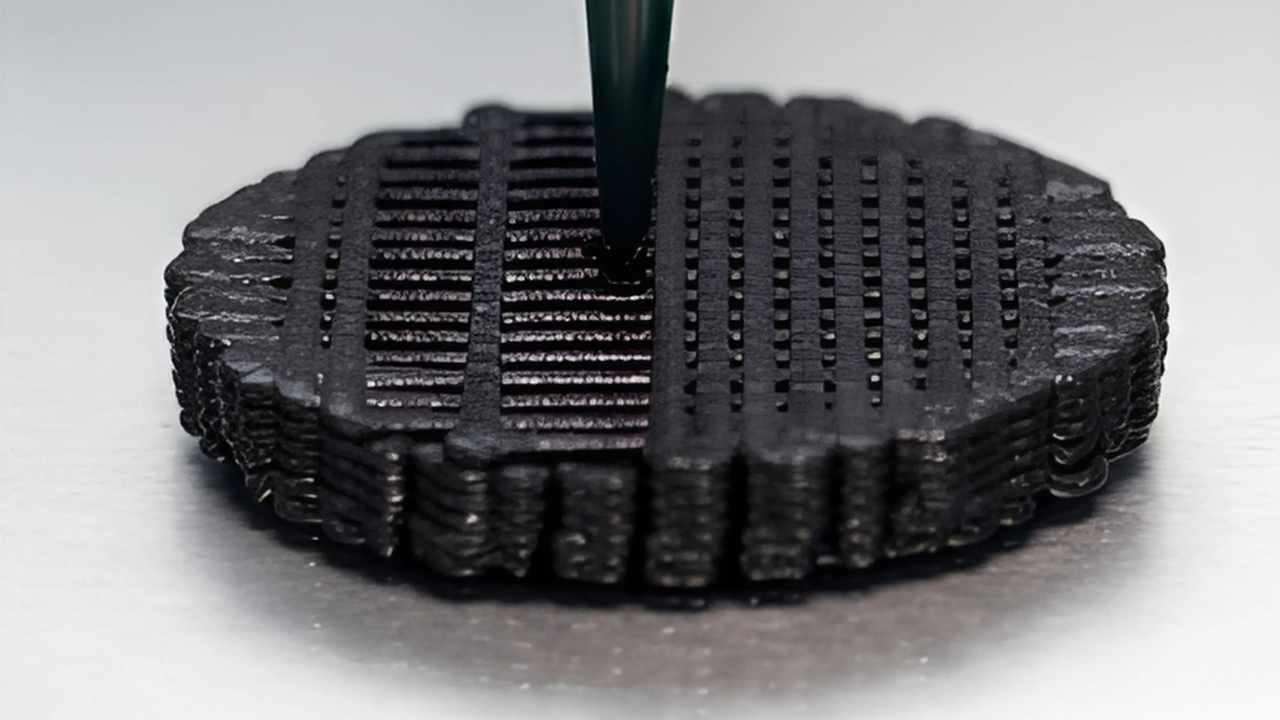


Meet the New Biobattery Created by Researchers That Uses Fungi and Generates Energy Without Needing to Be Charged!
Science is constantly searching for new ways to generate and store energy more efficiently and cleanly. Recently, scientists from the Swiss Federal Laboratories for Materials Science and Technology (Empa), led by researcher Carolina Reyes, made an important discovery: the development of an innovative biobattery that is entirely based on fungi.
This biobattery represents a new approach to energy generation, utilizing fungi as part of a scientific process aimed at reducing dependence on conventional batteries.
Fungi Generating Energy?
The big surprise of this biobattery is that it uses fungi as energy generators.
-
A “silent skill” is allowing Brazilians to earn up to R$ 22,000 per month without a degree and become indispensable for companies that rely on millions of data to survive.

-
Researchers at the Toyota Research Institute found that if a human uses robotic arms to flip a pancake 300 times in an afternoon, the robot learns to do it on its own the next morning, and this is currently the most promising method to solve the biggest bottleneck in modern robotics.

-
Goodbye iron: a common item in households is starting to lose space to technology that smooths clothes in minutes without an ironing board and with less energy consumption.

-
Antarctica reveals an unusual clue high in the Hudson Mountains, and what appeared to be just an isolated rock began to expose a secret hidden under the ice for ages.

Instead of relying on toxic and non-biodegradable materials, the fungal biobattery is made with fungi that naturally generate energy.
These fungi, although they can’t generate enough electricity to power a home, can provide the necessary amount of energy for small devices, such as temperature sensors used in agriculture or environmental research.
Thus, this biobattery is an ecological solution for energy generation on a smaller scale, something greatly needed in low energy consumption areas.
The uniqueness of the fungal biobattery is that it doesn’t need to be charged but rather fed.
This means that, instead of a traditional battery that requires constant recharging, the fungal biobattery can be activated simply by adding water and nutrients.
This method makes the biobattery more practical, sustainable, and less harmful to the environment, as it is biodegradable and free of toxic substances, in contrast to conventional batteries.
How Does the Fungal Biobattery Work?
Although it is called a biobattery, the technology developed by Carolina Reyes’s team is, in fact, a microbial fuel cell.
This is because it doesn’t store energy but generates electricity.
Like bacteria, fungi convert nutrients into energy.
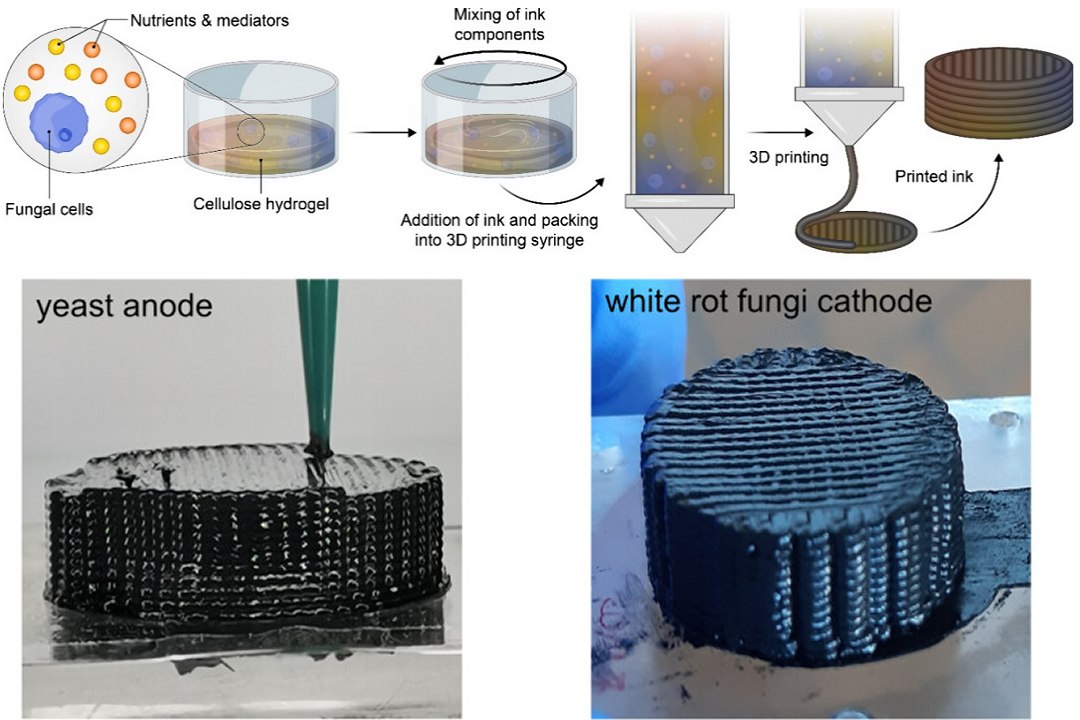
In the case of fungal biobatteries, two types of fungi are used to generate electricity: a yeast fungus at the anode, which releases electrons, and a white rot fungus at the cathode, which captures the released electrons and conduits them out of the cell, creating an electric current.
This process generates the necessary electricity to power small devices.
This combination of fungi in a biobattery is an example of how science is harnessing the potential of living beings to solve energy problems.
The use of fungi is an innovative way to apply biotechnology in energy generation, something that could transform the way we deal with batteries in the future.
Science, by exploring fungi as a source of electricity, opens new possibilities for the development of more sustainable and efficient energies.
3D Printing Technology and Fungi in Biobatteries
One of the major advancements in the development of fungal biobatteries has been the use of 3D printing for constructing their components.
3D printing was crucial for creating the biobattery electrodes, allowing fungi easy access to the necessary nutrients for energy generation.
Fungal cells are mixed with special ink and inserted into the 3D printer, requiring a great amount of scientific precision to ensure that the fungi grow correctly and that the ink is conductive to electricity.
Although it has been a significant challenge to create suitable ink for printing fungi, the use of this technology offers many advantages.
3D printing allows the biobattery to be built more efficiently and precisely, as well as enabling the creation of more compact and functional components.
The use of fungi together with 3D printing represents a significant milestone in science, combining biotechnology and innovation into a single device.
The Application of Fungal Batteries in Energy Generation
Although fungal biobatteries are not yet a solution for large energy needs, they show great potential for specific applications, such as low energy consuming devices.
Carolina Reyes’s team continues to work on improving these biobatteries, making them more powerful and durable.
They are also exploring other types of fungi that could generate more energy and have an even greater impact on the science of energy generation.
The use of fungi in electricity generation paves the way for a new way to harness energy more ecologically and sustainably.
Fungal biobatteries could, in the future, be an important alternative to conventional batteries, especially in smaller devices.
Science continues to explore the potential of fungi to generate energy, and this innovation may eventually transform the way we produce and consume electricity.
Click Here to Read the Research
With information from the website Technological Innovation







❤️Aqui você pode tirar a roupa da garota e vê-la nua) Confira ➤ Ja.cat/gosea