





 Português
  Inglês
  Espanhol
  3 min de leitura
  0 comentários



Many Drivers Have This Question: Open The Windows Or Use The Air Conditioning? See Which Choice Affects Fuel Consumption More.
When it comes to fuel economy, every detail can make a difference, especially on long trips. But after all, what is more economical on the road: driving with the windows open or with the air conditioning on?
To answer this question, a team from Autoesporte conducted detailed tests with the Chevrolet Onix Plus, one of the most fuel-efficient cars available in Brazil. The result may surprise you.
The Test of Windows and Air Conditioning
The experiment took place at the General Motors (GM) test track, with technical support from engineers and journalists from Autoesporte. Three scenarios were tested at a constant speed of 100 km/h:
-
OMODA & JAECOO grows in Europe in 2026 with an integrated strategy of sales, innovation, local production, and technological advancement in the United Kingdom, Italy, and Spain.

-
OMODA & JAECOO expands after-sales service in Brazil with competitive maintenance, a 7-year warranty, and high availability of parts for technological SUVs.

-
OMODA & JAECOO appoints Alessandra Souza as executive marketing director in Brazil and accelerates brand expansion with a focus on innovation, networking, and hybrid portfolio.

-
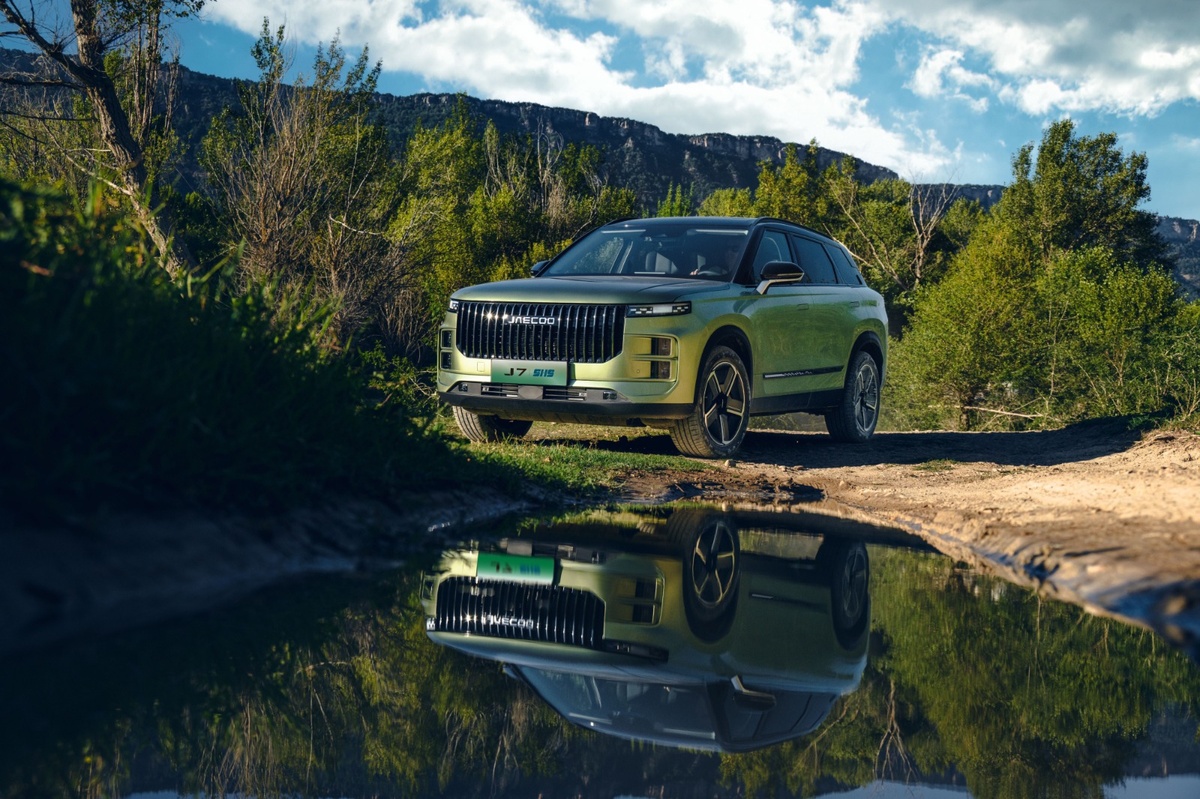
Jaecoo 7 with super hybrid SHS system exceeds 1,200 km of combined range with a 1.5 turbo engine, high-density battery, and intelligent energy management.

- Windows Closed and Air Conditioning Off (ideal condition for consumption).
- Windows Open to allow air to enter.
- Air Conditioning On with Windows Closed.
These situations were chosen to simulate the real use of the resources and measure the difference in fuel consumption accurately.
The Results
In the initial scenario, with the windows closed and the air conditioning off, the Onix Plus recorded a consumption of 18.6 km/l, the best performance among the tests.
When opening the windows to cool the interior, consumption dropped to 18 km/l, resulting in an additional cost of R$ 0.76 for every 100 km traveled.
When the air conditioning was turned on, the consumption was: 17.4 km/l, increasing the trip cost by R$ 2.27 per 100 km. Comparing the two scenarios, it can be seen that the cost difference between driving with the windows open and the air conditioning on is small: about R$ 1.51 per 100 km.
To understand better:
| Speed | Windows | Air Conditioning | Consumption (km/l) | Extra Cost (R$) |
|---|---|---|---|---|
| 100 km/h | Closed | Off | 18.6 | 0.00 |
| 100 km/h | Open | Off | 18.0 | 0.76 |
| 100 km/h | Closed | On | 17.4 | 2.27 |
The Impact of Speed
An important point highlighted in the test is that the choice between open windows or air conditioning may vary depending on speed.
Starting at 110 km/h or 120 km/h, the aerodynamics of the vehicle is more adversely affected with the windows open, significantly increasing fuel consumption. On the other hand, the air conditioning maintains a constant impact on consumption, regardless of speed.
Thus, at higher speeds, the air conditioning may be a more efficient and comfortable option.
What To Consider On The Road
The decision between “wind in the face” or “cold wind” depends on several factors:
- Distance Traveled: On short trips, the cost difference between the two scenarios may be almost irrelevant.
- Speed: As mentioned, at higher speeds, the use of open windows becomes less efficient.
- Thermal Comfort: On very hot days, the impact on consumption may be worth it if the comfort provided by the air conditioning is a priority.
Conclusion
The tests showed that, at 100 km/h, driving with the windows open is slightly more economical than using the air conditioning.
However, this difference is small and tends to reverse at higher speeds. The decisive factor, ultimately, is the balance between comfort and economy.
For those who want to save as much as possible, the tip is to drive with the windows closed and the air conditioning off whenever possible. However, on long trips and in intense heat, the comfort provided by the air conditioning may justify the small additional cost.
Final Tip: Keeping the air conditioning maintenance up to date, properly inflating the tires, and avoiding excess weight in the car are practices that can help optimize fuel consumption in any situation.
With information from AutoEsporte.










-

-

5 pessoas reagiram a isso.