





 Portuguese
  English
  Spanish
  4 min of reading
  0 comments


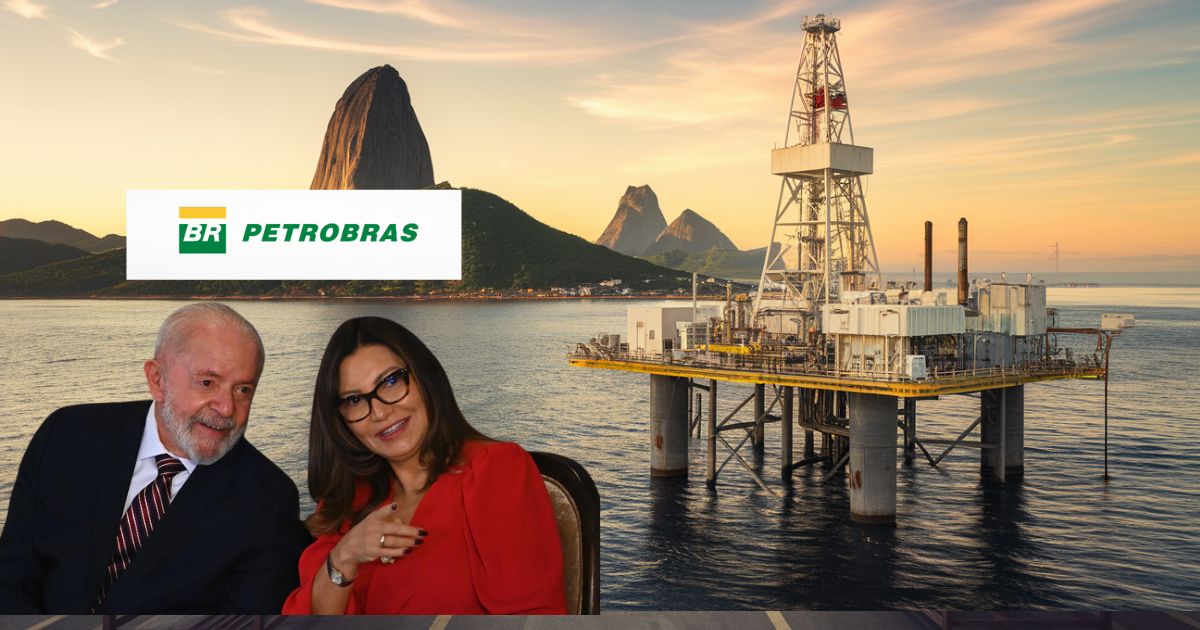
A clash over Brazil’s energy future reignites each day, and now, the exploration of an oil field in the Equatorial Margin gains even more momentum with the passionate defense by First Lady Rosângela Lula da Silva, known as Janja.
In a controversial interview filled with emphatic statements, Janja indicated that Petrobras is a key player in sustainably exploring one of the largest oil reserves in the country, with potential to boost the Brazilian economy and create hundreds of thousands of jobs.
The issue, however, is far from consensual, dividing environmentalists, government sectors, and society itself, while awaiting a crucial decision.
-
50 viaducts, 4 tunnels, 28 bridges, and 40 kilometers of bike paths: BR-262 in Espírito Santo will receive 8.6 billion reais for the largest engineering project in the state’s history, inspired by the Immigrant Highway in São Paulo.

-
Brazil produces too much clean energy and doesn’t know what to do with it: over 20% of solar and wind capacity was wasted in 2025 while investors flee and 509 renewable generation projects were abandoned in the last year.

-
Piauí will produce a new fuel that replaces diesel without needing to change anything in the truck’s engine and reduces pollutant gas emissions by half: truck drivers from all over the Northeast are already celebrating the news that will arrive later this decade.

-
A new Brazilian shopping center worth R$ 400 million will be built in an area equivalent to more than 4 football fields, featuring 90 stores, 5 cinemas, a supermarket, a college, and parking for 1,700 cars, potentially generating 3,000 jobs.


Oil Exploration: The New Brazilian Frontier?
The Equatorial Margin, a region that extends from Amapá to Rio Grande do Norte, encompasses areas such as the Mouth of the Amazon and the maritime basins of Pará-Maranhão, Barreirinhas, Ceará, and Potiguar.
According to Janja, this area represents a unique opportunity for Petrobras to explore an estimated quantity of billions of barrels of oil, paving the way for the creation of approximately 350,000 direct and indirect jobs.
She emphasized that the state-owned company, recognized for its cutting-edge technology and innovation, would be prepared to operate without harming the environment.
“Petrobras is a powerhouse,” Janja asserts
During the interview with CNN Brazil, Janja highlighted Petrobras’s competence to conduct a sustainable operation and emphasized the company’s fundamental role in the national economy.
“Petrobras is a powerhouse in this matter, a leading company in the development of technologies,” the First Lady stated, indicating that exploration could contribute to the country’s development responsibly.
With the promise of boosting the economy and creating job opportunities, the First Lady’s proposal finds support among some sectors but faces strong resistance.
Environmental Impact and Resistance from Environmentalists
Oil exploration in the Equatorial Margin is a matter that generates strong reactions. Environmentalists warn about the potential environmental impact on the waters of the North coast and the rich biodiversity of the region.
In May 2023, Petrobras had already faced obstacles when Ibama issued an unfavorable position on drilling a well in block FZA-M-59, located in the Amazon River Basin.
The state-owned company, however, requested a reevaluation of this decision, as the site hosts one of the largest potential reserves, with an estimated capacity of 5.6 billion barrels of oil.
According to the Minister of Mines and Energy, Alexandre Silveira, oil extraction in this specific area could increase national reserves by about 37%.
R$ 280 Billion and the Search for Ibama’s License
According to estimates, investment in the Equatorial Margin could reach R$ 280 billion, with potential reserves of approximately 10 billion barrels.
This amount attracts investors’ attention and generates expectations for economic recovery and strengthening of the country’s energy infrastructure.
Despite the optimistic projection, Petrobras and other companies holding exploration blocks in the region are still awaiting the approval of licenses from Ibama.
So far, only the Potiguar Basin has obtained authorization to proceed with drilling, while other licensing processes remain under review.
Division of Opinions in Government and Society
Within the government itself, the topic generates divergences.
Exploration in the Equatorial Margin is supported by figures such as Alexandre Silveira, Minister of Mines and Energy, and Magda Chambriard, President of Petrobras.
Both consider oil extraction essential for energy autonomy and economic growth in Brazil.
On the other hand, environmental organizations and other sectors express concerns about the impact on the environment.
The operation involves an area of extreme environmental wealth and houses marine ecosystems of great significance.
The Dilemma Between Economic Progress and Environmental Sustainability
The potential exploration of the billion-dollar field represents a dilemma between economic development and environmental conservation.
On one hand, the government argues that exploration will bring significant economic benefits, with job creation and increased national energy production; on the other, fears about environmental impact and the lack of consensus around licenses reflect a complex challenge.
The expectation of thousands of jobs and the potential increase in oil reserves fuel the debate, while the demand for environmental preservation remains a point of conflict.
Pendent Issue: The Role of Ibama
Currently, the final decision still rests on the position of Ibama, the agency responsible for assessing the environmental impacts of operations.
So far, only the Potiguar Basin has received the necessary clearance for drilling.
Thus, both Petrobras and other energy companies operating in the Equatorial Margin are eagerly awaiting the release of licenses, which could pave the way for large-scale exploration.
However, the impasse between economic expansion and environmental preservation is expected to continue as a controversial and widely discussed issue.
The impasse over oil exploration in the Equatorial Margin illustrates the clash between progress and preservation. Will Brazil be able to balance economic development and environmental preservation in this new era of oil expansion?








Seja o primeiro a reagir!