





 English
  Francês
  Alemão
  Italiano
  Japonês
  Norueguês
  Portuguese
  Spanish
  5 min of reading
  0 comments



The IDB, with resources from Japan, will finance a project of US$ 890 thousand to map rare earth deposits, lithium, and graphite in Bahia and Minas Gerais. The initiative aims to reduce risks for investors and expand geological knowledge of Brazil in critical minerals.
Brazil will receive a new project to map rare earth deposits, lithium, and graphite in regions considered strategic for the global energy transition. The initiative, funded by the IDB (Inter-American Development Bank) with resources from the Japanese government, plans an investment of US$ 890 thousand in geological and geochemical surveys in Bahia and the Jequitinhonha Valley in Minas Gerais over 36 months.
The project was requested by the Brazilian government through the Ministry of Mines and Energy and the Geological Service of Brazil (SGB), which will conduct the fieldwork. The goal is to identify new deposits of rare earths and other critical minerals, generate public data that reduce risks for private investors, and expand knowledge about Brazil’s mineral potential, which is still considered limited compared to the actual wealth of the national subsurface.
What the rare earth mapping project funded by the IDB entails
The project, identified as BR-T1690, will be executed with a direct budget from the IDB and will last for 36 months. The resources come from the Japanese government, which has established experience in advanced mining technologies and strategic interest in accessing critical minerals for its technology industry.
-
Expansion of Federal Institutes: 38 new campuses and R$ 200 million for public education; see the cities included.

-
Lula’s government changes rule in important benefit and thousands of Brazilians will no longer receive it; see what has changed.
-
New Gripen fighter makes Argentines surrender to Brazil, and the heavy reaction exposes envy, frustration, and shock at Brazil’s technological leap.

-
This discovered deposit near the Andes could change the future of Argentina, attract billions, and even shake up the global metals market.
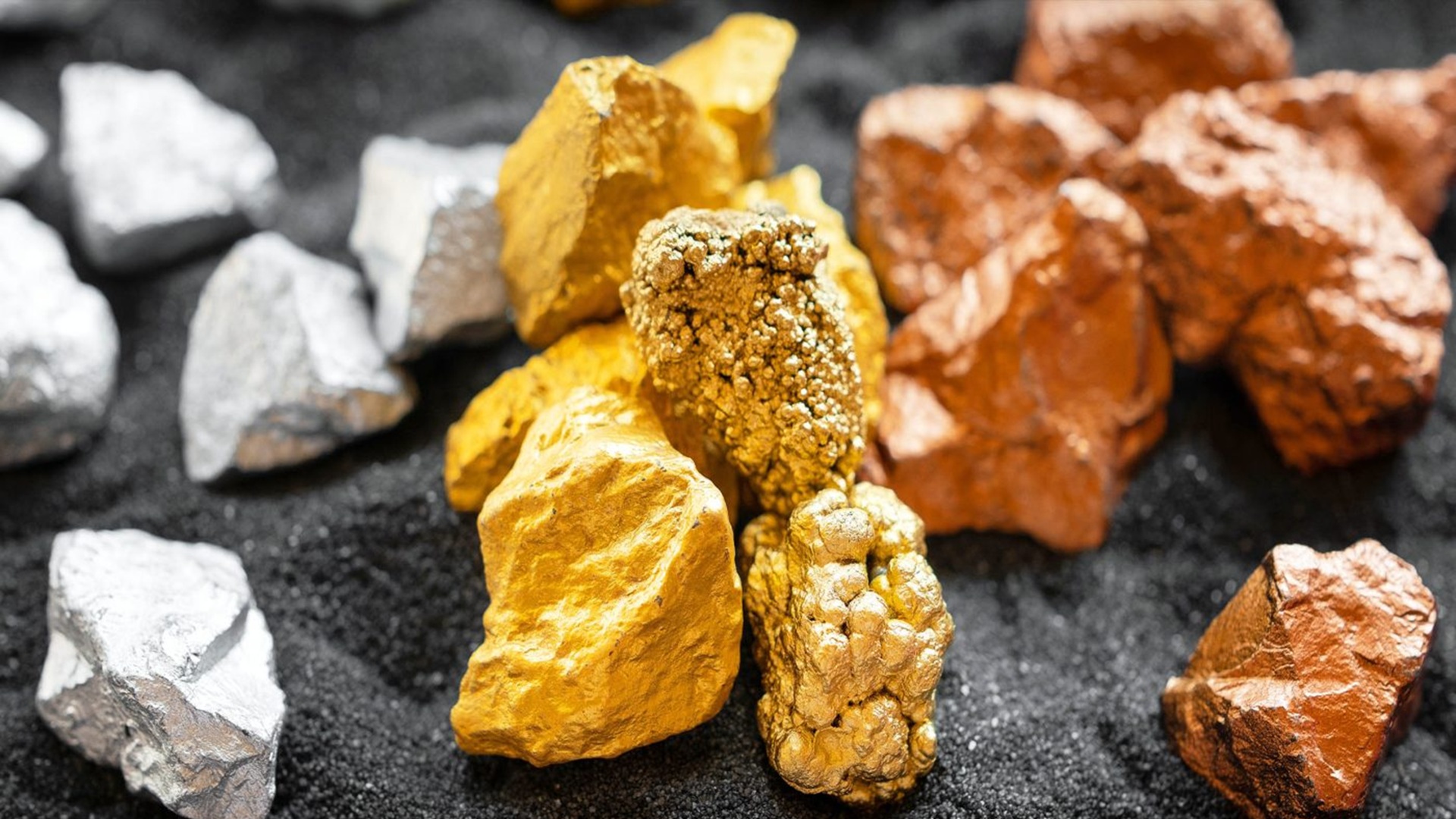

The program is divided into four main fronts. The first involves an electromagnetic study in the graphite province of Minas-Bahia to identify new graphite mineralizations. The second phase will focus on rare earths in Bahia, with geochemical surveys and the creation of a mineral favorability map, a tool used by companies to direct exploratory investments. The third front will focus on lithium in the Jequitinhonha Valley, with soil sample collection and geological data generation to support the discovery of new deposits.
Why Japan is investing in the search for rare earths in Brazil
Japan’s interest in funding the mapping of rare earths in Brazil is not casual. The Asian country is one of the economies most dependent on critical minerals for its industry, especially for the manufacture of semiconductors, electric vehicle batteries, and electronic equipment. The concentration of global supply of these materials in China has led Japan to seek alternative sources on other continents.
Brazil hosts one of the largest reserves of critical minerals on the planet, but much of the territory has yet to be mapped at a scale adequate to attract investments. About 55% of the crystalline basement areas, where rare earth deposits and other economically relevant minerals typically concentrate, have not yet been surveyed at the 1:100,000 scale, considered the most suitable for mineral potential assessment. The partnership with Japan aims to fill this gap.
The regions chosen for the mapping of rare earths and lithium
The project focuses its efforts on two strategic regions: Bahia and the Jequitinhonha Valley in Minas Gerais. In Bahia, the surveys will seek new mineralizations of graphite in the Minas-Bahia graphite province and new rare earth targets through detailed geochemical studies. The state has recognized potential but still lacks geological data at a sufficient scale to attract significant investments.
In the Jequitinhonha Valley, the focus will be on lithium, a mineral essential for electric vehicle batteries and energy storage systems. The region has been consolidating as one of Brazil’s main lithium hubs, and the project plans to collect soil samples and generate data that will allow the identification of new deposits beyond those already known. The fourth front of the program will focus on institutional strengthening, with the transfer of Japanese technology to enhance the capacity of the Geological Service of Brazil to map and manage strategic mineral resources.
The problem of geological mapping in Brazil
Brazilian authorities, including President Lula, often state that only 30% of the national territory is mapped at the 1:100,000 scale. This data is correct from a technical standpoint but includes areas such as large sedimentary basins, where the probability of finding rare earth deposits or other economically relevant minerals is low.
When the analysis focuses only on the crystalline basement, the geological domain that houses most of the country’s mineral provinces, the coverage rises to about 45%. In regions with a consolidated mineral tradition, such as Minas Gerais, the mapping level is even higher.
The Iron Quadrilateral, for example, already has nearly 100% coverage at the 1:100,000 scale and, in some areas, surveys at more detailed scales, such as 1:25,000. The challenge lies precisely in the less explored regions, where the new project funded by the IDB intends to operate.
What Brazil can gain from public data on critical minerals
The IDB states that all data generated by the project will be pre-competitive and public, meaning that any company or investor will be able to access it. This transparency is considered fundamental to reducing exploratory risk in the mineral sector. When a company knows more precisely where there is a likelihood of finding rare earths, lithium, or graphite, the cost and time of exploration decrease significantly.
The initiative occurs amid the global race for critical minerals, used in electric vehicle batteries, wind turbines, solar panels, and electronic equipment.
Despite the potential, Brazil still faces challenges such as low rare earth prices in the international market, technical complexity of projects, and investor caution. The IDB assesses that, with greater geological knowledge, the country can accelerate the discovery of new deposits and expand its participation in the global market for strategic minerals.
The project funded by the IDB with resources from Japan positions Brazil to advance in the mapping of rare earths, lithium, and graphite in regions with still unexplored potential.
If the surveys confirm new deposits in Bahia and the Jequitinhonha Valley, the country could become a key player in the global supply of critical minerals for the energy transition.
With information from the portal of CNN Brasil.
What do you think about this partnership between Japan and Brazil to map rare earths and lithium? Do you believe the country will be able to take advantage of this mineral potential or will it continue to depend on the export of raw materials? Leave your opinion in the comments and share with those who follow the mining and energy sector.








Seja o primeiro a reagir!