





 Português
  Inglês
  Espanhol
  6 min de leitura
  0 comentários


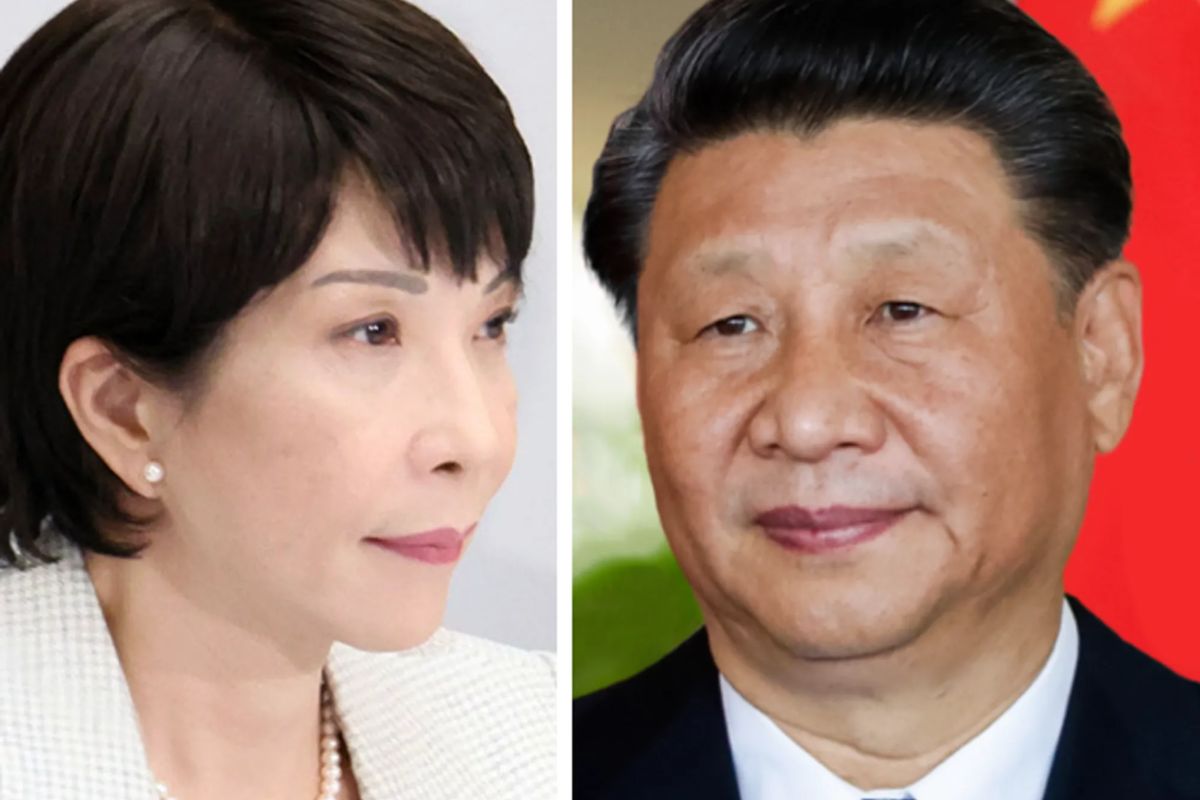
In New Escalation, Japan Accuses Chinese Fighters of Locking Its Targeting Radar on Aircraft Near Okinawa, Beijing Denies and Calls It Defamation, Taiwan Becomes Sensitive Focus and Allies Fear That Rising Military Tensions in the Indo-Pacific May Rapidly Get Out of Control, Frightening Asian Neighbors and Keeping Allies Alert.
Japan accused China on Saturday, December 6, of having locked the targeting radar on two Japanese fighter jets mobilized near Okinawa, during a Chinese military exercise in the Pacific. The allegation was detailed by the UOL portal on Sunday, December 7, in which Tokyo classified the episode as a dangerous provocation in an already tense military region.
According to the Ministry of Defense, Japan’s fighters were pursuing Chinese aircraft at a safe distance and had not taken any action that could be seen as provocation. Still, the government asserts that the Japanese planes were “illuminated” by the Chinese radar, a gesture that, in military language, signals potential preparation for an attack and elevates the risk of miscalculation among the forces involved.
Targeting Radar Aims at Japanese Fighters Near Okinawa
According to Japanese defense officials cited by the Kyodo News agency, the Chinese radar illumination exceeded what was necessary to ensure a safe flight, which led Defense Minister Shinjiro Koizumi to file a formal protest with Beijing.
-
If the USA were to go to war with Brazil, Washington’s greatest fear would not be the attack itself, but facing a vast territory, prolonged resistance, and a costly, chaotic, and unpredictable occupation.
-
In 2013, Nicaragua sold the concession for a canal to rival Panama to a Chinese billionaire who lost 85% of his fortune, disappeared, and was declared bankrupt. Now the project resurfaces with a new route, a new Chinese partner, and a cost of $64.5 billion.
-
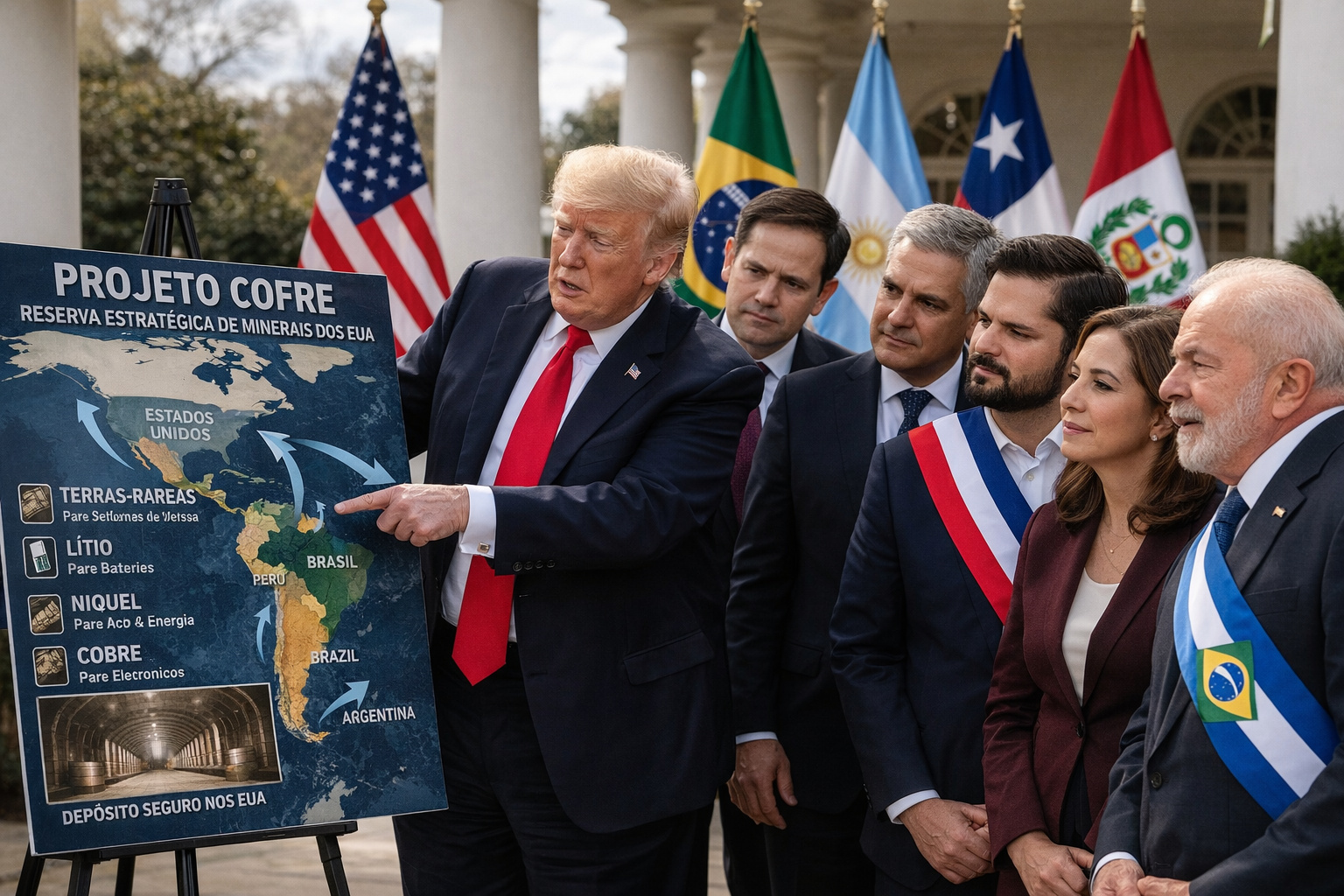
The USA announces a mysterious billion-dollar vault project to store critical minerals, but what intrigues experts is not just the plan itself, but why Latin America, including Brazil, has entered the center of this global dispute against China.
-
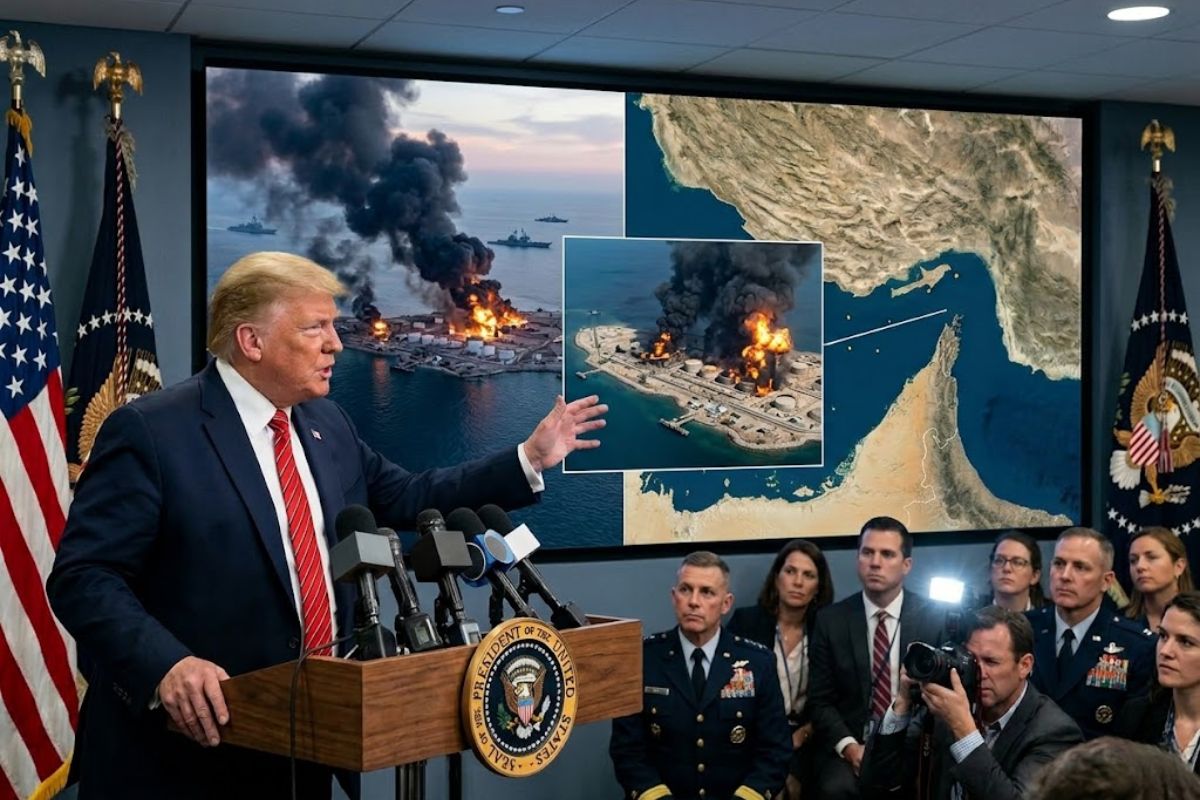
Trump Announces Bombing of U.S. Military Targets on Iranian Island Responsible for About 90% of Iran’s Oil Exports, Warns of Further Attacks if Navigation in Strategic Strait of Hormuz Is Threatened
The episode involved two Chinese fighters launched from the aircraft carrier Liaoning, which was maneuvering in international waters southeast of Okinawa, escorted by three missile-launching destroyers.
Experts remind that directing a targeting radar at another aircraft is considered an overtly threatening act.
In the cockpit, the pilot receiving the radar alert cannot know if the system is merely tracking the target or if it is about to guide a missile, which tends to force evasive maneuvers and could trigger unexpected responses. For Japan, this type of interaction in the air, in a scenario of mutual distrust, significantly increases the risk of a serious incident.
Koizumi did not publicly detail what Japan’s immediate operational response to the alleged threat was but reiterated that the Japanese aircraft maintained a professional conduct.
Still, Tokyo classified the Chinese behavior as unacceptable and indicated it will continue to monitor every movement of China’s aerial and naval forces around Okinawa, a region where Japan hosts the largest concentration of U.S. forces outside American territory.
Beijing Denies Provocation and Accuses Japan of Disrupting Training
China rejected the narrative presented by Japan. In a statement, a spokesperson for the Chinese Navy asserted that Japanese fighters repeatedly approached and would have interfered in a carrier-based flight training, previously announced, in an area east of the Miyako Strait. According to Beijing, it was Japan that unnecessarily escalated the operation’s temperature.
“We solemnly demand that the Japanese side immediately stop defaming and slandering and strictly restrict actions on the front line,” said spokesperson Wang.
He added that the Chinese Navy will take “necessary measures, in accordance with the law, to resolutely safeguard its own security and legitimate rights and interests.”
In practice, the message signals that Beijing does not intend to back down from its military posture in the region and may react with more displays of force if it believes Japan is pressing too much.
Within Japan, the reading is that the Chinese denial seeks to shift responsibility for the episode and test the reactions of Tokyo and its allies, particularly the United States and Australia.
The accusation of “defamation” has become another chapter in the narrative dispute between the two countries, which are currently engaged in a diplomatic and military duel over strategic maritime routes and the situation in Taiwan.
Japan Talks About Resolute Response and Sees Risk to Regional Order
Commenting on the incident during a meeting in Tokyo with Australian Defense Minister Richard Marles, Koizumi stated that Japan will respond to China in a “resolute and calm” manner, with the declared goal of preserving regional peace and stability. The message seeks to show firmness without signaling a desire for immediate escalation.
Marles, for his part, said he was “deeply concerned” about the episode and promised that Australia would continue to cooperate with Japan to “maintain a rules-based order” in the Indo-Pacific.
For analysts, the Australian statement reinforces that the incident is not seen merely as a bilateral issue between China and Japan but as another test of the coordination capacity among the United States, Asian allies, and regional partners in the face of China’s military expansion.
Relations between the two countries had already been souring since Japan’s new Prime Minister, Sanae Takaichi, publicly warned that Japan could respond to any Chinese military action against Taiwan that threatened Japanese security.
The warning was received in Beijing as a direct challenge, bringing the issue of Taiwan even closer to the heart of Japan’s defense policy.
Economic Pressure on Japan and Taiwan 110 km from Yonaguni
In response, Beijing began to activate instruments of economic and cultural pressure against Japan. Among the measures are travel warnings to Chinese tourists, a ban on imports of Japanese seafood, and the halting of licenses for films and shows originating from the neighboring country. Tokyo views this package as part of a broader effort at coercion, combining military power and economic levers.
China claims the democratic territory of Taiwan and has intensified military and political pressure on the island in recent years, with regular flights of combat aircraft and the presence of ships around it. For Japan, the geographical factor is decisive: Taiwan is about 110 kilometers from the Japanese island of Yonaguni, which means that any conflict there would have a direct impact on Japanese national security and vital trade routes in the region.
This context means that every incident between China and Japan in the air or at sea is read in light of the Taiwan issue. In Tokyo, there is a growing perception that a crisis in Taiwan could automatically drag Japan into a confrontation, due both to geographical proximity and joint defense obligations with the United States.
More Than One Hundred Chinese Ships and American Presence in Okinawa
On the Thursday prior to the incident with the fighters, China already had more than one hundred naval and coast guard ships in various locations in East Asian waters, according to information cited by the Reuters agency based on intelligence reports. The government of Taiwan described this increase in naval presence as a “threat” to the Indo-Pacific region.
Japan responded by stating that it is closely monitoring Chinese activity and emphasized that the region hosts the largest concentration of American military forces outside U.S. territory, including warships, aircraft, and thousands of Marines in Okinawa.
This American deployment is viewed by allies as a guarantor of deterrence but by Beijing as a direct obstacle to its strategic ambitions.
With the new incident involving targeting radar, capitals in Asia are concerned that the combination of intense military maneuvers, aggressive rhetoric, and physical proximity among Chinese, Japanese, American, and Taiwanese assets increases the risk of an accidental clash capable of triggering an uncontrollable crisis.
Trump Urges Calm to Tokyo and Hears Xi’s Message About Taiwan
On the American side, President Donald Trump, who is planning a visit to China in 2026, also stepped in.
In a phone call with Japanese Prime Minister Sanae Takaichi in November, Trump urged Japan to avoid further escalating tensions with China, in an attempt to preserve room for diplomatic negotiation and reduce the risk of direct confrontation.
Before that, according to the official Chinese news agency Xinhua, President Xi Jinping reportedly told Trump, in another call, that Taiwan “needs to return to the sphere of Chinese influence”.
The comment reinforces Beijing’s view that the island is part of its territory and positions the issue as a central point in the Chinese strategic agenda, complicating any mediation efforts.
In Japan, Trump’s actions are seen with ambivalence. On one hand, Tokyo heavily relies on the U.S. security umbrella and takes into account Washington’s calls for calm.
In light of this scenario, in your opinion, should Japan harden its military response to China or rely solely on diplomatic pressure and alliances to curb tensions in the Indo-Pacific?









-

Uma pessoa reagiu a isso.