





 Portuguese
  English
  Spanish
  4 min of reading
  0 comments


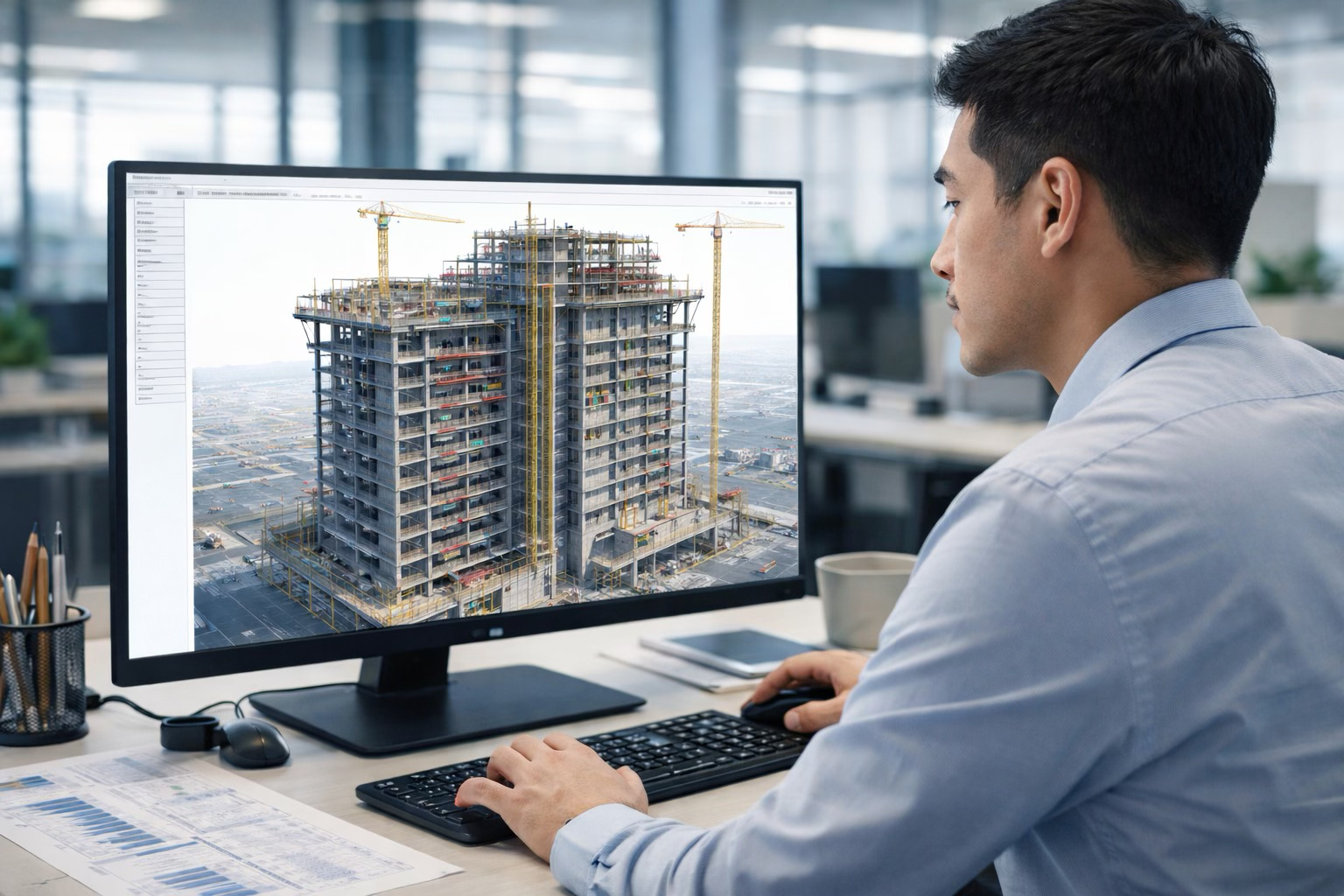
Simulation of AI in Real Time in Japan Tests 48000 Scenarios Before the Project and Changes the Way Zero Energy Buildings Are Designed with Visible Thermal Comfort in VR
Cities around the world are tightening the grip on carbon emissions. In this movement, buildings have become a direct target because they consume energy all day while needing to keep people comfortable.
This is where the design of zero-energy buildings starts to get complicated. The goal is clear: to use much less energy, but the path is often filled with decisions made in the dark.
The most striking detail is that many tools still work with static simulations. In practice, this hinders understanding how heat, airflow, and internal comfort behave in real time as the design changes.
-
Scientists from an international project drill 1,800 meters of ice in Antarctica using hot water and discover details about one of the most intriguing places on planet Earth.
-
Seen from space, a colossal volcano nearly 5,000 meters high in Russia has released 1,600 km of smoke over the Pacific, forming “devil’s horns” of lava and revealing the brutal force of the Ring of Fire.

-
Expedition 501: Scientists drill into the ocean floor and discover a giant reserve of fresh water hidden beneath the sea, extracting nearly 50,000 liters and revealing an invisible system that could reshape the map of water scarcity.
-
Archaeologists find an intact tomb over 2,500 years old, with more than 100 preserved objects, weapons, jewelry, and human remains never touched.

What Happened and Why the AI Digital Twin Became a Highlight in the Zero Energy Building Design
A study presented a digital twin with AI capable of running continuous simulations while architects and engineers test layout, materials, and climate strategies during the design phase.
The leap here is easy to understand: instead of waiting for a closed simulation to finish before making adjustments, the system tracks the experimentation happening and shows the effects in real time.
According to what was described, this helps teams notice inefficiencies and discomfort points earlier when changing the design is still cheap and fast.
Why the TAAC System Stalled Decisions and How AI Brought Early Testing of Energy and Comfort
The problem becomes more visible when the TAAC comes into play, which stands for Task Ambience air conditioning. This type of air conditioning separates the climate around work areas from the rest of the environment and is known to save energy once installed.
However, until now, there has been a practical way to compare the impact of TAAC while the building is still on paper. The result was predictable: important choices made without immediate feedback.
The proposal of the new model is precisely to push this evaluation to the design phase, with energy and comfort appearing side by side, without depending on the building existing and being in operation.
Who Led the Project in Japan and China and What Is the VEEM ZEB Model
The work was led by Professor Teng from Kanazawa University in Japan, in collaboration with a scientist from Fushou University in China.
The group developed a symbolic AI model based on rules, called VEEM ZEB, designed for zero-energy buildings that use TAAC.
In practice, the digital twin estimates energy consumption and thermal comfort during the design stage. This gives planners a more concrete view of performance before any construction begins.
How It Works in Practice, Two Air Zones, PMV and PPD Indicators, and Live VR Visualization
Instead of treating the building as a single climate zone, the model splits the climate control into two parts. One is the air around individual work areas. The other is the air in the broader environment.
This separation allows measuring comfort and consumption simultaneously. For thermal comfort, the standard PMV and PPD indicators are used.
And there is a component that makes everything more visual: a VR visualization shows results live. Thus, changes in layout, occupancy, or system adjustments appear immediately in energy performance and internal comfort.
48000 Simulated Scenarios, Seasonal Variations, and Office Behavior to Find More Efficient Configurations
The system can run about 48000 different scenarios of design and operation using standard parameters.
The tests consider seasonal changes, different numbers of occupants, and how people behave in offices, which helps reveal more efficient and comfortable combinations.
The surprising result is that the model was able to identify configurations with better efficiency and comfort reliably, providing a more solid basis for choosing energy-saving strategies during the decision-making stage.
What Can Change Now, Direct Comparison of Cooling Strategies While Still in the Building Design
The most striking point is the change of phase. The comparison of cooling strategies with TAAC moves from the operation stage to the design stage.
This happens within a three-layer digital twin that combines rule-based AI with a more interpretable VR environment, especially when the team needs to decide quickly.
The expectation presented is that this tool will become a decision-support system in the daily lives of architecture and engineering offices, helping to balance comfort and efficiency from the start.
What stands out most in this case is the idea of seeing energy and comfort in real time before construction exists.
In your view, is the greatest gain in saving energy, reducing project rework, or avoiding discomfort after the building is in use?








-

-

-

5 pessoas reagiram a isso.