





 Portuguese
  English
  Spanish
  3 min of reading
  0 comments


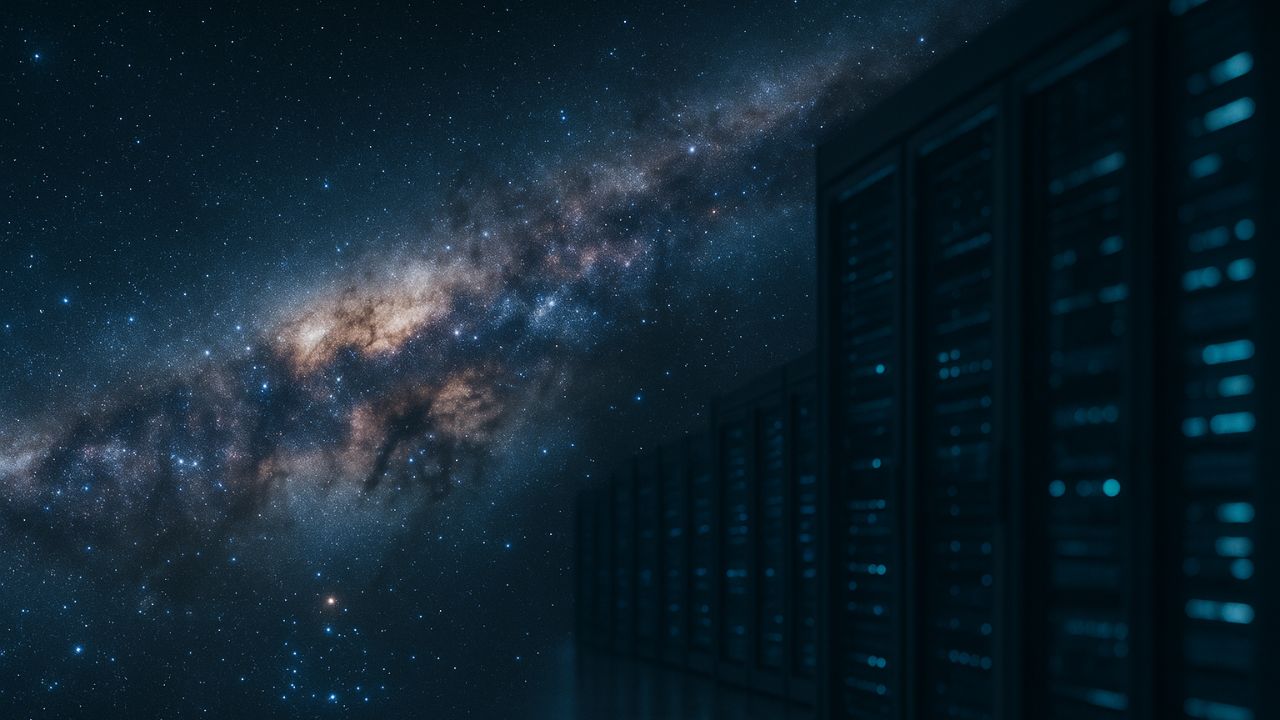
Milky Way Simulated Star by Star Thanks to Japanese Supercomputer and AI Revolutionizing Scientific Research.
The Milky Way has just gained a previously unseen digital representation. Researchers from Japan, Spain, and the United Kingdom announced the first simulation capable of reproducing each star individually, using a supercomputer and artificial intelligence.
The demonstration took place at the international conference SC ’25, where the team revealed how they managed to accelerate calculations that would previously take decades.
The project was conducted in Japan and marks a profound advancement in how galaxies can be studied, especially since traditional models cannot keep up with such fast and complex phenomena.
-
Millions of people have been eating yam for centuries without knowing that this humble tuber contains a compound called diosgenin, which scientists have now discovered can improve memory and help control blood sugar levels.

-
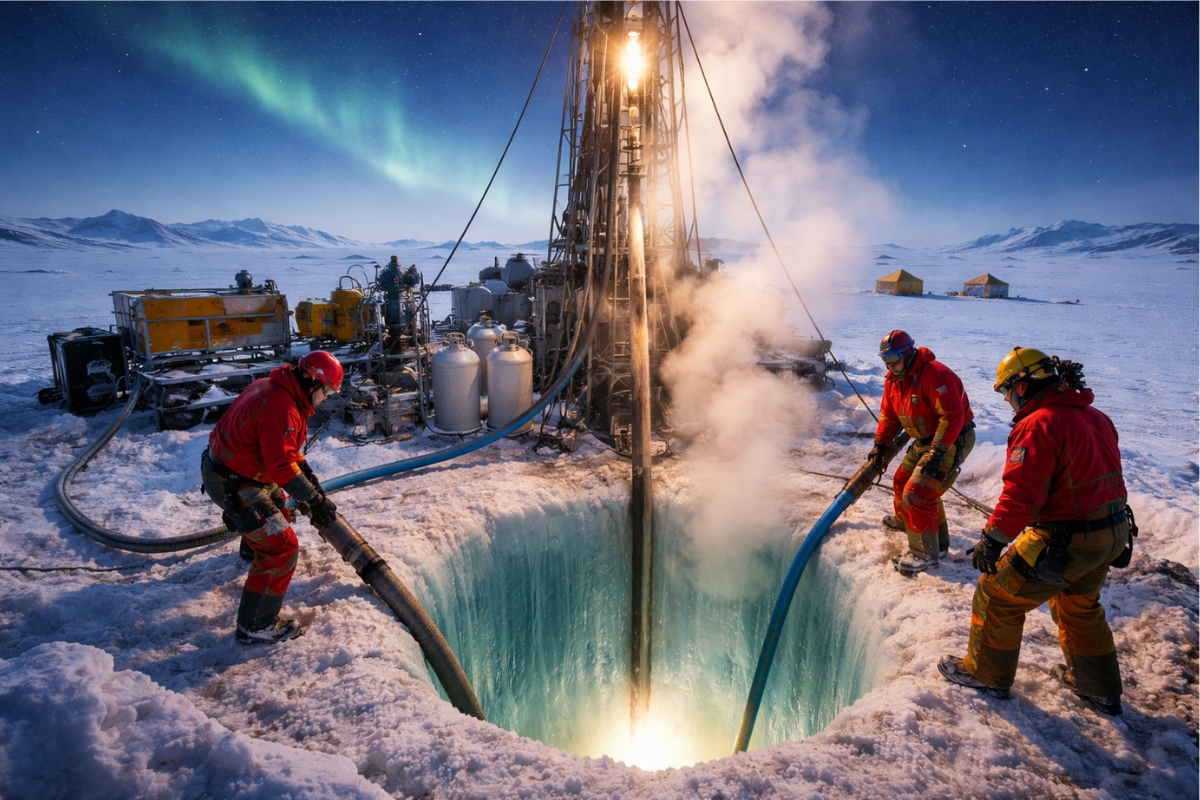
Scientists from an international project drill 1,800 meters of ice in Antarctica using hot water and discover details about one of the most intriguing places on planet Earth.
-
Seen from space, a colossal volcano nearly 5,000 meters high in Russia has released 1,600 km of smoke over the Pacific, forming “devil’s horns” of lava and revealing the brutal force of the Ring of Fire.

-
Expedition 501: Scientists drill into the ocean floor and discover a giant reserve of fresh water hidden beneath the sea, extracting nearly 50,000 liters and revealing an invisible system that could reshape the map of water scarcity.

The innovation arises to address an old challenge. Although the Milky Way hosts over 100 billion stars, gas, dust, and dark matter, modeling everything accurately has always been considered nearly impossible.
This happens because supernova explosions and other small-scale phenomena require extremely short time intervals, which delayed the entire simulation.
Thus, even the largest supercomputers advanced only a few years at a time, making it unfeasible to reach the 1 billion year period necessary to represent the complete evolution of the galaxy.
Japanese Supercomputer and AI Change Simulation Logic
The breakthrough began when the team led by Keiya Hirashima from the iTHEMS center in Japan combined traditional physics with an artificial intelligence model.
Instead of calculating each supernova explosion in detail, the system began to predict the behavior of the gas around these events over a span of 100,000 years.
This strategy allowed the Fugaku supercomputer, also from Japan, to make much larger leaps in time without losing accuracy. The result was astonishing: the technique made the process 113 times faster.
What previously took 315 hours to simulate 1 million years is now done in just 2 hours and 46 minutes.
Therefore, the complete evolution of the Milky Way, which would take 36 years, can now be completed in just over 100 days.
How the Fugaku Supercomputer Boosted the Project
The Fugaku supercomputer played a key role in the work. To achieve the necessary level of detail, the system used over 7 million processing cores and simulated 300 billion particles — a huge leap compared to the previous limit of less than 1 billion.
To make the process even more efficient, the researchers divided the supercomputer into two types of nodes.
One simulated the galaxy as a whole, while the other was dedicated exclusively to supernova explosions.
When a supernova was identified, the specific segment was sent directly to the AI model, which made the prediction quickly. Meanwhile, the rest of the simulation continued uninterrupted.
Artificial Intelligence Reproduces Unseen Details
The AI model used is based on the U-Net architecture, capable of predicting gas density, temperature, and velocities.
Since these values vary greatly — changing by up to six orders of magnitude — the researchers adopted logarithmic versions of the information to maintain accuracy.
Another important point is that the entire system was optimized to operate solely on CPU. According to the researchers, this avoided data transfer issues that would arise had GPUs been used.
Furthermore, the artificial intelligence revealed details that could not be achieved with classical mathematical formulas alone.
The team emphasized that the technique accurately reproduced the complex morphology of gas after supernova explosions, something that was not captured by traditional simulations.
Applications Beyond the Milky Way
The researchers claim that the technique could assist in various scientific fields dealing with both fast and slow phenomena simultaneously.
Thus, climate studies, ocean modeling, turbulence research, and even large-scale cosmic structure simulations could benefit from this advancement.
For Hirashima, the work represents a profound shift in the role of AI within the sciences.
“We showed that artificial intelligence is not only useful for recognizing patterns, but also for aiding in scientific discovery,” asserted the researcher.









-

2 pessoas reagiram a isso.