





 Portuguese
  English
  Spanish
  5 min of reading
  0 comments


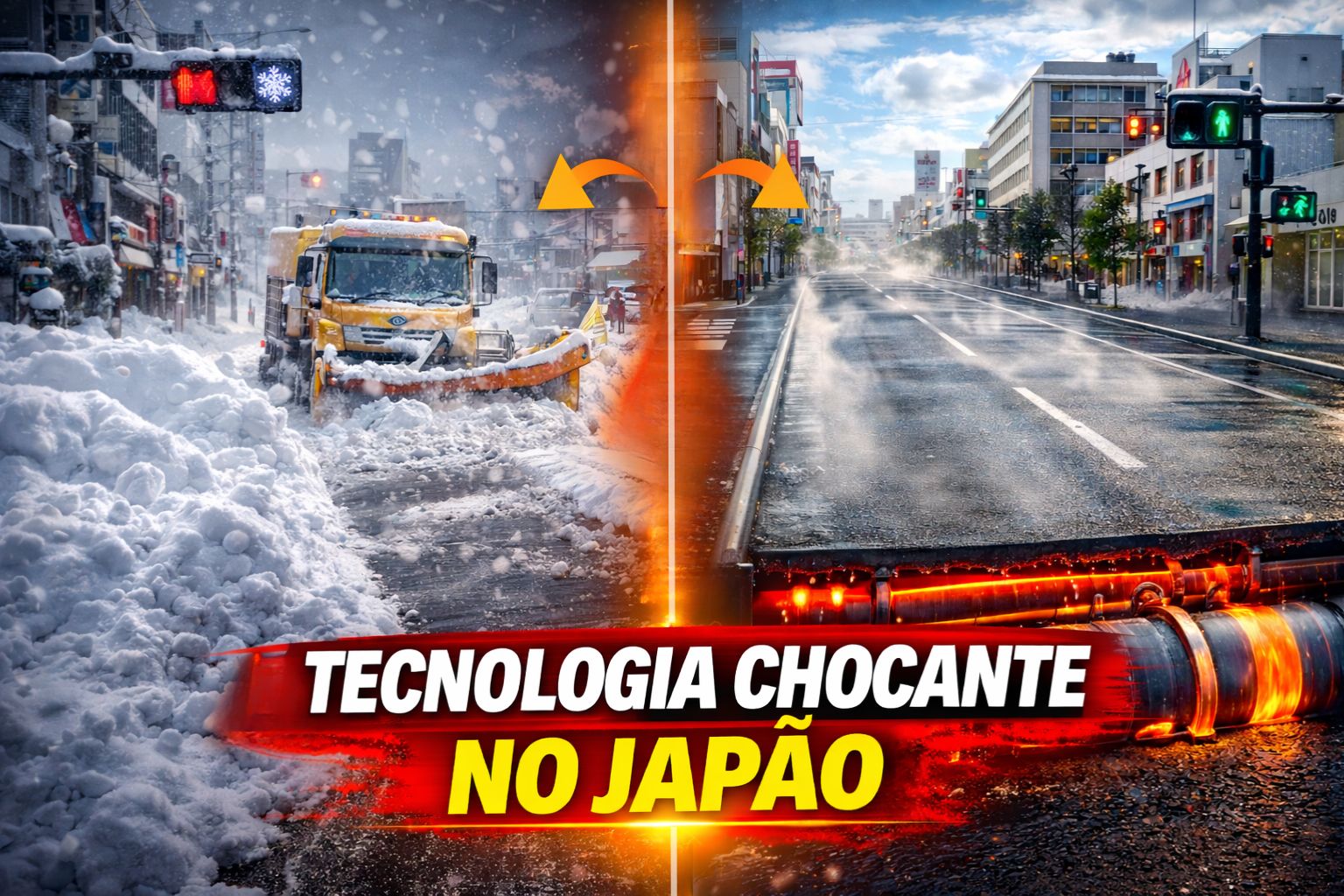
Japan Uses Underground Systems with Geothermal Water to Melt Snow on the Streets, Reducing Accidents, Costs, and Dependence on Tractors in Winter.
The north of Japan faces some of the harshest winters in the urban world. Regions like Niigata, Aomori, and Yamagata experience annual snowfall accumulations that can exceed several meters, driven by cold air masses from Siberia crossing the Japan Sea laden with moisture. Historically, mechanical removal with tractors, excavators, and trucks has always been essential to keep streets and highways operational. However, since the latter half of the 20th century, several Japanese cities have adopted a permanent structural solution: underground snow melting systems, known as shōsetsu setsu-bi or popularly associated with the term Yukidokoro.
These systems utilize pipes installed beneath the asphalt that circulate warm water, often sourced from natural geothermal springs or underground aquifers, preventing snow from accumulating on the surface.
Climatic Context and Structural Need
Cities like Nagaoka, in Niigata Prefecture, record annual average snowfalls exceeding 4 meters accumulated over the winter. The country’s geography, with mountain ranges close to the coast of the Japan Sea, favors the so-called “lake effect,” intensifying snow precipitation.
-
Friends have been building a small “town” for 30 years to grow old together, with compact houses, a common area, nature surrounding it, and a collective life project designed for friendship, coexistence, and simplicity.

-
This small town in Germany created its own currency 24 years ago, today it circulates millions per year, is accepted in over 300 stores, and the German government allowed all of this to happen under one condition.

-
Curitiba is shrinking and is expected to lose 97,000 residents by 2050, while inland cities in Paraná such as Sarandi, Araucária, and Toledo are experiencing accelerated growth that is changing the entire state’s map.

-
Tourists were poisoned on Everest in a million-dollar fraud scheme involving helicopters that diverted over $19 million and shocked international authorities.




Before the implementation of these systems, reliance on heavy machinery was constant. The annual cost of mechanical removal, fuel, and urban maintenance was high, in addition to the impact on traffic and local commerce.
It was in this context that Japanese municipalities began testing underground thermal solutions starting in the 1960s, expanding their application in the following decades.
How the Snow Melting System Works
The principle is relatively simple, but requires precise hydraulic and thermal engineering. Pipes are installed beneath the asphalt layer, generally a few centimeters from the surface. Warm water, either naturally heated or heated by auxiliary systems, circulates through these pipes.
There are two main models:
- System with Geothermal Water or Deep Aquifer Water
Subterranean water that is naturally warm, usually between 10 °C and 20 °C, is pumped continuously and distributed under the roadway. After circulating, the water is returned to the underground or discarded according to environmental regulations. - Closed System with Heated Recirculation
Uses heat exchangers and boilers to maintain a constant temperature, forming a closed circuit.
Heat transfer occurs through thermal conduction via the pavement, keeping the surface above freezing point.
Scale of Application in Japanese Cities
In cities like Nagaoka, hundreds of kilometers of urban roads already utilize underground water snow melting systems. Some municipal estimates indicate that over 30% of central roads feature some form of permanent anti-snow technology.
The infrastructure is particularly common in commercial areas, hospitals, access to train stations, and school zones, where pedestrian safety is a priority.
In addition to streets, the system is also applied to sidewalks, ramps, and entrances to public buildings.
Impact on Mobility and Safety
By reducing the accumulation of snow and ice, the system lowers the risks of vehicular accidents and pedestrian falls. It also prevents the formation of compacted ice, which can persist for days even after mechanical removal.
The partial elimination of the need for snow plows reduces congestion and improves the continuity of economic activities during snowstorms.
Although mechanical removal is still necessary in cases of extreme snowfalls, operational dependence is significantly lower in areas equipped with underground heating.
Geothermal Energy and Sustainability
Japan has significant geothermal activity due to its location in a tectonically active zone. Many regions utilize naturally heated waters to supply the anti-snow systems, reducing additional energy consumption.
This integration of geology and urban infrastructure transforms a natural resource into an efficient urban solution.
However, excessive use of subterranean water may cause aquifer depletion. Therefore, several municipalities have implemented recirculation systems and hydrological monitoring to prevent environmental impacts.
Costs and Technical Challenges
The initial installation is significantly more expensive than conventional asphalt. It involves excavation, installation of temperature-resistant piping, and integration with pumping systems.
The cost varies depending on the method used, the depth of the piping, and the source of heat. However, municipalities argue that the reduction of annual expenses with snow removal compensates part of the investment over time.
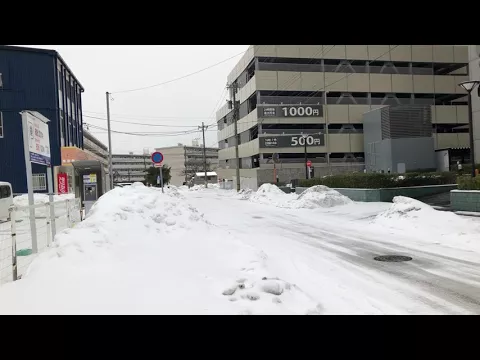
Another challenge is maintenance. Underground leaks require complex interventions, as the system is embedded beneath the pavement.
Why It Is Not Widely Adopted Globally
Although cold countries like Canada, the United States, and European nations use similar systems in airports or specific parking lots, the large-scale urban model like Japan’s remains relatively rare.
The main factors are the high initial cost and limited availability of natural geothermal sources in many regions.
Japan combines three strategic factors: high urban density, severe climate, and access to geothermal resources.
Invisible Infrastructure That Redefines Urban Winter
For visitors to these cities during winter, the scene is unusual: clean streets while roofs and unheated areas remain covered in snow. The contrast highlights that there is engineering operating beneath their feet.
The technology does not eliminate winter but transforms its management. Instead of an emergency response with tractors and salt, part of the solution is permanently integrated into the pavement.
Structural Adaptation to Extreme Climatic Conditions
In the Japanese winter, kilometers of piping beneath the asphalt circulate warm geothermal water to prevent snow accumulation, creating cities that almost do not rely on snow removal tractors. It is a combination of hydraulic engineering, thermal transfer, and geological utilization.
More than convenience, the system represents a structural adaptation to extreme climatic conditions. By transforming subterranean heat into urban infrastructure, Japan has incorporated winter into the very engineering of its cities.
The result is a landscape where snow continues to fall intensely, but the impact on urban mobility is controlled by invisible technology beneath the asphalt.










Seja o primeiro a reagir!