





 Portuguese
  English
  Spanish
  4 min of reading
  1 comment


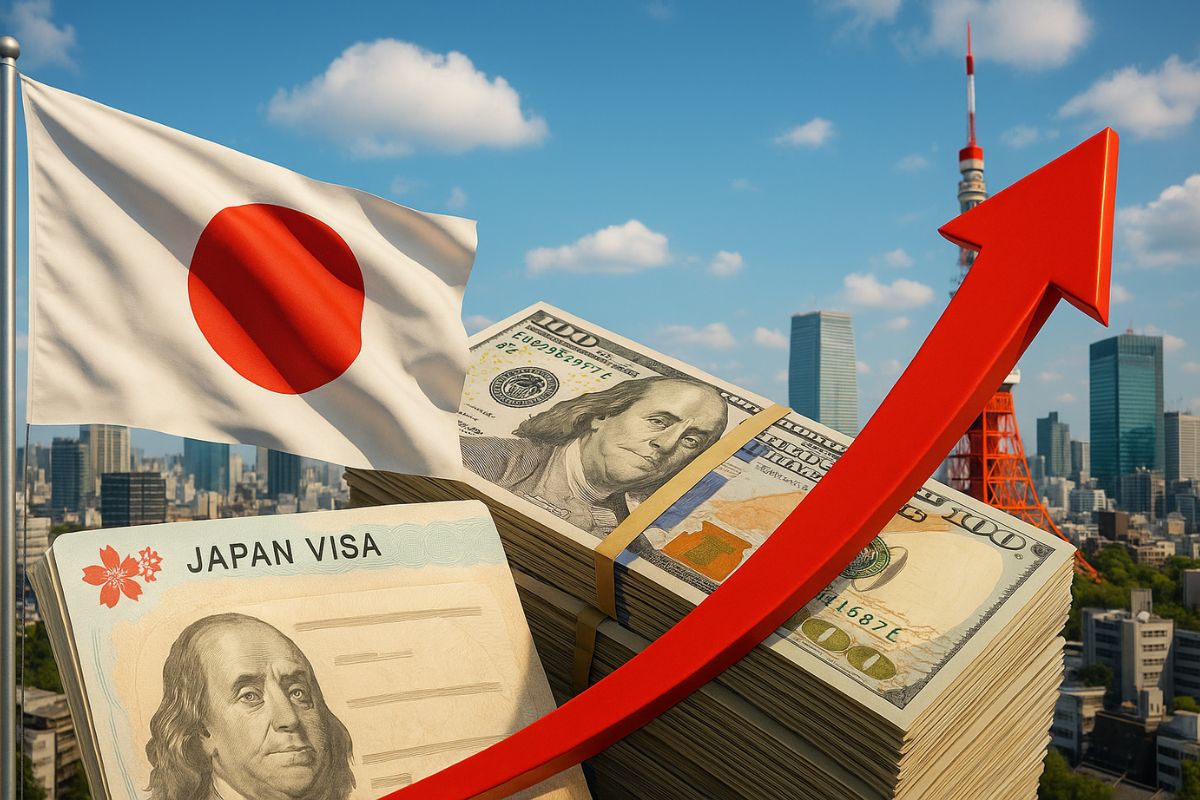

Historic Adjustment Aims to Balance Administrative Costs and Align Fee Values to Standards of Countries Like the USA and Europe, After Record of International Visitors.
For the first time since 1978, Japan will increase visa fees in an attempt to equalize the rates charged to those practiced by the United States and European countries. The measure, set to take effect next fiscal year, reflects the increase in administrative costs and the unprecedented growth in the number of foreign tourists.
According to the valor econômico portal, the adjustment, which will undergo public consultation prior to implementation, will cover tourist, business, and long-stay visas. Although the exact amounts have yet to be disclosed, the Japanese government indicates that the new fees will be calculated based on the standards of the G7 and the OECD, following a trend of inflationary updates and modernization of processes.
Understand Why Japan Will Increase Visa Fees
Japan has not updated its visa fees in over 45 years, making it one of the cheapest countries in the world for entry applications. Currently, a single-entry visa costs about 3,000 yen (US$ 20), and a multiple-entry visa costs 6,000 yen.
-
Brazilian city gains industrial hub for 85 companies that is equivalent to 55 football fields.

-
Peugeot and Citroën factory in Argentina cuts production by half and opens a layoff program for more than 2,000 employees after Brazil drastically reduced purchases of Argentine vehicles.

-
A Brazilian city gains a factory worth R$ 300 million with the capacity to process 200 thousand tons of wheat per year, a mill of 660 tons/day, silos for 42 thousand tons, and an industrial area of 276 thousand m².

-
Havan will leave the shopping mall in Blumenau to inaugurate something that the chain has never done before: a megastore in half-timbered style in the Historic Center of the city, which is expected to be completed in May and change the landscape of local retail.


In comparison, the United States charges US$ 185, the United Kingdom US$ 177, and the countries of the Schengen Agreement such as France, Germany, and Italy charge around €90 (US$ 105).
This significant difference has motivated the Japanese government to revise its fee structure, adjusting it to international realities and covering rising issuance costs.
According to authorities, the increase is not only aimed at offsetting expenses but also curbing excessive or frivolous applications, as the record volume of requests has increased the workload of consular teams.
The country is even considering charging the fee at the time of application, as the United States and the European Union do.
The Impact of Record Tourism in Japan
The move comes amid a rapid growth of international tourism. In the first half of 2024, Japan welcomed 21.5 million visitors, a 20.7% increase compared to the same period the previous year.
This marks the first time the country has surpassed 20 million visitors in six months, driven by the full reopening of borders and the depreciation of the yen, which has made travel cheaper for foreigners.
However, this advancement brings new challenges. The high demand has increased administrative costs, requiring additional personnel and consular infrastructure.
Furthermore, overcrowding issues in popular tourist destinations, such as Kyoto and Osaka, have led the government to reevaluate entry policies and flow control, balancing economic and urban sustainability.
How the Fee Increase Fits into the Japanese Government’s Strategy
The new fees are part of a broader policy of tourism management and border security. The government states that the adjustment of visa fees should not significantly reduce the number of visitors, but instead optimize issuance and ensure quality service for travelers with legitimate purposes.
Currently, Japan requires short-term visas from citizens of over 120 countries, including China, Vietnam, and the Philippines, which together account for almost 90% of all visas issued.
Chinese visitors alone accounted for 5.24 million visas in 2023, followed by Filipinos (570,000) and Vietnamese (320,000). Meanwhile, 74 nations, including the United States, South Korea, and Australia, enjoy partial or total visa exemptions.
The new model, therefore, adjusts the system without compromising tourist flow, maintaining the attractiveness of the country while reinforcing the operational sustainability of the Ministry of Foreign Affairs.
What the Adjustment Reveals About Japan’s Stance
The increase in visa fees marks a shift in mindset within Japanese economic diplomacy. For decades, the country prioritized opening doors to tourism and cooperation, maintaining low fees as a sign of hospitality.
Now, with tourism at a historic level and administrative demands on the rise, the priority shifts toward fiscal balance and operational efficiency.
Additionally, by aligning with international standards, Japan reinforces its position among the world’s largest economies, adjusting its entry policy to the same level of requirement and cost as its G7 peers.
More than just a simple adjustment, the increase in visa fees in Japan reflects a new phase in the country’s migration and tourism policy, an attempt to preserve international attractiveness without compromising internal management.
The measure also opens the floor for a broader debate on access, sustainability, and valuing responsible tourism.
Do you agree with the visa fee adjustment? Do you believe this could impact tourism in Japan, or is it a necessary measure to balance costs? Share your opinion in the comments; we want to hear from those who have lived this experience firsthand.








Your writing has a way of resonating with me on a deep level. I appreciate the honesty and authenticity you bring to every post. Thank you for sharing your journey with us.