





 Portuguese
  English
  Spanish
  3 min of reading
  0 comments


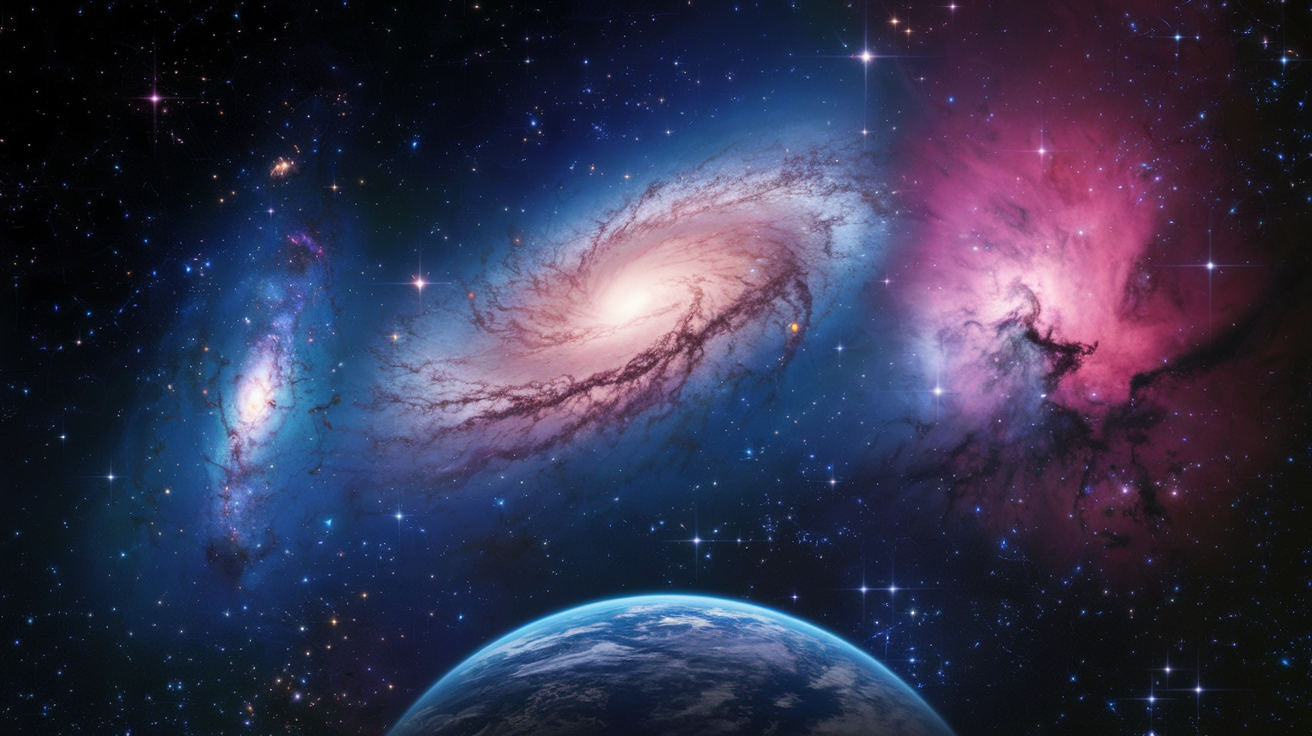
Study Suggests That Crossing Through a Region of Intense Stellar Formation Altered the Protective Barrier of Our System and Influenced Climatic Phenomena in the Planet’s Past.
Researchers from the University of Vienna in Austria discovered that the Solar System may have passed through a region of intense stellar formation about one million years ago. The research suggests that this encounter may have compressed the protective bubble around our system, allowing for a greater flow of interstellar dust. This phenomenon would have left geological traces and possibly influenced the Earth’s climate.
Solar System Crosses Different Regions of the Galaxy
According to Efrem Maconi, a PhD student at the University of Vienna and the lead author of the study, the Solar System constantly moves through the center of the Milky Way, encountering different galactic regions. One of these regions is the Radcliffe Wave, located in the constellation of Orion. This thin and long structure is composed of several interconnected stellar formation areas.
The scientists analyzed data from the Gaia mission of the European Space Agency and used spectroscopic observations to determine that the Solar System passed through this region about 14 million years ago. This journey caused neighboring planets to move through areas where star clusters were forming, a process that may have altered the conditions around our system.
-
Scientists from an international project drill 1,800 meters of ice in Antarctica using hot water and discover details about one of the most intriguing places on planet Earth.
-
Seen from space, a colossal volcano nearly 5,000 meters high in Russia has released 1,600 km of smoke over the Pacific, forming “devil’s horns” of lava and revealing the brutal force of the Ring of Fire.
-
Expedition 501: Scientists drill into the ocean floor and discover a giant reserve of fresh water hidden beneath the sea, extracting nearly 50,000 liters and revealing an invisible system that could reshape the map of water scarcity.

-
Archaeologists find an intact tomb over 2,500 years old, with more than 100 preserved objects, weapons, jewelry, and human remains never touched.

Evidence of Passage Through the Stellar Nursery
The study’s co-author, João Alves, explains that this region can be observed in the night sky. “Look for the constellation of Orion and the Orion Nebula (Messier 42) – our Solar System came from that direction!” The interaction of the system with this area could have resulted in an increase of interstellar dust in the Earth’s atmosphere, leaving traces of radioactive elements from ancient supernovae.
Analyses indicate that the passage occurred between 14.8 and 12.4 million years ago, which coincides with a geological event known as the Middle Miocene Climatic Transition. This period marked a shift in the Earth’s climate, making it milder and favoring the initial formation of the ice sheet in Antarctica.
Impact of Interstellar Dust on Earth Climate
Scientists consider it plausible that the increase of interstellar dust contributed to the changes in the Earth’s climate during that period. However, further research is needed to establish a cause-and-effect relationship between the Solar System’s passage through the Radcliffe Wave and the climatic alterations recorded in the geological records.
Maconi emphasizes that the climatic changes that occurred during the Middle Miocene happened over hundreds of thousands of years and cannot be compared to the current climate changes, which have distinct causes and dynamics.
New Research May Clarify Future Impacts
Scientists will continue investigating how the interaction between interstellar dust and the Earth’s atmosphere may have affected climatic conditions throughout the planet’s history. Understanding these processes better may also provide insights into how future galactic travels of the Solar System could influence Earth and other planets in our cosmic neighborhood.
Source: Canaltech








Seja o primeiro a reagir!