





 Português
  Inglês
  Espanhol
  5 min de leitura
  0 comentários


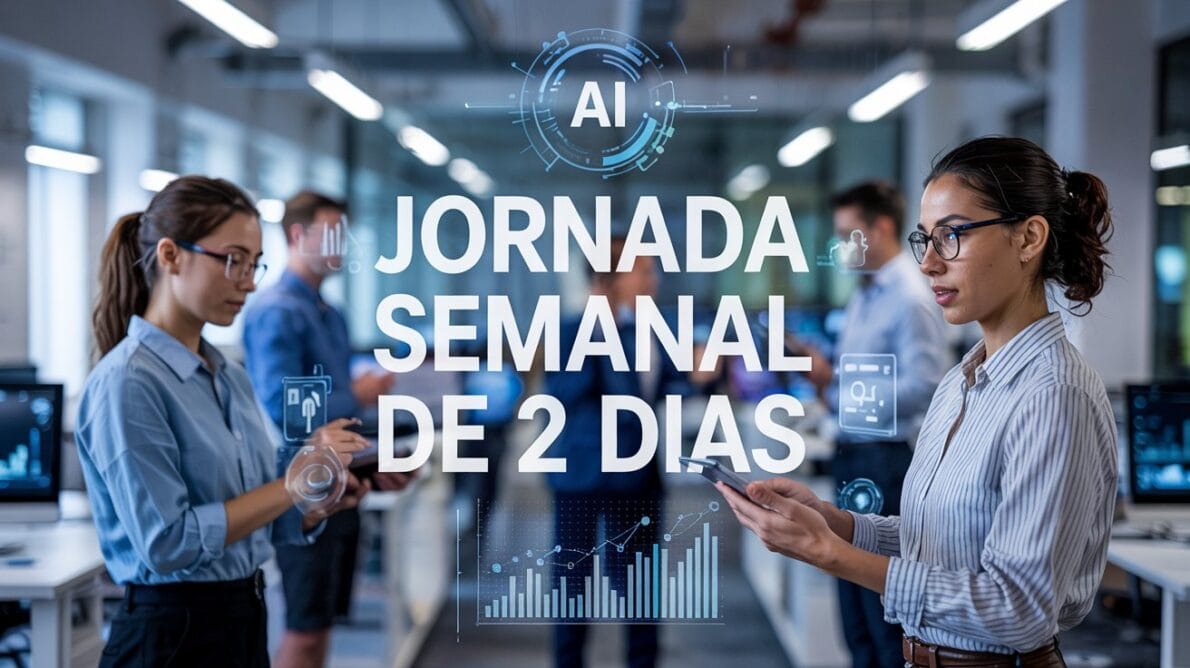
Artificial Intelligence Can Transform the Working Routine, Bringing Shorter Weeks and Impacting Global Productivity, But the Future Is Still Uncertain.
In recent years, Artificial Intelligence (AI) has gained an increasingly significant space in the job market, transforming the way companies operate and how professionals perform their roles.
The promise of automating repetitive processes, accelerating complex tasks, and increasing productivity is one of the main factors that make AI one of the most impactful technologies today.
Microsoft co-founder Bill Gates has been a proponent of this technological revolution and believes that in the next ten years, many people’s workweeks could be reduced to just two days, a transformation driven by automation and artificial intelligence.
-
With more than 635,000 doctors, Brazil sees competition increasing in large cities, and recent graduates are competing for shifts at an accelerated pace while the countryside still faces shortages.

-
Found in one of the most radioactive places on Earth, this Chernobyl fungus may be doing something with radiation that no one has been able to explain to this day.

-
The world’s first octopus farm wants to open in the Canary Islands and is already provoking an international reaction: the plan aims to produce 3,000 tons per year.

-
A bright yellow mushroom imported from Asia escaped from a cultivation farm in the United States in 2010 and is now aggressively spreading across 25 states, destroying entire communities of native fungi in American forests.


During an appearance on the famous talk show The Tonight Show with Jimmy Fallon, Gates shared his vision for the future of work, suggesting that technological changes will allow for flexibility never before seen in the job market.
According to Gates, although it may seem like a futuristic idea, this change is directly linked to the rapid innovations that are shaping our reality.
According to Gates, many companies around the world are already testing shorter workweeks, and in some cases, the results have been surprising.
In addition to significant increases in productivity, these changes have provided substantial improvements in the quality of life for employees.
However, the question remains: how will artificial intelligence be able to shape this future, and what impact will it have on society as a whole?
How Can Artificial Intelligence Reduce Work Hours?
The automation of tasks is undoubtedly the main driver behind the proposal to reduce work hours.
AI has the capacity to perform various functions that previously required human intervention.
From analyzing large volumes of data to customer service, artificial intelligence is occupying spaces that were traditionally dominated by professionals.
This ability to automate processes not only saves time but also allows companies to reduce their operational costs, which, in turn, can result in greater profit and competitiveness in the market.
AI is already demonstrating its efficiency in various areas, especially in professions that require analytical or repetitive skills.
Roles such as accounting, technical support, and even some medical specialties are increasingly being assisted by intelligent systems.
These changes allow workers to focus on more creative, strategic, and human tasks, areas where AI still cannot replace the personal touch and judgment capability.
Sectors That Will Not Be So Impacted by AI
Despite the promises of a work revolution driven by AI, it is important to note that not all sectors will be equally affected.
Some areas will continue to require a significant level of human interaction, something that machines are still unable to replicate accurately.
Sectors such as education, healthcare, and social services are clear examples where human presence will be fundamental.
Empathy, cultural understanding, and the ability to make complex decisions in sensitive contexts are aspects that AI cannot easily replace.
Creative industries such as art, music, film, and design will also continue to value human creativity.
While AI may assist in certain parts of the process, such as editing and optimization, the essence of creative work will continue to be performed by humans.
The sensory and emotional experience that an artist, for example, conveys in a piece of art is something that AI still cannot achieve.
Therefore, while some professions may see their workloads reduced with the help of AI, others may even expand, leveraging new technologies to enhance and enrich the experiences they offer.

Challenges and Opportunities with Reduced Work Hours
The idea of a reduced workweek, with AI taking over much of the repetitive and operational tasks, brings both challenges and opportunities.
One of the biggest challenges will be the adaptation of professionals to the new demands of the job market.
Reskilling and continuous education will be essential to ensure that workers are not left behind.
Traditional professions will need to evolve, with new roles emerging in areas such as AI management, digital ethics, and data analysis.
On the other hand, the reduction of work hours can represent a significant opportunity to improve the quality of life for workers.
With more free time, individuals will have the chance to engage in personal activities, take care of their mental and physical health, learn new skills, or even invest in new projects.
This balance between personal and professional life can result in a more motivated and productive workforce, as employees with free time to rest and recharge tend to perform better in their roles.
Moreover, companies that adopt the shorter workweek may benefit from a healthier work environment, with lower stress levels and greater employee satisfaction.
A study conducted in 2023 with several companies that implemented 4-day workweeks showed that productivity increased by 25%, while stress levels significantly decreased.
The Future of Work with AI and Automation
As AI advances, it is important to remember that the future of work will not just be about replacing humans with machines.
Rather, emerging technologies will transform work environments, creating a scenario where collaboration between humans and machines will be essential.
AI will be a tool to enhance human capability, not to replace it completely.
As a result, new job opportunities may arise, requiring skills that were not even imagined until recently.
Furthermore, while automation may reduce the need for labor in some areas, it may create new roles that require a combination of technical and creative skills.
Professions related to AI management, technology ethics, and the design of automated systems are just a few examples of areas that are expected to grow in the coming years.
The Impact of AI on the Job Market
The idea of a workweek of only two days, as suggested by Bill Gates, may seem distant to many, but it is becoming increasingly plausible with the rapid advancements in artificial intelligence.
AI not only has the potential to transform the way we work but can also improve our quality of life, creating a healthier balance between professional and personal responsibilities.
However, it will be essential for governments, companies, and workers to adapt to these changes, ensuring that the benefits of automation are widely distributed, without leaving anyone behind.
What do you think of this perspective on shorter workweeks?
Do you believe that artificial intelligence will be the key to greater quality of life at work, or could it bring more challenges than benefits? Share your opinion in the comments and join the discussion!





-

Uma pessoa reagiu a isso.