





 Portuguese
  English
  Spanish
  4 min of reading
  0 comments


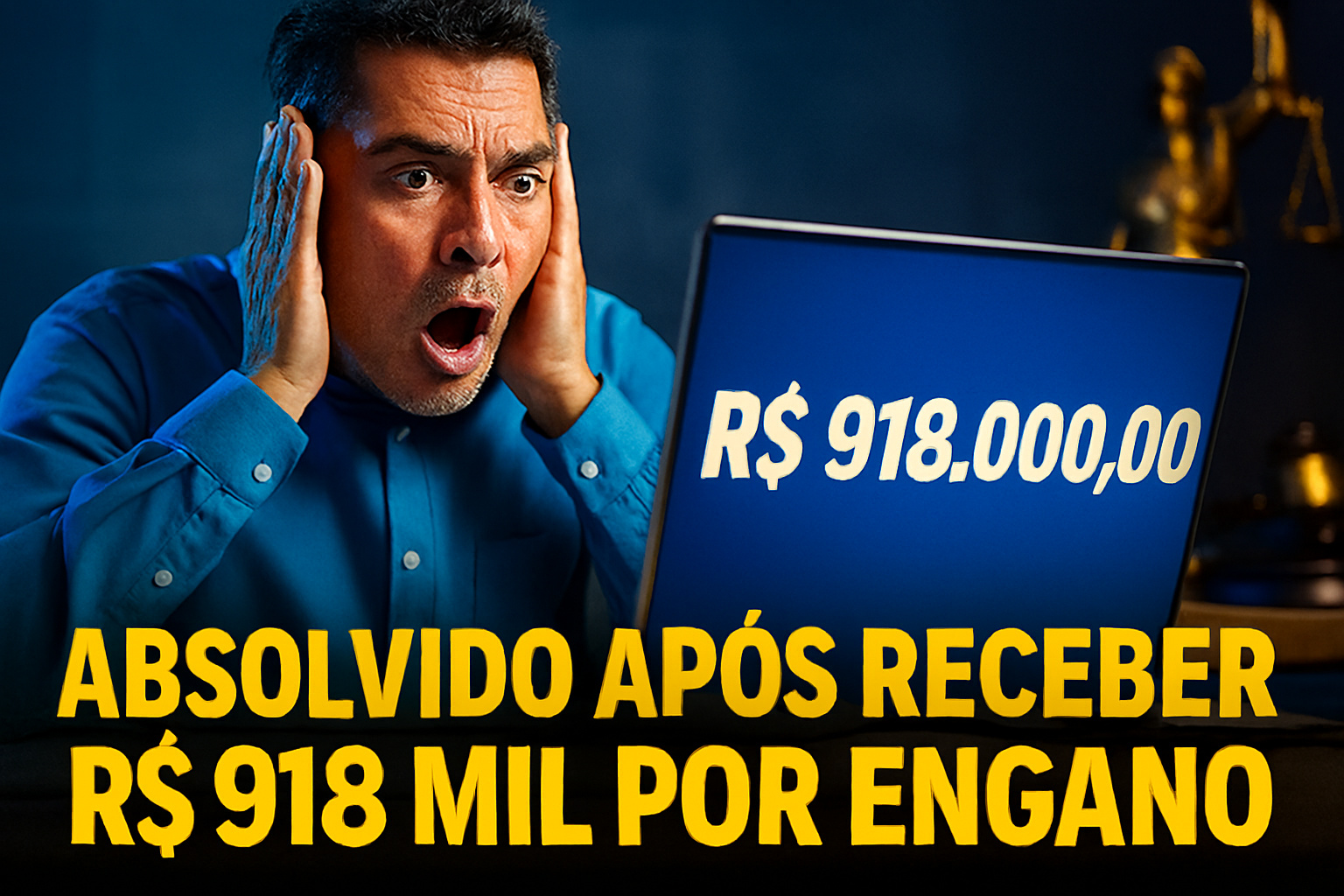
Chilean Court Acquits Official Who Received R$ 918 Thousand by Mistake and Did Not Return: Ruling Ends Three-Year Legal Dispute and Creates Controversial Legal Foundations.
Imagine finding nearly a million reais in your account without having done anything to deserve it. This is exactly what a Chilean official experienced in 2022 — and now, after a long legal battle of over three years, he has been acquitted by the court. The unusual and intriguing case raises debates about law, morality, and the limits of returning funds due to payment errors.
The Case: Incorrect Deposit of R$ 918 Thousand
On May 30, 2022, a dispatch assistant at the company Cial (Industrial Food Consortium) — which controls the brands La Preferida, San Jorge, and Winter — noticed he had received a payment much higher than usual.
The deposit was equivalent to R$ 918 thousand (when converted), resulting from an administrative error by the company.
-
The noise law will no longer be in effect at 10 PM starting in June with a new rule valid during the 2026 World Cup.

-
The Chamber opens a debate on driver’s licenses at 16 years old as part of a reform that includes around 270 proposals to change the Brazilian Traffic Code and may redesign rules for licensing, enforcement, and circulation in the country.

-
The new Civil Code could revolutionize marriages in Brazil with “express divorce” and changes that could exclude spouses from inheritance.
-
Banco do Brasil sues famous influencer for million-dollar debt and intensifies debate on delinquency, risks of seizure, and direct impact on Gkay’s credibility.


Instead of alerting immediately or returning the amount, he kept the money, causing surprise and shock within the company and the Chilean legal sectors. Cial attempted to recover the amount legally, stating that it was an undue deposit and demanding its return as a legal obligation.
The Legal Dispute and the Final Decision
The legal battle dragged on for years. Cial argued that, according to Chilean civil law, the improperly paid amount should be returned as there was no justification for compensation.
On the other hand, the former employee argued that, after the elapsed time and considering the principle of good faith and prescription, the company’s right to demand payment had expired.
Finally, the First Guarantee Court of Santiago, in Chile, ruled that the worker was exempt from the obligation to repay. The decision considered that the prolonged error without immediate challenge from the company diluted the right to recover the amount, as well as recognizing potential legal limitations on exercising the claim.
The judge understood that the action brought by Cial lost validity due to lapse of time — in many legal systems, it is as if the company had “lost the chance” to ask for it back.
As a result, the employee was acquitted and released from the obligation to return the nearly R$ 918 thousand he had received by mistake.
Legal Foundations at Stake
Non-Performance Due to Error and Restitution
The general rule in cases of undue payment is that the payer has the right to recover the amount, provided they act in a timely manner and within legal deadlines (such as prescription or expiration).
Good Faith of the Beneficiary
If the recipient of the payment did not act in bad faith (that is, did not realize the error immediately or tried to take advantage of it), there may be legal mitigating factors that hinder or prevent full restitution. Delays in legal action may also indicate loss of right.
Prescription / Lapse of Time
The law usually sets deadlines for the aggrieved party to claim restitution. If these deadlines expire, the right to demand repayment may extinguish. In the Chilean case, it appears that Cial’s action was considered prescribed or expired.
Equity / Fair Balance
In extreme situations, courts may consider that forcing full restitution after years would create an unfair imbalance for the recipient, especially if they have already used part of the amount or changed their financial situation.
Impacts and Repercussions
Surprised Jurisprudence
The decision has generated reactions among lawyers and legal scholars, who are debating whether this type of acquittal could also be applicable in similar cases in Brazil or other Latin American countries.
The Future of Banking Error Cases
In a digital world, financial errors occur frequently: duplicate deposits, incorrect transfers, system glitches. This case shows that restitution is not always automatic.
Trust and Morality in the Corporate World
Some critics warn that decisions like this may encourage opportunistic behavior: if someone who receives funds by mistake can keep the money, there is a risk of consciously taking advantage of the error. On the other hand, companies may need to act more quickly to reclaim undue amounts.
Cases of acquittal in undue payment cases are not common, but there are precedents in other countries where the court understood that delays in recovering the amount jeopardize the right of action. In civil law systems, such as the Chilean one, prescription and the principles of good faith carry significant weight.
In Brazil, although the prevailing understanding is that undue amounts must be restituted, exceptional cases have admitted compensations or reductions in cases of unjustified error and missed deadlines.










-

-

-

-

-

-

54 pessoas reagiram a isso.